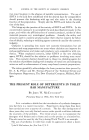
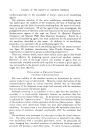
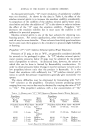
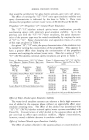
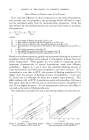
278 JOURNAL OF THE SOCIETY OF COSMETIC CHEMISTS Propellents "12" /"11" / l/Fater Emulsions Fairly satisfactory emulsions may be obtained by combining "11"• with its relatively good solvent powers, with "12." The spray charac- teristics of the emulsions may be varied from very fine to very wet by varying either the "12"/"11" ratio or the propellent/water ratio. The effect of varying the "12"/"11" ratio upon spray characteristics and emulsion separation times is shown in Table 2. The variations were tested at propellent/water ratios of 80/20 and 60/40, respectively. As the data in Table 2 indicate, increasing the proportion of"l l" in the propellent TABLE 2--EffECT or VARIATION IN PROPELLENT "12"/PRoPELLENT "11" RATIO UPON EMULSION AND SPRAY PROPERTIES Propellent Propellent 12"/11" Spray 12"/11" Spray Ratio, Sepal, ation Charac- Ratio, Separation Charac- Wt. % Times teristics Wt. % Times teristics 80/20 Propellent/Water Ratio 60/40 Propellent/Water Ratio 100/0 (1 min. 100/0 1 min. 70/30 1 min. Very't•e 70/30 30-60 min. Fine'" 50/50 1-5 min. Fine 50/50 30-60 min. Medium fine 30/70 15-30 min. Medium fine 30/70 30-60 min. Soft medium 0/100 15-30 min. No spray 0/100 1 hr. No spray 4 parts Emcol 14/104 parts final emulsion mixture increases the stability of the emulsions and also the wetness of the spray. Both of these effects would be predicted on the basis of the data in Table 1 and the fact that "11" lowers the vapor pressure of "12," thus giving propellent mixtures that produce coatset sprays. The effect of varying the propellent/water ratio upon emulsion stability and spray characteristics is given in Table 3. In these experiments the "12"/"11" ratio was held constant at 30/70. TABLE 3--EffECT or VARIATIONS IN PROPELLENT*/WATER RATIO UPON CREAMING AND SPRAY CHARACTERISTICS Propellent/Water Separation Ratio, Wt. % Times Spray Characteristics 90/10 1-5 min. Very fine 80/20 5-15 min. Fine 60/40 30-60 min. Medium 40/60 1 hr. Very coarse--almost foams 20/80 1 min. Stream--foams Emulsions prepared with 4 parts Emcol 14/104 parts of finished emulsion * Propellent is "12"/"11" (30/70). In this series, increased emulsion stability and increased wetness of sprays result with a decrease in the propellent/water ratio. The increase in stability probably results primarily from the increase in viscosity of the

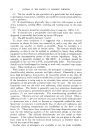
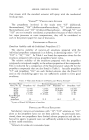
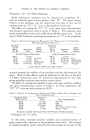
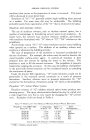
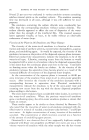
AEROSOL EMULSION SYSTEMS :279 emulsions that occurs as the proportion of water is increased. ]'his point will be discussed in more detail later. Emulsions of "12"/"11" generally exhibit slight bubbling when sprayed on a surface. For some uses, this may be undesirable. The bubbling probably results from vaporization of the "11" that is retained in the spray. Emulsions with dluxiliary Solvents The use of auxiliary solvents, such as odorless mineral spirits, has a number of advantages in formulating aerosol water-in-oil emulsions. As shown later, the solvents may increase emulsion stability, particularly with emulsions formulated with "12" alone or "12"/"114" solutions as the propellents. As previously noted, "12"/"1 l"/water emulsions tend to cause bubbling when sprayed on a surface. The addition of an auxiliary solvent may minimize or eliminate the bubbling entirely. The ease of preparation of the emulsions is increased considerably by the use of solvents. For example, the solvent may be used to dissolve the water-insoluble surface-active agent. A water-in-oil emulsion is then prepared from the solvent by adding the water to the solvent. This emulsion is used to fill the aerosol container. The propellent is pressure loaded after capping the container. In this case, the addition ofpropellent to the previously formed emulsion can be considered merely as extending the continuous oil phase. Under the present ICC regulations, "12"/water emulsions would not be permissible in the standard aerosol containers as a result of pressure limitations. Auxiliary solvents serve as pressure depressants for "IT' and permit the formulation of emulsions using "12" alone as the propellent. Propellent "12"/ Solvent/tl/ater Systems Emulsion systems of "iT'/odorless mineral spirits/water produce non- foaming sprays. The spray characteristics themselves may be varied over a wide range from very fine to very coarse by changing the "12"/solvent ratio. Examples of this are listed in Table 4. TASLE 4--Pv. oPEL•E•v "12"/OooR•SS M•ERAL Sm•vs/WxvE• EMuLsions Propellent "12"/OMS*/H20 .---•Separation Times--• Spray Ratio, Wt. % Without "12" With "12" Characteristics 60/20/20 1 hr. 1-5 min. Fine 40/20/40 l hr. 1 hr. Medium 20/20/60 1 hr. 1 hr. Wet 60/30/10 5-15 min. 1-5 min. Fine 60/10/30 1 hr. 1-5 min. Fine 4 parts Emcol 14/104 parts of finished emulsion * OMS = Odorless mineral spirits.
Purchased for the exclusive use of nofirst nolast (unknown)
From: SCC Media Library & Resource Center (library.scconline.org)