276 JOURNAL OF THE SOCIETY OF COSMETIC CHEMISTS confined generally to the oil-soluble or known water-in-oil emulsifying agents. The ultimate selection of the most satisfactory emulsifying agents was based upon the stability of the emulsions, the lack of foaming with the sprays, and the lack of corrosion resulting from the water-in-oil emul- sions in metal containers. Of all the agents that were investigated, the polyglycerol esters of the fatty acids were found to be the most satisfactory. Surface-active agents of this type are Eracol 14 (Emulsol Chemical Company) and Soleonic PGE (Sole Chemical Company). Era col 14, a water-in-oil emulsifying agent, was used exclusively for the preparation of the emulsions described in this paper. In addition to its emulsifying properties, it is reported to be an antifoaming agent (6). Another effective water-in-oil emulsifying agent for the aerosol systems was Span 20 (sorbitan monolaurate, Atlas Powder Company). This material also is reported to possess antifoaming properties (7). There are, without doubt, many other surface active agents that would also be effective for preparing aerosol water-in-oil emulsion systems. However, in view of the large variety and number of agents that are commercially available and the time required to evaluate a given agent, it was not possible in the present study to test all materials that conceivably might have been effective. EVALUATION OF EMULSION STABILITY AND SPRAY CHARACTERISTICS The true stability of the emulsion systems as determined by size-fre- quency analysis was not determined. However, visual observations of the creamed-aqueous phase at various intervals showed that no observable coalescence of the dispersed water drops had occurred with the emulsions that are discussed in the present paper. Although creaming in an emulsion is not a sign that the emulsion is unstable, it is commercially important because an emulsion that has creamed must be shaken before use. In the present case, rate of creaming is indicated by "separation times." This is the time interval after shaking of the emulsions before visible separation of the two phases occurs. Sepa- ration times were determined within one hour after preparation of the emulsions. In many cases it was observed that the separation times for a given series of emulsions changed considerably after the emulsions had aged. The emulsions were packaged in coated glass bottles for visual observa- tion. The spray characteristics of the emulsions as reported in the tables were determined with a standard glass-bottle valve. In practically all cases, changing from standard actuators to mechanical break-up type of actuators will produce a much finer spray. In many instances, emulsions

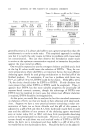
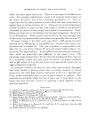
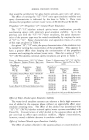
AEROSOL EMULSION SYSTEMS 277 that stream with the standard actuator will spray with the mechanical break-up type. "FREON ©" * PROPELLENTS STUDIED The propellents involved in the study were "12" (dichlorodi- fluoromethane), "114" (dichlorotetrafluoroethane), "11" (trichloromono- fluoromethane), and "1 lY' (trichlorotrifluoroethane). Although "11" and "11Y' are not normally considered as propellents because of their relative low vapor pressures at room temperatures, they will be considered as such in the present paper for ease of discussion. EXPERIMENTAL RESULTS Emulsion Stability with the Individual Propellents (17) The relative stability of water-in-oil emulsions prepared with the individual propellent compounds is as follows, in decreasing order: "11" "113" "12, .... 114." In Table 1 are listed the separation times for the emulsions prepared with various propellent/water ratios. The relative stability of the emulsions prepared with the propellent compounds corresponds roughly to the solvent properties of the compounds. This is indicated by a comparison of the Kauri-butanol values (8) for the propellent compounds that are also listed in Table 1. Actually propellent "12" and propellent "114" are such limited solvents that the Eracol 14 used as the emulsifying agent was not sufficiently soluble to form good emulsions. TABLE 1--EMULSION STABILITY OF PROPELLENT-WATER SYSTEMS* Propellent/Water Emulsion Separation Time Ratio, Wt. % Propellent "12" Propellent "114" Propellent "11" Propellent "113" 90/10 1 min. 1 min. 15-30 min. 1-5 min. 80/20 1 min. 1 min. 15-30 min. 1-5 min. 60/40 1 min. 1 min. 1 hr. 1 hr. 40/60 1-5 min. 15-30 min. 1 hr. 1 hr. Kauri-Butanol values of propellents 18 11.8 60.1 32 * 4 parts of Emcol 14/104 parts of emulsion. PROPELLENT-WATER EMULSIONS Satisfactory water-in-oil emulsions with "12"/"114" solutions or "114" alone as the propellent have not yet been achieved. As previously men- tioned, these two propellents have limited solvent properties and the sur- face active agents in general were not sufficiently soluble in the propellents to form stable emulsions. * Referred to by number only in remainder of paper.
Purchased for the exclusive use of nofirst nolast (unknown)
From: SCC Media Library & Resource Center (library.scconline.org)