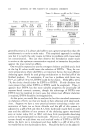
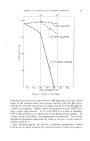
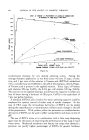
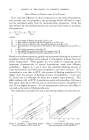
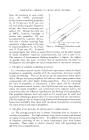
FORMULATING AEROSOLS TO OBTAIN SPRAY PATTERNS 297 carbons should be used. Then, knowing that the density of the hydro- carbon propellents is lower than that ofhalocarbon propellents, the amount of the required volume of hydrocarbons per aerosol container can be cal- culated. Further, since the flashing determines mainly the amount of instantaneous evaporation, and therefore the basic foam formation, the evaluation of the flashing curves should be taken into consideration. If the flashing curve of the hydrocarbon mixture has a flatter slope than that of the corresponding halocarbon mixture, an increased volume of hydro- carbon propellent might compensate in foam formation. Finally, since the new product would have somewhat different properties, small correc- tions in the formulation may be required to adjust surface tension, density, viscosity, and solubility of the propellent concentrate mixture. CONCLUSION The cosmetic chemist who intends to formulate a product in aerosol form should evaluate all the factors affecting spray or foam characteristics. Important factors are valve design, vapor pressure, thermodynamic values and the physical and chemical properties of propellent and product. Special emphasis should be given to the phenomenon of "flashing." Graphs were prepared to compare the relative flashing rate of halocarbons and hydrocarbons. REFERENCES (1) "A Tentative Method for Determination of the Particle Size Distribution of Aerosols," Chem. Specialties Moers. Assoc. Proc. 43rd Ann. Meeting, Dec., 1956. (2) Marshall, W. R., Jr., "Atomization and Spray Drying," Chemical Engineering Progress Monograph Series, 50, No. 2 (1954). (3) York, J. Louis, y., $oc. Cosmetic Chemists 7, 204 (1956). (4) Kinetic Chemicals, Inc., "Thermodynamics Properties of Freon 11, Freon 12, Freon 114." (5) Goodhue, Lyle D., and Franz, H., "Hydrocarbon Propellents for Aerosols," Phillips Petroleum Co., Research Division, Report 1751-$7R.

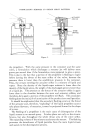
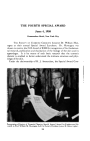
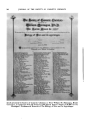
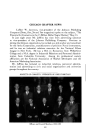
THE FOURTH SPECIAl, AWARD June 4, 1958 Commodore Hotel, New York City THE SOCTET¾ Or COSMETIC CHEMISTS honored Dr. William Mon- tagna at their annual Special Award Luncheon. Dr. Montagna was chosen to receive the 1958 Award of S1000 for recognition of his fundamen- tal research, publication and elucidation of the biology of the skin and its appendages. It is by means of such basic research that the cosmetic chemist is enabled to better understand the intricate structure and phys- iology of the skin. Under the chairmanship of H. J. Amsterdam, the Special Award Corn- Presentation of Society of Cosmetic Chemists Special Annual Award for Fundamental Re- search to Prof. William M. Montagna (left) by Society President James H. Baker (right). 298
Purchased for the exclusive use of nofirst nolast (unknown)
From: SCC Media Library & Resource Center (library.scconline.org)