284 JOURNAL OF THE SOCIETY OF COSMETIC CHEMISTS then the particle size of the sprays from the concentrated emulsions will be much larger than those from the dilute emulsions regardless of the fact that the size of the dispersed water droplets was the same in both emulsions before spraying. The picture becomes even more complicated in emulsions formulated with an auxiliary solvent, such as odorless mineral spirits. In this case the propellent is dissolved in the solvent and the flashing of the propellent during spraying breaks the solvent into fine particles. The particle size of the sprayed solvent will depend therefore upon the ratio of propellent to solvent, as in any homogeneous system. What effect the break-up of the solvent has upon the dispersed water droplets is not known. It is possible that the auxiliary solvent and water are sprayed as separate droplets. However, if this occurs, then re-emulsification occurs when the two phases impinge upon a surface. Experiments show that an emulsion is obtained when a propellent/solvent/water emulsion is sprayed into a container. Corrosion Studies with lgf ater-in-Oil Emulsions The combination of water and surface-active agents in aerosol systems always introduces the possibility of corrosion of metal containers. The difficulties 'hat have been encountered in attempts to package aerosol shampoos based on fatty alcohol sulfates are well known. On the other hand, aerosol shave lathers based on fatty acid soaps have an excellent record with respect to corrosion. The basic water-in-oil emulsion systems discussed in the present report appear generally to have remarkable stability as far as corrosion of metal containers is concerned. The emulsions were packaged in the following containers for the specified storage temperatures and times: 1. Crown lacquer-lined tin-plate cans equipped with Precision nylon- brass valves Aging periods: 2 months at 130øF. 1 year at room temperature 2. Continental tin-plate cans equipped with Precision nylon-brass valves Aging periods: 6 months at 100øF. 1 year at room temperature The particular emulsion systems that were evaluated were as follows: 1. Propellent"12"/deodorized kerosene/water--60/20/20ratio 2. Propellents "12"/"114" (15/85)/"Nujol"/water--60/20/20 ratio 3. Propellents "12"/"11" (30/70)/"Nujol"/water--60/20/20 ratio 4. Propellents "12"/"11" (30/70)/water--80/20 and 60/40 ratios The first three emulsions systems produced no observable corrosion in any of the containers under any of the storage conditions. The fourth

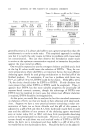
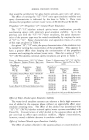
AEROSOL EMULSION SYSTEMS 285 system, "12"/"11"/water emulsions, caused no corrosion in the lacquer- lined containers under any of the storage conditions nor did they cause corrosion in the tin-plate containers at room temperature. After six months of 100øF., however, slight derinning on the can shoulders was observed. The general lack of corrosion observed with the emulsion systems is encouraging. It should be recognized, however, that the addition of active ingredients may introduce corrosive characteristics into the system. It is necessary, therefore, to shelf test any practical formulations. It has been proposed by Boe (15) that the water-in-oil systems would be expected to show less corrosion than the oil-in-water systems because in the former, the dispersed water has less tendency to come into contact with the container and valve. This may well be an important factor. On the other hand, the surface-active agent that is used also has an important bearing upon the corrosion that is observed. Some of the other water-in- oil emulsions prepared with agents other than the Emcol 14 were found to cause considerable corrosion. Pressures of zlerosol Fomulations The pressures resulting with the propellent/solvent/water emulsions are substantially those of the propellent/solvent mixture. The pressures of such mixtures will depend upon the ratio of the mixtures and the particular propellent and solvent that are used. Examples of the pressures of such mixtures are given in Reference 5 and need not be considered in more detail here. In cases where the proportion of propellent is low and the relative proportion of oil-soluble emulsifying agent is high, then the emulsifying agent will contribute to a lowering of the vapor pressure of the propellent. Flammability These propellents are nonflammable. As a result, all of the propellent/ water emulsions are also nonflammable. However, when a flammable auxiliary solvent, such as odorless mineral spirits, is used in the formulation then the flammability properties must be determined. The flammability characteristics of a series of emulsions with varying concentrations of odorless mineral spirits are given in Tables 8 and 9. The propellents were "12" and "12"/"11" (30/70), respectively. The flammability characteristics were evaluated by the flame extension and the flame sustaining tests. The flammability of the formulations appears to be a function of the concentration of auxiliary solvent, concentration of water, and spray characteristics. The data in Table 8, for example, indicate that emulsions with 20 per cent odorless mineral spirits are nonflammable, those with 30 per cent are flammable but do not sustain a flame, and those with 40 per cent are flammable and sustain a flame.
Purchased for the exclusive use of nofirst nolast (unknown)
From: SCC Media Library & Resource Center (library.scconline.org)