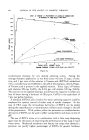
288 JOURNAL OF THE SOCIETY OF COSMETIC CHEMISTS particular propellent and system involved. Water emulsions of "11" or "113" were prepared by dissolving the surface-active agent in this pro- pellent compound, adding the water, and shaking to form the emulsion. As "12" and "114" are gases at room temperature, they must be handled differently. Emulsions of either of the above with water were prepared either by dispersing the agent in the water and pressure loading the pro- pellent or by dissolving the agent initially in the propellent and pressure loading the propellent solution of the agent. The latter is the preferred procedure. Many of the emulsions were formulated with an auxiliary solvent, such as odorless mineral spirits. In such cases, the surface active agent was dissolved in the solvent and the aqueous phase added slowly with agitation. The resulting water-in-oil emulsion was then poured into a coated bottle. If "11" or "113" were used in the formulation, they were added at this time and the bottle was capped. The remainder of the propellent was pressure loaded. After loading was completed, the emulsions were shaken 20 times by hand to complete the dispersion and the separation times were determined within an hour after pressure loading the propellent. Determination of Emulsion Type Determination of emulsion type was generally carried out with the electrical conductivity apparatus described by Griffin (16). For emulsions under pressure the apparatus was modified by fitting the electric contacts into a glass pressure-tube as discussed in Reference 5. SUMMARY The various methods available for spraying water-based aerosol products are reviewed with emphasis upon the water-in-oil emulsion systems. By suitable choice of propellents and auxiliary solvents, nonfoaming sprays varying from very fine to very coarse may be obtained. The characteristics and properties of the emulsion systems, such as emulsion stability, flammability, viscosity, stability to electrolytes and alcohol, and particle size of the sprays are discussed. REFERENCES (1) Callans, L. D., and Griswold, J., Chem. Specialties Mfrs. ztssoc. Proc., ¾3rd ztnn. Meeting, Dec., 1956. (2) AterosolAtge, October (1956), p. 12. (3) Mina, F. A., U.S. Patent No. 2,702,957. (4) Genetron Technical Data Bulletin WBA-7-56, General Chemical Co. (5) "Kinetic" Technical Memorandum #21, E. I. du Pont de Nemours & Co., Inc. (6) McCutcheon, J. W., "Synthetic Detergents and Emulsifiers" (1955). (7) "Atlas Surface Active Agents," Atlas Powder Co. (8) "Kinetic" Technical Memorandum #3, E. I. du Pont de Nemours & Co., Inc. (9) Sherman, P., y. Soc. Chem. Ind., 69, S70, S74 (1950). (10) Clayton, "The Theory of Emulsions and Their Technical Treatment," 5th Ed., New York, The Blakiston Co., Inc.

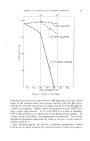
FORMULATING AEROSOLS TO OBTAIN SPRAY PATTERNS 289 (11) Ostwald, Wo., Kolloid-Z., 6, 103 (1910). (12) Cheesman, D. F., and King, A., Trans. Faraday Soc., 34, 594 (1938). (13) Dixon, H. H., and Bennet-Clark, T. A., Nature, 124, 650 (1939) Proc. Roy. Dublin Soc., 19, 422 (1930) Ibid., 20, 211 (1932). (14) Chem. Specialties Mfrs. ,4ssoc. Proc., 43rd /lnn. Meeting, Dec., 1956. (15) Boe, C. F., U.S. Patent No. 2,524,590. (16) Kirk, R. E., and Othmer, O. F., editors "Encyclopedia of Chemical Technology," Vol. 5, New York, Interscience Encyclopedia, Inc. (1950). (17) Propellents referred to in this paper are all the trade name Freons made by E. I. du Pont de Nemours and Co., Inc. HOW TO FORMULATE AEROSOLS TO OBTAIN THE DESIRED SPRAY PATTERN By MARIA V. WIENER* Presented September lB, 1957, New York City THE FORMATION of proper spray patterns often constitutes a prob- lem to aerosol chemists and producers. It is of the utmost importance to formulate each aerosol product with a spray pattern best suited for the intended application. Room deodorants, for example, require very fine atomization in order to keep the active ingredients air-borne for a long time for better effectiveness. On the other hand, the efficiency of colognes does not depend upon an extremely fine particle size as required for room deodorants. Moreover, the colognes require a directed spray, for the purpose of deposition only at the desired spots, and without formation of too small droplets that would not strike the target surface but would be dispersed in the air, and therefore, wasted. THE DRoP SIZE DXSTRIBUT•ON OF SPRAY The spray pattern of an aerosol is best described by the drop size distribu- tion. There are two ways of presentation of drop size distribution in a spray. The one recommended by the Chemical Specialties Manufacturers Association uses the cumulative weight per cent method which records the weight per cent of the spray, with a particle size smaller than or equal to a given diameter (in microns). The mass median diameter is the drop size which divides the spray, so that 50 per cent of it by weight falls below the median diameter and the balance consists of equal or larger particles. Particle size distribution in an aerosol spray often follows the normal logarithmic distribution curve if plotted on a probability graph paper it gives an almost straight line. In Fig. 1, which represents the drop size * Fluid Chemical Co., Inc., Newark, N.J.
Purchased for the exclusive use of nofirst nolast (unknown)
From: SCC Media Library & Resource Center (library.scconline.org)