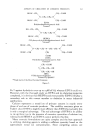
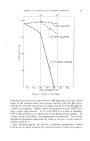
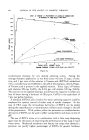
ASPECTS OF CHELATION IN COSMETIC PRODUCTS 265 excess of the chelating power of the EDTA or DTPA so that ferric hydrox- ide would form, the solution would still contain chelated ferric ion prac- tically equal to the former system. If one would wait long enough in the case of EDTA at a pH of 8.5, the iron chelate in both of the latter cases would hydrolyze and would give up the iron to form iron hydroxide. At the pH condition of 4.0 and up to 6.5, the iron chelate of EDTA is exceed- ingly stable and the ferric ion is reduced to such a low value that iron hydroxide cannot form. In the case of DTPA, at both 4.0 and through 8.5, the iron is always lower than the solubility product of iron hydroxide so no precipitation will occur. Thus, the order of addition is exceedingly important in the performance of the chelating agent and in any aqueous system the chelating agent should always be the first ingredient. In prac- tical cosmetic systems where fatty acids, bacteriostats and hydroxide ion will compete for the ferric ion or other trace metal ions, it is obviously necessary to first have a sufficient amount of the chelating agent and in the most advantageous position, by introduction before the other com- peting anions. To illustrate this fact, we were approached by a manufacturer of sur- factants to help solve an iron problem in neutralizing their alkyl aryl sulfonate fraction with caustic. Phase separation and iron hydroxide flock were the problems after reaction with caustic. Addition of the Chelating agent to the neutralized or sodium alkyl aryl sulfonate solution did not dissolve the iron hydroxide nor did phase separation occur of the unreacted hydrocarbon. Once the chelating agent, DTPA, which proved to be the most effective, was added to the sulfonic acid fraction and then neutralized to a pH of 7.5 or 8.0 with caustic, clear-cut phase separation of unreacted hydrocarbon was observed and no iron hydroxide flock developed in the surfactant fraction. EDTA was investigated in this problem and it performed as well as DTPA. Shelf-life of the surfactant solution was a factor and with the final pH of 7.5-8.0, if one would wait long enough, the ferric chelate of EDTA would gradually hydrolyze and iron hydroxide would form. This did happen, but DTPA was the solution to this*:type• of product problem. The most suitable means of incorporating EDTA or DTPA into cosmetic products is the use of the acid form. This allows the use of a suitable base such as sodium, potassium, ethanolamines and ammonia for any system where compatibility is a necessity. However, there are a number of prod- uct formulations where the sodium derivative of either EDTA or DTPA can be used. The best known use of the sodium derivative of EDTA in cosmetic products is for shelf life clarity of liquid soaps. This use has developed that it is unnecessary to chill or filter the liquid soap preparation before packaging. However, filtering is still employed as a precautionary measure.

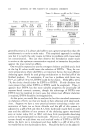
266 JOURNAL OF THE SOCIETY OF COSMETIC CHEMISTS The subject of performance of a soap or syndet-based shampoo in soft and hard water has been tossed around by both the cosmetic chemist and the chemical supplier to the cosmetic industry. The word shampoo im- plies a copious lathering or foaming of a liquid type preparation of cleansing the scalp and the hair. The successful shampoo is expected to perform in soft or hard waters, to rinse out easily, and leave a clean, nonirritating feeling to the scalp and the hair lustrous, soft and manageable. The cos- metic chemist attempts to formulate a shampoo to give these effects and perform under wide variations of normal conditions of use. The consumer usually judges the performance of a shampoo by its immediate and per- sistent lathering or fo.•ming action, by the number of applications required to give desirable lathering and whether it rinses out freely. If it lathers properly and rinses out freely, then reflection is made to other effects pleasing or displeasing to the consumer. Much dissatisfaction with shampoos arises from poor lathering perform- ance be it in soft or hard water. There may be little complaint with performance of the shampoo in soft water, but hard water eliminates many types from competition and with others in moderately hard water leave much to be desired. Perhaps, the foremost prerequisite then is that the shampoo preparation shall be designed to perform satisfactorily up to a given hardness to blanket the greatest potential market. The cosmetic chemist has relied on a combination of synthetic surfactants or soap plus a syndet to affect better performance in hard water areas. Fatty alkylolamides in combination with sodium lauryl sulfate or TEA soaps improved performance in moderately hard waters but above 150 p.p.m. hardness foam depression was still very evident unless, of course, higher concentrations were used. A very useful property of the alkylol- amides is their lime soap dispersing ability. This feature coupled with a chelating agent can be exploited to make soap-based shampoos very com- petitive with syndet shampoos. The chelating agent is to be responsible for the softening of the water and foam stability during the shampoo cycle and the alkylolamide for its lime dispersing action during the rinsing cycle. This combination in a potassium or TEA soap shampoo will produce excellent foaming at low concentration which is a very important feature toward gaining consumer's preference. Complete softening of the water is unnecessary in the case of syndet- based shampoos. The amount of the chelating agent to use should be based on lowering the hardness from a predetermined maximum to the optimum performance level for the syndet. This approach will enable the manufacturer to extend his product into market areas with hardness levels at 300 p.p.m. A look at sodium stearate demonstrates the foam stabilization action of EDTA. The calcium salt of stearic acid is quite insoluble in water.
Purchased for the exclusive use of nofirst nolast (unknown)
From: SCC Media Library & Resource Center (library.scconline.org)