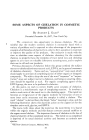
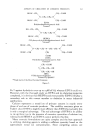
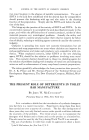
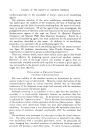
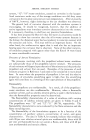
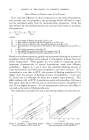
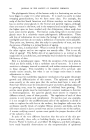
280 JOURNAL OF THE SOCIETY OF COSMETIC CHEMISTS As discussed previously, "12"/water emulsions of satisfactory stability were not obtained. As shown by the data in Table 4, the effect of the odorless mineral spirits is to increase the emulsion stability considerably. A comparison of the stability of the odorless mineral spirits/water emul- sions before and after the addition of "12" is also shown in order to indicate the effect of the "12" upon the emulsion stability. Propellent "12" decreases the emulsion stability but in most cases the stability is still sufficient for practical purposes. Odorless mineral spirits is one of the best solvents for obtaining non- foaming sprays. For certain applications, other solvents such as cotton- seed oil may be more desirable. These solvents form fairly good emulsions but in some cases there appears to be a tendency to promote slight bubbling or foaming. Propellent "Z2"/"ZZ¾"/Odorless Mineral Spirits/1/Fater Emulsions Pressures of 25 psig. or less at 70øF., are generally considered desirable for aerosols to be packaged in glass. In "12"/odorless mineral spirits/ water systems pressures below 25 psig. may be achieved by the proper ratio of propellent to solvent. As discussed later, however, the extent to which this can be done is limited by flammability considerations. In order to obtain pressures below 25 psig. it may be necessary to have such a low propellent/solvent ratio that the product is flammable. It is also found that emulsions with sufficiently low "IT'/odorless mineral spirits ratios to satisfy the pressure requirements generally give excessively wet sprays. The above difficulties may be eliminated by formulating with "IT'/ "114" solutions as the propellent. Emulsion systems producing sprays ranging from very wet to fine may be obtained by varying the ratio of "iT' to "114." The propellent solutions with a low concentration of "12," TABLE 5--PROPELLENTS "12"/"114"/OooRLESS MINERAL SPIRITs/WATER EMULSION Propellen ts Propellen ts "12"/"114" Spray "12"/" 114" Spray Ratio, Separation Charac- Ratio, Separation Charac- Wt. % Times teristics Wt. % Times teristics Propellent/Solvent/Water Ratio 60/20/20 0/100 1-5 min. Soft-- medium wet 15/85 1-5 min. Soft-- medium wet 40/60 1-5 min. Medium 57/43 1-5 min. Medium fine 100/0 1-5 min. Fine Propellent/Solvent/Water Ratio•'tO/20/40 0/100 15-30 min. Very wet 15/85 15-30 min. Medium wet 40/60 15-30 min. Medium 57/43 l hr. Medit, m 100/0 1 hr. Medium fine 2 parts Eracol 14/102 parts finished emulsion

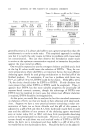
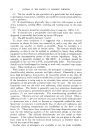
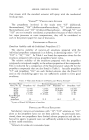
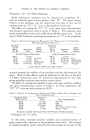
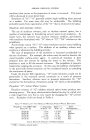
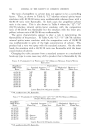
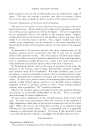
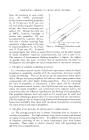
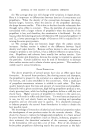
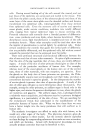
AEROSOL EMULSION SYSTEMS 28l that would be satisfactory for glass bottle aerosols, give very soft sprays. The effect of varying the "12"/"114" ratio upon emulsion stability and spray characteristics is indicated by the data in Table 5. Data were obtained for propellent/solvent/water ratios of 60/20/20 and 40/20/40. Propellent "12"/ Propellent "11"/ Solvent/ l/Fater Emulsions The "12"/"11"/odorless mineral spirits/water combinations provide non-foaming sprays with relatively good emulsion stability. As in the previous case with the "12"/"11"/water emulsions, the spray character- istics of the present type may be varied considerably by varying the ratio of "12" to "11." Spray characteristics and separation times of a series of this type are given in Table 6. At a given "12"/"11" ratio, the spray characteristics of the emulsion may be varied by varying the concentration of the propellent. This appears to have a greater effect than keeping the concentration of the propellent constant and varying the solvent/water ratio. Data for a series of "12"/ "11" (30/70)/odorless minerals spirits/emulsions are given in Table 7. TABLE 6--PROPELLENTS "12"/"11"/ODoR- LESS MINERAL SPIRITs/WATER EMULSION TABLE 7--PROPELLENTS "12"/"11" (30/70)/ ODORLESS MINERAL SPIRITS/WATER EMUL- SIONS 2 parts Emcol 14/102 parts finished emulsion Propellents "12"/"11" Separation Spray Propellent/ Ratio, Times, Charac- Solvent/ Separation Spray Wt. % Min. teristics Water Time, Charac- Ratio Min. teristics Propellent/ Solvent/ lt/ater Ratio--60/20/20 100/0 1-5 Fine 60/10/30 30-60 Medium wet 70/30 30-60 Medium fine 60/15/25 30-60 Medium wet 50/50 30-60 Medium 60/20/20 30-60 Medium wet 30/70 30-60 Wet 40/20/40 30-60 Partial 0/100 ... Stream stream 20/20/60 Stream 60/30/10 36-•0 Medium wet 40/30/30 30-60 Stream 50/40/10 30-60 Stream 2 parts Emcol 14/102 parts finished emulsion Effect of Ethyl .4/cohol upon Emulsion Stability The water-in-oil emulsion systems can tolerate a fairly high concentra- tion of alcohol in the aqueous phase without an appreciable effect upon emulsion creaming time. The effect of the alcohol was determined with "12"/"11" (30/70)/odorless mineral spirits/water systems emulsified with Eracol 14. Concentrations of ethyl alcohol in the aqueous phase up to 30 per cent had no effect upon emulsion stability. Higher concentrations, however, caused a definite decrease in emulsion stability. Effect of Sodium Chloride upon Emulsion Stability The effect of sodium chloride in the aqueous phase at concentrations of
Purchased for the exclusive use of nofirst nolast (unknown)
From: SCC Media Library & Resource Center (library.scconline.org)