DETERGENTS IN TOILET BAR MANUFACTURE 273 which may have great future use. These are the soaps of modified fatty acids. For example, alphahydroxy stearic acid made by hydroxylation of the chloro derivative may have interesting possibilities (5). Also in- cluded here are the alpha-sulfonated acids which have been neutralized by organic bases to various mixtures (6, 7). These are very interesting because of their similarity to soap and their wide range of solubility and plasticity obtainable by choice of chain length and method of neutralization. Possi- bilities exist here for an all detergent bar having homogeneous characteris- tics of formulation. Some concern may be felt for the recommended type of salts used, since ammonia derived products are generally skin irritants (1). Of equal interest is the fatty acid soap where a CH2 group has been replaced by an NH group, as exemplified by a primary fatty amine con- densation with a lactone (8). This type of product is commercially avail- able, but at a cost price of about 50 cents per pound which makes it un- attractive for a large scale use. It also suffers from color and odor character- istics which are removable with diflqculty at the present time. The advantage of the product lies in the fact that the precipitated lime soaps are of a crystalline nature and meet point (4) above. It foams extremely well at pH values of 6 to 8.0 and it has trace germicidal powers due to slight amphoteric properties. In summary therefore we may say that toilet type synthetic detergent bars have reached a plateau where they are being accepted in limited amounts in the retail field at prices equivalent to that of a specialty bar. Price, within reasonable limits, is not as great a factor as quality. New materials are available which may be of great use to formulatots in the future and may provide a means of capturing a good segment of this specialty soap field. REFERENCES (1) Van Scott, Eugene J., and Lyon, J. B., •t. Invest. Dermatol., 21, 199-203 (1953). (2) Barail, Louis C., Soap Chem. Specialties, 30, 51-53, 109 (1954). (3) Becher, Paul, U.S. Patent No. 2,774,735. (4) Faier, Robert G., U.S. Patent No. 2,749,315. (5) Swern, Daniel, Ault, Waldo C., and McCutcheon, John W., "A Survey on Research Possi- bilities or Animal Fats," U.S. D. A., A1C-346, 47-50, Jan. (1953). (6) Well, J. K., Bristline, Jr., R. G., and Stirton, A. J., 7. Atrn. Oil Chemists' Soc., 32, 370-372 (1955). (7) Well, J. K., Stirton, A. J, Maurer, E. W., and Palm, W. E., Soap Chem. Specialties, 33, No. 12, 49-52, 143, 145 (1957). (8) Isbell, Arthur F., U.S. Patent No. 2,468,012.

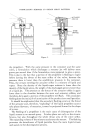
AEROSOL EMULSION SYSTEMS By P. A. SANDERS* Presented December 20, 1957, New York City THE FIRST AEROSOL products and the majority of the aerosol products today were formulated as homogeneous systems in which all of the components of the formulation were mutually soluble. In these products the pressure supplied by the propellent forces the solution of active ingredients, solvents and propellent up the standpipe and through the valve. As the solution leaves the valve the liquefied propellent changes into a gas and blasts the solution of active ingredients into fine particles. There are, however, many materials that would be desirable to spray as aerosols that are soluble in water and have only limited solubility in organic solvents. Water is incompatible with the fluorinated hydrocarbon propellents and the formulation of aqueous-based aerosols giving satis- factory sprays has presented many difficulties. As discussed by Callans (1), the successful formulation of aqueous-based aerosols in the future should lead to a much wider variety of products than are now possil•le with the homogeneous systems alone and should result in a consideraisle expansion of the aerosol market. It is the purpose of this paper to present the various aerosol systems that have been proposed in the attempts to spray aqueous-based products with particular emphasis upon the water-in-oil emulsion systems. THREE-PHASE SYSTEMS One of the first successful methods for spraying aqueous systems resulted from the development of the "three-phase" system by Eaton (2) and Mina (3). In this system, the aqueous solution is layered over the denser fluorinated hydrocarbon propellent, which provides the pressure necessary to force the aqueous phase through the standpipe. The latter extends only into the aqueous phase. Since there is essentially no propellent dissolved in the aqueous phase as it passes through the valve, atomization is obtained by the mechanical shearing action of a special valve rather than by flashing of dissolved propellent. At the present time, such valves produce relatively coarse sprays with these systems. * E. I. du Pont de Nemours and Co., Inc., Freon Products Laboratory, Wilmington, Del. 274
Purchased for the exclusive use of nofirst nolast (unknown)
From: SCC Media Library & Resource Center (library.scconline.org)