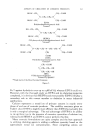
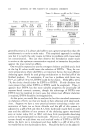
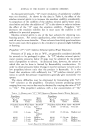
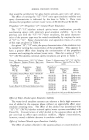
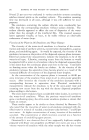
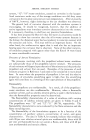
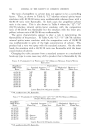
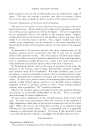
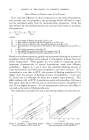
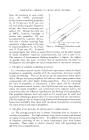
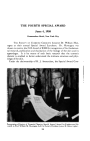
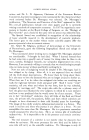
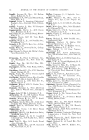
262 JOURNAL OF THE SOCIETY OF COSMETIC CHEMISTS +2 OC--CH• /0 ..... -• NH• NH•CH•CO0- --•- '-- / uu .,/ No,• E DTA Figure 1. The commercially available aminocarboxylic acids aside from EDTA that are currently offered for cosmetic uses are N-hydroxyethylethylene- diaminetriacetic acid, HEDTA diethylenetriaminepentaacetic acid, DTPA and N-dihydroxyethylglycine, DHG. Figure 2 shows the struc- tural configuration of each of these acids. The common symbols for the acid form of each and the commercial name of these products offered by The Dow Chemical Company are given beneath each structural formula. HEDTA was introduced a few years ago, but DTPA is a very recent development. DHG has been around for quite some time and its main feature is specificity to ferric ion. It becomes a problem to most chemists deciding which of the chelating agents is best suited for his particular need. This is where formation constants have some practical value. Formation constants are expressed as log K values (logarithmic values) that define the ratio of the metal ion as a metal chelate to the metal ion in the free ionized state. When the log K value is very large then the metal ion concentration will be extremely lOW. Let us consider ferric Fe +•, cupric Cu +2, and calcium Ca +2 ions to illustrate the significance of formation or stability constants. Table 1 gives the values for each of the chelating agents shown on Fig. 2. The log K values show DTPA is the strongest chelator of ferric, cupric and calcium ions. The greater this value the more preferential is the complexing action, so it means that trivalent metal ions are complexed first followed by divalent metal ions. However, chelation is pH dependent, so the efficiency of these agents for ferric and calcium ions is given special treatment. The Fe+•-EDTA chelate is more susceptible to hydrolysis in the presence of OH ion or alkalinity than either HEDTA or DTPA, thus, above a pH of 7.0 the best choice for complexing Fe +• would be DTPA, and from 7.0 to 2.0, either EDTA or DTPA. The only reason the hydroxyethyl derivative of EDTA came into prominence was the fact that it had the ability to hold

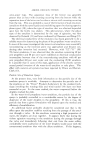
ASPECTS O1,' CHELATION IN COSMETIC PRODUCTS 263 HOOC--CH= CH2--COOH N--CH=--CH=--N HOOC--CH= CH=--COOH EDTA Ethylenediaminetetraacetic Acid Versene © HO--CH= CH= CH=--COOH N--CH.•--CH=--N HOOC--CH., CH=--COOH HEDTA N-Hydroxycthylethylenediaminetriacetic Acid Versenol© HOOC--CH= CH=--COOH N--CH=--CH=--N--CH=--CH=--N HOOC--CH2 CH= CH=--COOH I COOH DTPA Diethylenetriaminepentaacetic Acid Versenex © CH=--COOH N--CH2--CH=--OH % CH=--CH=--OH DHG N-Dihydroxyethylglycine Versene Fea Specific © ©Trade mark of the Dow Chemical Company. Figure 2. Fe +• against hydrolysis even up to a pH of 9.0, whereas EDTA could not. However, with the thorough study on DTPA and its chelating properties completed, it is obvious that HEDTA and even possibly EDTA will play a secondary role to this newest member to chelation in many industrial applications. Calcium represents a metal ion of primary concern in nearly every phase of end use of cosmetic products. The stability constants given on Table 1 show DTPA is slightly more efficient than EDTA but actually this is only a marginal advantage. The real advantage of DTPA is its ability to tie up ferric ion in the presence of excessive quantities of calcium ion, whereas both HE DTA and EDTA cannot perform this feat. Many cosmetic formulations are quite complex and the best approach to utilizing chelating agents is adding a sufficient quantity based on the approximate metal ion contamination. Since competing anions are
Purchased for the exclusive use of nofirst nolast (unknown)
From: SCC Media Library & Resource Center (library.scconline.org)