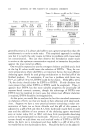
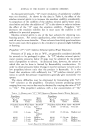
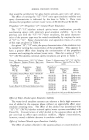
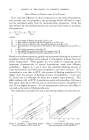
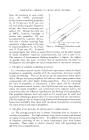
AEROSOL EMULSION SYSTEMS 28l that would be satisfactory for glass bottle aerosols, give very soft sprays. The effect of varying the "12"/"114" ratio upon emulsion stability and spray characteristics is indicated by the data in Table 5. Data were obtained for propellent/solvent/water ratios of 60/20/20 and 40/20/40. Propellent "12"/ Propellent "11"/ Solvent/ l/Fater Emulsions The "12"/"11"/odorless mineral spirits/water combinations provide non-foaming sprays with relatively good emulsion stability. As in the previous case with the "12"/"11"/water emulsions, the spray character- istics of the present type may be varied considerably by varying the ratio of "12" to "11." Spray characteristics and separation times of a series of this type are given in Table 6. At a given "12"/"11" ratio, the spray characteristics of the emulsion may be varied by varying the concentration of the propellent. This appears to have a greater effect than keeping the concentration of the propellent constant and varying the solvent/water ratio. Data for a series of "12"/ "11" (30/70)/odorless minerals spirits/emulsions are given in Table 7. TABLE 6--PROPELLENTS "12"/"11"/ODoR- LESS MINERAL SPIRITs/WATER EMULSION TABLE 7--PROPELLENTS "12"/"11" (30/70)/ ODORLESS MINERAL SPIRITS/WATER EMUL- SIONS 2 parts Emcol 14/102 parts finished emulsion Propellents "12"/"11" Separation Spray Propellent/ Ratio, Times, Charac- Solvent/ Separation Spray Wt. % Min. teristics Water Time, Charac- Ratio Min. teristics Propellent/ Solvent/ lt/ater Ratio--60/20/20 100/0 1-5 Fine 60/10/30 30-60 Medium wet 70/30 30-60 Medium fine 60/15/25 30-60 Medium wet 50/50 30-60 Medium 60/20/20 30-60 Medium wet 30/70 30-60 Wet 40/20/40 30-60 Partial 0/100 ... Stream stream 20/20/60 Stream 60/30/10 36-•0 Medium wet 40/30/30 30-60 Stream 50/40/10 30-60 Stream 2 parts Emcol 14/102 parts finished emulsion Effect of Ethyl .4/cohol upon Emulsion Stability The water-in-oil emulsion systems can tolerate a fairly high concentra- tion of alcohol in the aqueous phase without an appreciable effect upon emulsion creaming time. The effect of the alcohol was determined with "12"/"11" (30/70)/odorless mineral spirits/water systems emulsified with Eracol 14. Concentrations of ethyl alcohol in the aqueous phase up to 30 per cent had no effect upon emulsion stability. Higher concentrations, however, caused a definite decrease in emulsion stability. Effect of Sodium Chloride upon Emulsion Stability The effect of sodium chloride in the aqueous phase at concentrations of

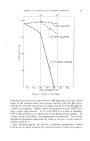
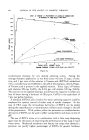
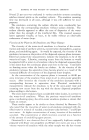
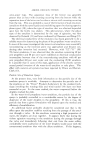
282 JOURNAL OF THE SOCIETY OF COSMETIC CHEMISTS 10 and 25 per cent was evaluated in various emulsion systems containing odorless mineral spirits as the auxiliary solvent. The emulsion creaming time was decreased in all cases, although it was still sufficient for most purposes. The emulsions containing the sodium chloride were considerably less milky than the corresponding emulsions without sodium chloride. The sodium chloride appeared to affect the ease of dispersion of the water rather than the strength of the interfacial film. The creamed aqueous layers appeared visually, at least, to be stable without an observable coalescence of water drops. I/iscosity of the lf ater-in-Oil Emulsions and Phase Changes The viscosity of the water-in-oil emulsions is a function of the concen- tration and type of auxiliary solvents, concentration of propellents, aqueous phase, and emulsifying agent. As would be expected, the viscosity of the emulsions increases as the portion of the dispersed aqueous phase increases. Electrical conductivity measurements indicate the emulsions to be of the water-in-oil type. Likewise, creaming occurs from the bottom as would be expected with a water-in-oil emulsion where the dispersed aqueous phase is less dense than the continuous phase and rises to the top. Essentially no foaming occurs when the bottles are shaken. As the viscosity of the emulsions increases the separation times become greater as a result of the increased difficulty of movement of the dispersed water droplets. As the concentration of the aqueous phase is increased to 60-80 per cent, inversion of the emulsion from water-in-oil to oil-in-water generally occurs. After inversion the viscosity of the emulsions decreases with a corresponding decrease in separation time. Electrical conductivity measurements indicate the emulsions to be of the oil-in-water type and creaming now occurs from the top with the denser dispersed propellent phase settling to the bottom. The oil-in-water emulsions foam considerably when shaken, in contrast to the water-in-oil emulsions. Where the previous water-in-oil emulsions gave a nonfoaming spray, the oil-in-water emulsions produce a stream that foams on contact. These results appear to be similar to those obtained by Sherman (9), who noted that the viscosities of water-in-oil emulsions prepared with dis- tilled water in mineral oil reached a maximum value between 77 and 82 per cent water. At higher concentrations of water, inversion of the emulsion occurred. The concentration at which inversion occurred was a function of the amount of emulsifying agent present. Occasionally it was observed that of two supposedly duplicate samples prepared with 20 per cent propellent and 80 per cent water, one was a very viscous water-in-oil emulsion while the other sample was the less viscous
Purchased for the exclusive use of nofirst nolast (unknown)
From: SCC Media Library & Resource Center (library.scconline.org)