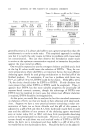
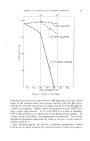
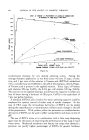
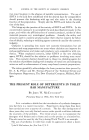
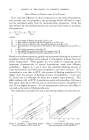
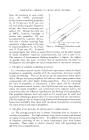
268 JOURNAL OF THE SOCIETY OF COSMETIC CHEMISTS • /go • loo 6o 4o oeo o Figure 3a. syndet-based shampoo for any desired softening action. Taking the average shampoo application as one fluid ounce we have 35.4 gm. of solu- tion, and 1 per cent of this solution is Versene acid (EDTAA) solubilized with a suitable base and buffered to the pH of the shampoo, then 0.354 gm. of Versene acid is present in the applied solution. Since 1 gm. of Versene acid chelates 339 mg. CaCOa, the 0.354 gm. will chelate 120 mg. CaCO•. This amount in the applied shampoo would have the capacity to soften one liter of water having a hardness of 120 p.p.m. CaCOa or the equivalent of 7 gin. per gallon hardness A standard EDTA-CaC12 titration for water softening capacity could be employed for quality control of either soap of syndet shampoo. In the case of TEA soaps the tetrasodium derivative of EDTA can be added during the saponification or neutralization without much change in the pH of the preparation. With syndets, either the potassium or triethanolamine derivative of EDTA can be used to affect compatibility and close control of pH. The use of EDTA alone or in combination with a lime soap dispersing agent may be the means of improving the performance of bar soap in hard water areas. Medicated deodorant and beauty bar soaps that demand a premium can justify higher percentages of EDTA for greater hardness

ASPECTS OF CHELATION IN COSMETIC PRODUCTS 269 immunity, antioxidant property, preventing discoloration and skin irrita- tion due to presence of heavy metal ions. Even synthetic-based hard soaps designed for hard water areas still lack the cleaning action desired. EDTA is the answer, but for the present, economics limit its use in this area though soap plus EDTA should become greater competition to the syn- thetic bar. Where bacteriostats are employed in soap products, discoloration, deactivation and skin irritation may be problems created by reaction with heavy metal ions. Some bacteriostats are reactive with ferric ion and become primary irritants so that chelation is a safeguard measure. To create a white soap or pastel shades requires proper choice of fatty acids, whitener or colorant, perfume and bacteriostats plus chelation for shelf-life stability. Again, the only function performed by the presence of EDTA or DTPA is as a protective measure to set up competition for the trace metal ions and lower their ionic activity to such low values that catalytic or color reactions to develop will require a time lapse of thirty days, ninety days or may never occur. Another aspect of chelation important to recognize with soap or the use of bacteriostats is the prevention and dissolving of calcium soaps. Calcium soaps are insoluble in water but dissolve in the oily secretions of the sebace- ous glands. EDTA, by dissolving calcium soaps, helps cleanse the skin and prevents the entrance of bacteria into the skin and also exposes the bacteria to the destructive action of sodium soap. The cleaner the surface of the skin the more effective exposure to the action of the bacteriostat. The use with hair dyes is similar to the established practice throughout the textile dyeing industry. The presence of EDTA will help level the dye and dye take-up. Its prime function is to cleanse the hair surface of impeding metal ions. Aromatic diamines and aminophenols require the addition of a reducing agent to act as a stabilizer and prevent oxidation during storage. EDTA will definitely promote greater stability of the reducing potential of the dye system since trace metal ions such as ferrous and cupric ions catalyze the reaction of the reducing agent with atmos- pheric oxygen. Any oxidation treatments involving bromates or peroxides are stabilized to a marked degree by either EDTA or DTPA. The chelating agent acts also as a protective agent against hair damage since mordanted metal ions act to localize and catalyze the oxidative action of the bleaching agent. A glance at the log K values for DTPA'versus EDTA with iron and copper ions plus the fact that DTPA is more stable to peroxide than EDTA desig- nates the use of DTPA as the stabilizer for any oxidative treatment of hair. Where stearic acid is the basic ingredient of formulations, such as vanish- ing creams and brushless shaving creams, it has been reported that these creams made with certain alkalis tend to darken with age and strict atten-
Purchased for the exclusive use of nofirst nolast (unknown)
From: SCC Media Library & Resource Center (library.scconline.org)