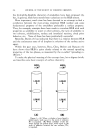
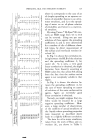
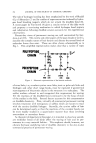
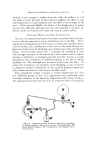
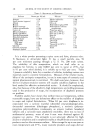
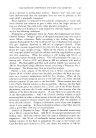
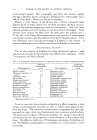
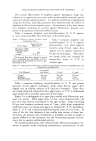
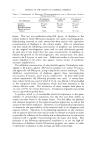
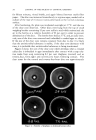
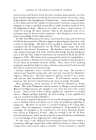
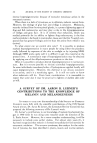
326 JOURNAL OF THE SOCIETY OF COSMETIC CHEMISTS the hydrophile-lipophile character of emulsifiers have been proposed (4), but, in general, these have merely been variations on the HLB system. More important, much time has been devoted to an attempt to find a correlation between the more-or-less empirical HLB number and some fundamental property of the emulsifiers preferably a surface property. Thus, for example, attempts have been made to correlate HLB with such properties as solubility in water or other solvents, the ratio of solubility in two solvents, solubilization, surface and interfacial tensions, cloud point behavior, etc. None of these has been particularly successful. Recently, Davies (5) has indicated that there is a relation between HLB and the coalescence rates of oil droplets in solutions of the surface active agent. Within the past year, however, Ross, Chen, Becher and Ranauto (6) have shown that HLB is quite closely related to the mutual spreading properties of the two phases, as measured by the so-called "spreading co- efficient." To make the physical meaning of this concept clear, let us digress briefly and describe some basic concepts of surface chemistry. AREA AREA I CM* I LIQUID A LIQUID A LIQUID A LIQUID B (A) Figure 1.--(A) When a cylinder of pure liquid is pulled apart, work equal to the work of cohesion /fc is required. (B) When cylinders of two dif- ferent liquids are pulled apart, work equal to the work of adhesion between the two surfaces, W,•, is required.

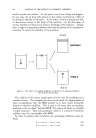
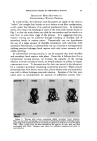
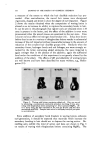
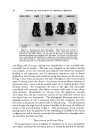
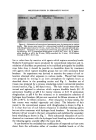
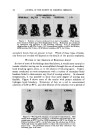
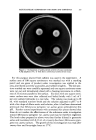
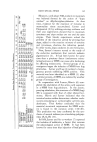
SPREADING, HLB, AND EMULSION STABILITY 327 If one places a drop of liquid on a surface (and the surface may be either a solid or another liquid) one of two things will happen. Either the drop will take up a more or less hemispherical shape on the surface, or it will spread to cover the surface. The question of which one of these events will occur is a function of the surface and interfacial tensions, and the exact relation is quite readily found. Let us imagine a cylinder of liquid, which for convenience we will assume to be one square centimeter in cross section (Fig. 1 A). Imagine that we may in some way pull it apart at the plane marked s. (Harkins has pointed out that this is exactly the problem of determining the tensile strength of the column of liquid. Unfortunately, there is no convenient way to clamp the liquid into a tensile strength tester.) When we pull apart the column, an additional 2 sq. cm. of surface has been created. From the definition of surface tension, the work (really a free energy) involved is given by /4/e = 25' (1) where///c is called the work of cohesion. Now let us perform a second intellectual experiment. Imagine now a second such column, but this time made up of two different liquids, with an interface at the plane s (Fig. 1 B). If we now pull this column apart at s, we create one square centimeter of surface of each of the liquids, but we lose one square centimeter of interface. Hence the work involved is •f• = w + w - 5'• (2) where 74 and y• are the surface tensions of the liquids, X•B is the inter- facial tension and///4 is known as the work of adhesion. Now, in order for one liquid to spread on another, it is merely necessary that the work of adhesion between the two liquids be greater than the work of cohesion of the liquid to itself. This may be put another way by de- fining a quantity called the spreading coe•cient, defined as 8 =/vA - we (3) Clearly, for spreading to take place, S must be positive. By combining equations. 1, 2 and 3, we can define S in terms of meas- urable quantities (in liquid systems) 8 = vB- va - 5',t• (4) where equation 4 defines the spreading coefficient for the case of liquid •/ spreading on liquid B. Now let us consider the application of this to the problem of the stability of emulsions. Consider the fate of an oil droplet, for example, in an oil- in-water emulsion. Imagine that, as in Fig. 2, this droplet rises through the emulsion (whether through creaming or as the result of random motion)
Purchased for the exclusive use of nofirst nolast (unknown)
From: SCC Media Library & Resource Center (library.scconline.org)