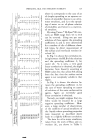
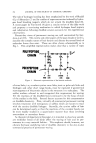
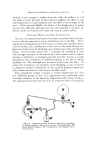
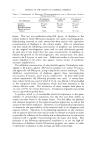
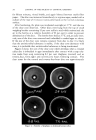
A NEW ANTISEPTIC BROMINATED SALICYLANILIDE COMPOSITION FOR SOAPS AND COSMETICS By HERBERT C. STECKER, PH.D.* and RICHARD E. FAUST, PH.D.t Presented May 12, 1960, New York City SALICYLANILIDE, a compound which is official in the National Formu- lary, has long been used as a lungicicle in textiles, and as an antifungal in the treatment of various skin infections (1). Schwartz and associates reported salicylanilide a most effective agent in the treatment of epidemic ringworm of the scalp caused by Microsporum audouini (2). Various polyhalogenated salicylanilides have recently been found to be more effective antifungals and to possess antibacterial activity as well (3, 4). The well-known Zinchlorundesal N.N.R. contains 5-chlorosalicyl- anilide, 5,3'-dichlorosalicylanilide and 5,4'-dichlorosalicylanilide among other active agents. The substitution of halogen groups confers anti- bacterial activity upon the parent molecule which unsubstituted exhibits very little antibacterial action. Taborksy, et al., recently reported that the salicylanilides of 3-nitro and 5-nitrosalicylic acid, halogenated by one, two or three halogens of various kinds in the aniline nuclei, possess a high degree of bacteriostatic and fungistatic activity (5). A recent patent describes 3,5,3',4'-tetrachlorosalicylanilide, a new substituted salicylanilide which has been recommended for soaps and cosmetics (6). PHYSICAL AND CHEMICAL PROPERTIES The halogenated salicylanilide composition we wish to describe consists of a patented synergistic mixture• of 5,4•-dibromosalicylanilide and 3,5,4 •- tribromosalicylanilide having the following structural formulas (4): OH OH I OH I OH Br Br 5,4'-dibromosalicy!anilide 3,5,4'-tribromosalicylanilide * Stecker Chemicals, Inc., Ridgewood, N.J. • Cuticura Laboratories, Malden, Mass. $ Available commercially as ASC-4.© 347

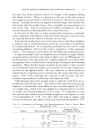
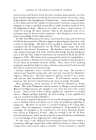
348 JOURNAL OF THE SOCIETY OF COSMETIC CHEMISTS TABLE 1--SoLuBILITY OF DIAPHENE Solvent Grams per 100 ml. Solvent Grams per 100 ml. Acetone 0.58 Methyl cellosolve 1.88 Amyl acetate (approx.) 1.0 Oleic acid 0.07 Arlacel 0.1 Olive oil 0.15 Benzol 0.03 Polyethylene glycol 400 3.0 Benzyl benzoate 0.3 Polyethylene sorbitan Carbon tetrachloride 0. 006 monolaurate 2.0 Castor oil 0.315 Propylene glycol 0.08 Dibutyl phthalate 0.4 Span 40 (at 80øC.) 3.0 Diethyl phthalate 0.5 Span 60 (at 80øC.) 3.0 Dimethylformamide 23.0 Span 80 0.1 Dimethyl phthalate 0.6 Toluol 0.03 Distilled water 0. 0015 Triethanolamine 6.0 Ethyl alcohol Tween 20 0.1 95% appr. 0.25 Tween 40 0.1 70% appr. 0.03 Tween 60 (at 80øC.) 6.7 Glycerol 0. 008 Tween 80 0.06 Glycerol triacetate 0.2 Xylol 0.03 Isopropyl alcohol O. 25 It is a white powder possessing a spicy taste and faint, pleasant odor. It fluoresces in ultraviolet light. It has a small particle size, 99 per cent minimum passing through a U.S. No. 200 mesh screen. The solubility of this composition, which we shall refer to as diaphene for brevity, is only 0.0015 per cent in water at 25øC., but in 95 per cent ethyl alcohol, it is soluble up to 0.25 per cent. Table 1 presents solubility data for a number of vehicles, including various raw materials used in cosmetic formulations. Because of the relative insolu- bility of the antiseptic composition, its use in some types of cosmetics and topical pharmaceuticals is restricted. We shall note later, however, that the hot oil phase emulsion systems will usually solubilize diaphene to the level needed for effective antimicrobial action. It should be emphasized, also, that because of the alkalinity, high temperatures and milling processes used in the production of soaps, the incorporation of diaphene presents no problem. Stability studies have shown that neither time nor temperature, within reasonable ranges, have any deleterious effect on the stability of diaphene in soaps and topical formulations. When 0.5 per cent diaphene is in- corporated into a cationic material (dimethyl stearamidopropyl-2-hy- droxyethyl ammonium dihydrogen phosphate), a nonionic (polyoxy- propylene polyoxyethylene condensate), an anionic (sodium hexadecyl sulfate) and a sarcosine type ampholytic emulsifier, there was no loss of antibacterial potency zones of over 6 mm. were obtained against M. pyogenes var. aureus. The antiseptic is not adversely affected by high acidity or alkalinity and is completely stable at the pH levels encountered in products used on the cutaneous surface. After storage for up to one year at room temperature and 37øC., many cosmetic products and soaps did not
Purchased for the exclusive use of nofirst nolast (unknown)
From: SCC Media Library & Resource Center (library.scconline.org)