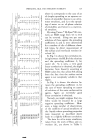
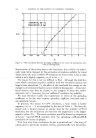
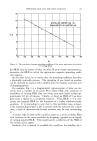
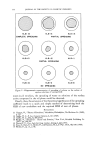
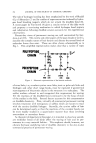
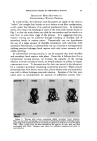
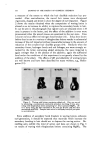
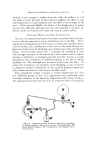
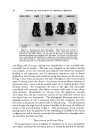
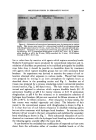
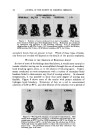
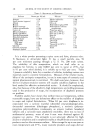
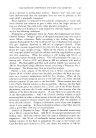
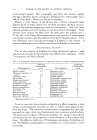
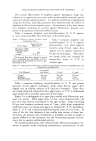
MAINTENANCE OF SKIN IN VITRO AS AN ORGAN SYSTEM 345 weeks in culture a considerable growth of embryonic fibroblasts and epi- thelial cells was observed on the floor of the flasks. The abundance of mitotic figures indicated that these cells were in a state of active pro- liferation. The grafts, however, had a waxy appearance, were markedly translucent in areas, and were extremely friable. This was due to the partial separation of the dermal and epidermal layers, which was visible grossly and confirmed upon histologic examination. The failure of the majority of the grafts to "take" when transplanted to the donors seemed to be due to differentiation and not to inadequate nutrition. In the series of experiments which followed cortisone was incorporated in the cultures in the manner described and the differentiation of the fibroblasts was notably suppressed. Eight of the ten auricular grafts cultured by this method for three weeks were successfully grafted. Eight grafts were maintained for one month and two of these survived. Ten grafts of human skin were similarly treated for periods up to two weeks. All of these grafts were observed to be viable upon homotrans- plantation. They remained intact, became vascularized and were in good condition until the typical homograft rejection phenomenon occurred. D•set•ssxo• It is apparent from the results that although intact skin has been main- tained in tissue culture for several weeks, further refinements are indi- cated. If this system is to be applicable to many problems involving skin, e.g., homograft rejection, the period of time that the skin may be main- tained in culture must be extended. The addition of steroid compounds more active than cortisone may increase this period by more effectively suppressing dedifferentiation. Furthermore, corticosteroids primarily affect only the connective tissue elements, other compounds may be found which inhibit the aledifferentiation of the epithelium and if used in con- iunction with cortical steroids they may greatly increase the period of successful maintenance in vitro. Other purely mechanical problems remain to be solved. For example, at present, studies on human skin are limited to split-thickness grafts. A major factor preventing the maintenance of thicker skin in vitro is the shrinking, and curling which occurs when the skin is released from the tension it is normally under in the body. Possibly a device could be made which would hold the skin under variable tension in culture so that the nutrients would diffuse uniformly throughout the tissue. The advantages of using this technique, however, in physiologic research on the skin are numerous. The intact skin is isolated in tissue culture from the humoral mechanisms which regulate its metabolism. It is there- fore possible to study the direct effects of agents upon the chemical and cytological metabolism of the skin. The possible intervention of con-

346 JOURNAL OF THE SOCIETY OF COSMETIC CHEMISTS current metabolic changes occurring in risc is precluded. Furthermore, experiments performed on skin maintained in culture may be more care- fully regulated and controlled than is sometimes possible in vivo. Another important advantage of this organ system is derived from the "flotation" technique. Since skin remains on the surface of the fluid culture medium the effects of topically applied agents may be studied. The subsequent grafting of skin maintained in vitro serves two purposes. Alterations occurring in the metabolism of the skin in culture are observ- ably translated into altered function of the graft. Secondly, the ultimate criterion for the survival of an organ in tissue culture is the maintenance of its functional integrity. This criterion is well satisfied if the skin is suc- cessfully grafted to the original donor after maintenance in vitro. SUMMARY A method for the maintenance of adult skin in tissue culture has been devised. Skin from mice and from humans remained viable and intact in an organ system for as long as four weeks. Adequate nutrition of the intact skin was provided by a "flotation" technique and through the use of a complex protein medium. The structural integrity of the skin was retained by adding cortisone to the culture flasks so that the process of cellular dedifferentiation was inhibited. Further studies are in progress to evaluate the effects of halogenated steroids and related compounds on the process of differentiation in vitro. A reliable criterion for the maintenance of skin in vilro as a functioning organ is the subsequent successful grafting of the skin to the original donor. Definite limitations exist in both the organ culture system and its appli- cations. However, this technique permits the study and treatment of intact skin in tissue culture for several weeks. An important advantage of the "flotation" technique is that the effects of topically applied agents may be studied. REFERENCES (1) Conway, H., Stark, R. B., Lazzarini, A. A., and Sedar, J., Plastic and Reconstr. Surg., 15, 430 (1955). (2) Conway, H., Stark, R. B., Sedar, J., and Lazzarini, A. A., Surg. Forum, 6, 568 (1956). (3) Gaillard, P. J., "Preservation and Transplantation of Normal Tissues," CIBA Founda- tion Symposium, Boston, Little, Brown and Company (1954), p. 100. (4) Paul, John, "Cell and Tissue Culture," Edinburgh and London, I.ivingston Ltd. (1959), p. 164. (5) Gillette, R., and Findley, A., Transpl. Bull., 5, 124 (1958). (6) Edgerton, M. T., John Hopkins University: Personal Communication. (7) Cornman, J., Proc. Soc. Exptl. Biol. Med., 75, 355 (1950). (8) Gillette, R., Findley, A. and Conway, H., Transpl. Bull., In press. (9) Op. Cit. (10) Conway, H., Griffith, B. H., Shannon, J., and Findley, A., Plastic and Reconstr. Surg., 20, 103 (1957).
Purchased for the exclusive use of nofirst nolast (unknown)
From: SCC Media Library & Resource Center (library.scconline.org)