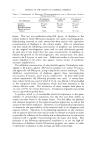
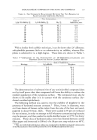
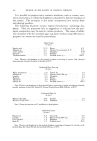
SALICYLANILIDE COMPOSITION FOR SOAPS AND COSMETICS TABLE 6--THE SYNEKGISTIC RELATIONSHIP BETWEEN THE Two BROMINATED SALICYLANILIDES COMPOSING DIAPHENE 355 -Test Composition. Zone of 3,5,4'-Tri-BrSA, % 5,4'-Di-BrSA, % Br, % Inhibition, mm. 0 100 43.1 o. 0 25 75 45.7 3.0 60 40 49.2 5.5 75 25 50.8 6.5 80 20 51.3 6.5 90 10 52.3 6.5 93 7 52.6 6.4 95 5 52.8 6.3 98 2 53.1 6.0 100 0 53.3 5.0 With a similar fresh calfskin technique, it can be shown that 5,4'-dibromo- salicylanilide possesses little or no substantivity on calfskin, whereas Dia- phene is substantive to a high degree. These data are shown in Table 7. TABLE 7--COMPARISON OF THE SUBSTANTIVITY OF 5,4'-DIBKOMOSALICYLANILIDE AND DIAPHENE USING THE FKESH CALFSKIN METHOD , .Zone of Inhibition Rinsings 5,4'-diBrSA Diaphene 1 9.5 14.0 2 3.0 8.0 3 1.0 6.0 4 0.2 5.2 5 0.0 5.0 6 0.0 5.0 7 0.0 5.0 8 0.0 5.0 9 0.0 5.0 10 0.0 5.0 The demonstration of substantivity of any antimicrobial compound does not by itself prove that that compound will have the ability to reduce the resident population of the cutaneous surface. The compound must also be shown to be stable after it is in contact with the cutaneous surface (hy- drated cornified epithelium). The following method was used to test the stability of diaphene•in the presence of hydrated stratum corneum.* Discs, 9 min. in diameter, were cut from sheets of human callus taken from the sole of the foot and sand- papered to about 0.4: min. thick. These were soaked in 95 per cent ethanol for ten minutes, in order to attempt to kill whatever contaminating bacteria may be present, and then soaked in sterile distilled water at 37øC. for thirty minutes. These discs of hydrated callus were then blotted between sterile filter paper and immersed in 100 mi. of a 10 per cent soap solution at 40øC. * This test with hydrated human callus was conducted in the Dermatological Laboratories of the Massachusetts General Hospital by Dr. Irvin H. Blank and Elsie Sylvester.

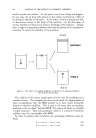
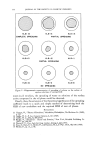
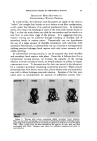
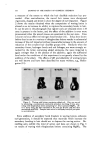
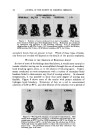
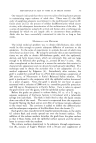
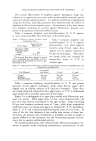
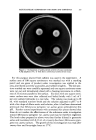
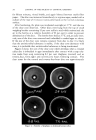
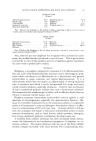
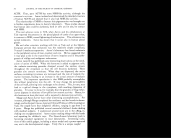
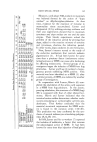
356 JOURNAL OF THE SOCIETY OF C¸SMFTIC CHEMISTS for fifteen minutes, rinsed briefly, and again blotted between sterile filter paper. One disc was immersed immediately in tryptose agar, seeded with a culture of the type of micrococci commonly found on the normal cutaneous surface. After hardening, the plate was incubated overnight at 37øC. and the size of the clear zone observed. Other discs were hung from the top of small weighing bottles containing 13 per cent sulfuric acid which maintained the air in the bottles at a relative humidity of 93 per cent in order to prevent dehydration of the discs. The bottles were held at 37øC. and, at daily inter- vals, one of the discs was removed and imbedded in seeded agar as above. If the size of the clear zone remains constant from disc to disc it is likely that the antimicrobial substance is stable if the clear zone decreases with time, it is probable that antimicrobial substance is being inactivated. Figure 2 shows the size of the clear zone which develops when a treated callus disc is imbedded in agar immediately after contact with a soap solu- tion made from soap containing 0.5 per cent diaphene (control) and at twenty-four, forty-eight and seventy-two hours following contact. The clear zones for the control and twenty-four-hour discs are approximately .,., ß %" ? Oorf'r'o! 'h.%•.. :"7•: . 7. . t -• .'.• :•.., ':?.' ..... ,G Figure 2.--Stability of diaphene on hydrated human callus.
Purchased for the exclusive use of nofirst nolast (unknown)
From: SCC Media Library & Resource Center (library.scconline.org)