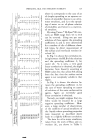
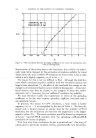
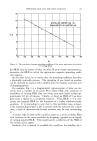
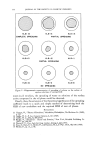
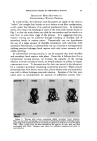
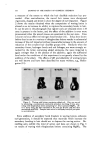
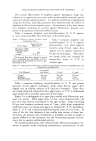
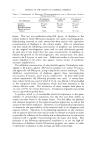
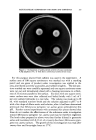
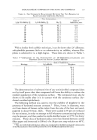
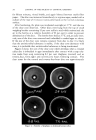
SALICYLANILIDE COMPOSITION FOR SOAPS AND COSMETICS 357 the same size, which indicates little or no change in the diaphene during this period of time. There is a decrease in the size of the clear zone at forty-eight hours, but there is no further decrease tot the seventy-two-hour period. Actually, the clear zone appears somewhat larger after seventy-two hours than after forty-eight hours this is probably an inconsistency in a test of this type. This test indicates the stability of diaphene in the pres- ence of hydrated cornified epithelium for seventy-two hours. A few tests of this type on other antimicrobial substances, commonly used in soap, have indicated less stability for these substances, but more tests are required before any definite statement can be made. From the above laboratory tests, it has been shown that when diaphene is added to soap it is both substantive to the skin and stable in the presence of cornified epithelium. It is, therefore, probable that the use of a soap containing diaphene will lower the resident population of the cutaneous surface. This reduction can be shown by the following handwashing tests. A soap containing 0.3 per cent diaphene was evaluated on eight subjects using the split-use procedure described by Quinn, Voss and Whitehouse (7). In this procedure, the soap under test is applied regularly to one hand while the opposite hand is covered with a neoprene glove during the handwashing operation. When the first hand is washed, the procedure is then reversed by covering this hand with a glove and using the control soap without bac- teriostat on the opposite hand. Per cent reduction in bacterial flora is determined by comparing counts obtained by the usual wash basin tech- niques. After twelve washings over a period of only five days, the anti- bacterial soap produced a median per cent reduction of 80. Table 8 presents data from another study in which the serial basin test as modified by Cade (8) was used. The results of this study demonstrate that diaphene is considerably more effective than hexachlorophene U.S. P. on a weight basis, with 0.5 per cent diaphene in soap equivalent in activity to 2.0 per cent hexachlorophene U.S. P. in soap. It is important to note also that the skin substantivity of diaphene appears to be superior to that of hexachlorophene U. S.P. Two days after returning to regular soap without bacteriostat, the subjects using soap with hexachlorophene U.S. P. TABLE 8 COMPARISON OF DIAPHENE AND HEXACHLOROPHENE USING A SERIAL BASIN HAN•)WASI-•ING TEST Reduction 2 Days Subjects Reduction After 7 Days, % After Regular Soap, % Hexachlorophene Soap •% 2% •% 2% 33 61 0 38 Diaphene Soap 0.5% •.0% 0.5% •.0% 10 76 80 65 71

358 JOURNAL OF THE SOCIETY OF COSMETIC CHEMISTS show a large increase in bacterial flora, while those who used soap with diaphene still have a low flora level. TOXICITY ?lcute Toxicity. Diaphene at a dosage of two grams per kilogram did not cause deaths when force fed to young adult mice as a 5 per cent suspension in corn oil. This is far less toxic than hexachlorophene U.S. P. which has a reported acute oral toxicity for mice of 0.187 gin. per kilogram. ?lnimal Skin Irritation. Young adult Swiss albino mice were topically treated daily for two weeks with a solution of soap containing 5 per cent diaphene. No epidermal damage was noted. The skin showed the same appearance as when treated with soap without the antiseptic. Six rabbits were prepared by shaving their backs. Applications of a 5 per cent soap solution containing 2 per cent diaphene were made daily for three weeks on three animals the other three animals were used for control with a 5 per cent solution containing no antiseptic. Each application was made so as to saturate the exposed area. At the conclusion of the test, there was no evidence of abrasion, lesion or trauma. Three rabbits were treated in one eye with a 5 per cent soap solution con- taining 2 per cent diaphene, and in the other eye with a control soap solu- tion containing no bacteriostat. No rinsing was made of the eyes in either case. In all cases, tests and controls, the eyes reddened for two days and were entirely clear after one week. Repeat Human Patch Tests. Ten human subjects were patch tested with a 5 per cent soap solution containing 2 per cent diaphene based on soap weight. The patch consisting of one-inch 4-ply gauze with a rubber dam backing was secured by tape to the upper arm. The patch, saturated with the test solution, was kept in contact for an overnight period. This pro- cedure was repeated ten times over a period of three weeks. Skin readings were taken the following morning after each patch application. Two weeks following the tenth patch a challenge or final patch was given. It was found that at no time was any skin reaction observed for the soap containing dia- phene outside of a slight erythema which is characteristic of soap and which was also found for the control soap without antiseptic. These results indi- cated that diaphene at a 2 per cent level in soap under the exaggerated testing conditions of the repeat insult human patch test shows no primary irritation and no sensitizing properties. The successful use of a composition consisting of 5,4'-dibromosalicylani- lide and 3,5,4'-tribromosalicylanilide in several leading commercial soaps for up to three years attests to the safety of the material. Also, a number of topical pharmaceuticals have been used for an equal period on over five hundred patients without any reported incidence of primary irritation or sensitization (9).
Purchased for the exclusive use of nofirst nolast (unknown)
From: SCC Media Library & Resource Center (library.scconline.org)