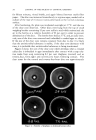
SALICYLANILIDE COMPOSITION FOR SOAPS AND COSMETICS 361 Deodorant Cream (8 mm.) Glyceryl monostearate ............ 10.0 Propylene glycol ............. 12.0 Stearic acid ...................... 4.0 Diaphene ................... 0.1 Cetyl alcohol .................. 2.0 Perfume ................. q.s. Isopropyl myristate ............... 4.0 Purified water q. s ............ 100.0 Potassium hydroxide ............. 1.0 Note: Dissolve the diaphene in the melted oil phase consisting of glyceryl •x ohostearate stearic acid, cetyl alcohol and isopropyl myristate at 80øC. Diaper Cream (6 mm.) Glyceryl monostearate .......... 12.0 Perfume .................... ct. s. Spermaceti .................... 6.0 Diaphene ................... 0.1 Oleyl alcohol ................... 2.0 Purified water q. s ............. 100.0 Glycerol ........................ 12.5 Note: Dissolve the diaphene in the oil phase consisting of glyceryl monostearate, sper- maceti and oleyl alcohol at 80øC. Also, when 0.1 per cent diaphene was levigated with a commercial tooth- paste, the modified product produced a zone of 6 mm. This is particularly noteworthy in view of the excellent activity of diaphene against Lactobacil- lus casei noted in pooled saliva studies. SUMMARY Diaphene, a synergistic composition composed of 5,4'-dibromosalicylani- lide and 3,5,4'-tribromosalicylanilide, possesses many advantageous prop- erties which contribute to its effectiveness as a bacteriostat and general antimicrobial in soaps, cosmetics and topical pharmaceuticals. It is a white powder which does not impart an objectionable or strong medicinal odor to products and which is easily incorporated into soaps and many varied cosmetic products, especially emulsions. Toxicity tests and history of use in commercial products indicate that such a brominated salicylani- lide composition has a high margin of safety, and, at effective levels, does not irritate or sensitize normal human skin. Diaphene possesses outstanding antimicrobial activity against a wide spectrum of micro6rganisms, especially the gram-positive bacteria. Be- cause of its excellent substantivity on the cutaneous surface, it is especially useful as a bacteriostat in soap and detergent formulations where it is effec- tive at a concentration of 0.3 to 0.5 per cent. At levels of 0.01 to 0.2 per cent, the antiseptic will impart a functional antimicrobial action to many cosmetic formulations, such as hand lotions, talcum powders, shampoos, face creams, deodorant products, toothpastes, shaving creams, etc. A modified fresh calfskin technique has been developed which demon- strates the substantivity and antibacterial properties of diaphene on cu- taneous surfaces. The results obtained with the use of the fresh calfskin method compare favorably with those derived from hand-washing tests.

362 JOURNAL OF THE SOCIETY OF COSMETIC CHEMISTS REFERENCES (1) "United States Dispensatory," 25th edition, Philadelphia, J. B. Lippincott Co. (1955), p. 1206. (2) Schwartz, L., Peck, S. M., Botwinick, J., and Frasier, E. S., •. •lm. Med. •lssoc., 132, 59 (1946). (3) Schuler, L., U.S. Patent No. 2,802,029 (1957). (4) Stecker, H., U.S. Patent No. 2,906,711 (1959). (5) Taborsky, R. G., Grant, D. D., and Kye, S., •. •lm. Pharm. •lssoc., Sci. Ed., 48, 503 (1959). (6) Bindler, J., and Model, E., U.S. Patent No. 2,703,332. (7) Quinn, H., Voss, J. G., and Whitehouse, H. S., •lppl. Microbial., 2, 202 (1954). (8) Cade, A. R., Soap Sanit. Chemicals, 26, 35 (1950). (9) Ryan, Vincent, M.D., Providence, R. I., personal communications. THE SIXTH SPECIAL AWARD May 12, 1960 Hotel Biltmore, New York City Ti•E SvEeIAI• AwAR•) presented annually by the Society of Cosmetic Chemists and carrying a prize of $1000, was awarded to Dr. Aaron B. Lerner, eminent professor of the Yale University School of Medicine in recognition of his work on enzymes and hormones which control skin pigmentation. The presentation was made at the Special Award Luncheon on May 12th at the Hotel Biltmore. Dr. L. Earle Arnow, President of Warner-Lambert Research Institute, acting as eulogist, described Dr. Lerner's work on skin pigmentation. Dr. Arnow was introduced to the meeting by Dr. Sophie L. Plechner, President- Elect of the SocieTy. Mr. H. J. Amsterdam, President of the SocieTY, introduced Dr. Mar- guerite R. Lerner, wife of the award winner and herself a well-known physician, and Mrs. Jennie Arnow, wife of the eulogist. He also introduced Dr. Hermann Wilmsmann, director of cosmetic development of the Wella Company of Germany Mr. Hansarnulf yon der Mosel of the E. F. Drew Company, Munich, Germany and Dr. Alec Rimer, of Dermacult, S. A. (Pry.) Ltd., Johannesburg, South Africa. In presenting the award to Dr. Lerner, Mr. Amsterdam gave the fol- lowing citation: "Aaron B. Lerner, in recognition of your fundamental research on the factors controlling skin pigmentations--For your isolation and identifica- tion of alpha melanocyte stimulating hormone--For your contributio•a to the understanding of the action of hormones on cells and adding to our knowledge of melanin biochemistry--Because of this fundamental research and your publications thereof, I present to you on behalf of the members of
Purchased for the exclusive use of nofirst nolast (unknown)
From: SCC Media Library & Resource Center (library.scconline.org)