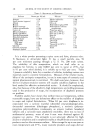
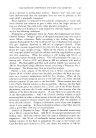
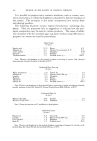
SAI,ICYLANILIDE COMPOSITION FOR SOAPS AND COSMETICS 359 APPLICATIONS A bacteriostat in soap, in order to be truly effective, should not only have a high degree of activity against microSrganisms found on the skin, but should also have a high degree of substantivity to the skin, so that subse- quent wear or washing will not remove the advantages of the protective antibacteiral mantel. Diaphene reacts with human keratin and other proteinaceous matter, such as wool and silk, and it can be exhausted quanti- tatively by immersing these materials in solution of the antiseptic. It has been observed that many very active antiseptics are readily removed from the skin surface and that the residual effect, if any, could be attributed to the inability of the researcher to remove the last vestiges of the antiseptic which were held predominantly by mechanical means. An effective soap bacteriostat must react with the proteinaceous com- ponents of the cutaneous surface in such a way that it is insolubilized at or near the skin surface and is thereby prevented from penetrating to sub- cutaneous levels where it may be absorbed and cause sensitization reactions. There appears to be a fine line between skin substantivity and skin sensiti- zation which is dependent in part upon the reactivity of the. bacteriostat toward amino acid residues. Because diaphene possesses outstanding antimicrobial activity, excellent substantivity to the skin, and a low order of toxicity, it is ideally suited for use in medicated or deodorant soap and detergent compositions. Further- more, the bacteriostat may be used in white soap tablets without producing discoloration. Concentrations of 0.3 to 0.5 per cent of diaphene are suflq- cient to reduce the bacterial flora of the skin, providing a protective mantel, so that the danger of secondary skin infections is reduced and the produc- tion of body odor by bacterial decomposition of perspiration is minimized. Diaphene is easily incorporated into bar soaps in the crutching operation. However, it is also possible to dispense the antimicrobial in the perfume if su•cient milling and plodding subsequently distribute the mixture uni- formly. Diaphene also possesses challenging potential as a cutaneous antimicro- bial for use in various topical pharmaceuticals, toilet preparations and medicated cosmetics. Its broad spectrum of activity against many cu- taneous pathogens, and its lack of toxicity are again of prime importance. Concentrations of 0.01 to 0.2 per cent are suitable for most cosmetic prep- arations. The limited solubility of diaphene presents certain formulation problems when clear aqueous or hydroalcoholic products are prepared. However, it is hoped that soon it will be possible to prepare such liquids by the use of new cosolvent and solubilizer systems which are currently under investigation. For example, 10 per cent diaphene can be solubilized in a solution of equal parts of triethanolamine, polyethylene glycol 400, and isopropyl alcohol.

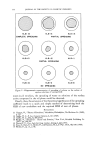
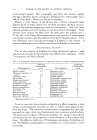
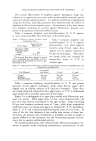
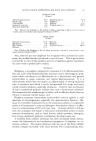
360 JOURNAL OF THE SOCIETY OF COSMETIC CHEMISTS It is possible to prepare many cosmetic emulsions, such as creams, oint- ments and lotions, in which the diaphene is dissolved in the hot oil phase of the system. The antiseptic is also easily incorporated into various body and dusting powders. The following illustrate various topical formulations containing dia- phene. They are presented only as suggestions to indicate how the anti- septic composition may be used in various products. The zones of inhibi- tion obtained with the standard agar cup-plate method using Micrococcus pyogenes vat. aureus are noted in parentheses. Hand Cream (7 mm.) Stearic acid ................... 11.75 Mineral oil ..................... 2.0 Cetyl alcohol ................. 0.6 Glycerol ....................... 6.0 Triethanolamine ................. 1. $ Borax .......................... 0.9 Glyceryl monostearate S. E ....... 2.0 Diaphene ....................... 0.05 Perfume ........................ q.s. Purified water q. s .............. 100.0 Note: Dissolve the diaphene in the melted oil phase consisting of stearic acid, glyceryl monostearate, mineral oil and cetyl alcohol at 80øC. Medicated Hair Dressing (8 ram.) White petrolatum ............... 6.0 Mineral oil ................... 37.5 Lanolin ....................... 3.0 Beeswax ....................... 8.0 Arlacel 83 ...................... 3.0 Arlacel 20 ....................... 1.0 Tween 20 ....................... 2.0 Silicone fluid 1000 csp ............. 1.0 Diaphene ........................ 0.2 Borax ......................... 0. $ Perfume ........................ q.s. Purified water q. s ............... 100.0 Note: Dissolve the diaphene in the melted oil phase consisting of white petrolatum, mineral, lanolin, beeswax, Arlace183, Arlace120, Tween 20 and silicone fluid 1000 cps. at 80øC. Medicated Baby Oil (4 mm.) Mineral Oil, light .................. 64.8 Lanolin ........................ 5.0 Myvacet Type 9-40 ............... 30.0 Diaphene ......................... 0.2 Note: Warm the mixture to 65 ø and dissolve the diaphene. Medicated Lotion (6 mm.) Mineral oil .................... 35.0 Lanolin ..................... 1.0 Cetyl alcohol ................. 1.0 Span 80 ..................... 2.1 Tween 80 ....................... 4.9 Silicone Fluid 1000 cps ............ 5.0 Diaphene ......................... 0.2 Purified water ..................... 49.8 Note: Dissolve the diaphene in the melted oil phase consisting of mineral oil, lanolin, cetyl alcohol, Span 80, Tween 80 and silicone fluid 1000 cps. at 80øC.
Purchased for the exclusive use of nofirst nolast (unknown)
From: SCC Media Library & Resource Center (library.scconline.org)