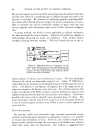
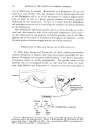
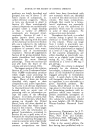
294 JOURNAL OF THE SOCIETY OF COSMETIC CHEMISTS By use of a magnet, a port is carefully opened between the cell and the tube, and the time taken for a particular gas to diffuse through the tube to the detector is recorded. By reference to calibration graphs comparing diffu- sion times with infrared detector outputs for known substances, it is pos- sible to estimate the various molecular weights of gases from the oral cavity, together with information upon some of their chemical configura- tion. A second method, one which is more applicable to clinical evaluation, has been developed for saliva samples. Infrared cells which are capable of withstanding dissolving by water are expensive. They further require complete cleaning between samples. This has limited the use of the in- C•• Sample and Pressure Inlet %•_•e Balance Inlet I Infrare d Cell 'Jl•. Diffusion Tube ,•o i Detecto r • Movable Seal l- I Odor Sampling Port Figure 5.--Schematic layout of apparatus for the study of the diffusion rates of odor containing gas mix- tures. The odor sampling port is used to extract samples of gases for odor analysis after their diffusion charac- teristics have been established. frared analysis of saliva, even in laboratory studies. We have developed infrared cells which are disposable using 0.5 ml. Teflon ©* FEP-fiuoro- carbon film for the windows and holding the layers of Teflon apart by use of shims. This plastic is transparent throughout the 1-Su range and is in- expensive enough to be thrown away after use. For clinical analysis, cells made of cardboard with Teflon windows could be prepared in advance and rapidly analyzed directly after the donation by a test subject. It has been possible with these cells to identify some dissolved gases in saliva. The same techniques could be used for the analysis of oral odor gases dissolved in one of several organic solvents since Teflon is inert to most organic sol- vents and oils. Micro-Dens ilometry By passing visible and ultraviolet light through pressurized quartz cuvettes containing gases dissolved in appropriate solvents, it is possible to record some absorption activity. However, the stability of gases from human breath exhaled through the oral cavity and bubbled into solvents other than water must be questioned. The method is suggested here

EVALUATION OF ORAL ODOR :295 because it appears to have some limited usefulness in the analysis of odor bearing gases and because good stable high sensitivity densitometry equip- ment is becoming available. SUMMARY For the present and near future our best detector for the sensing of oral odor is the human nose. Quantification of the intensity of the odor pro- ducing gases requires a tool for controlling the amount of odor gas in a gas mixture. The Fair and Wells osmoscope is of value in the clinical evalua- tion of substances which are being tested for their odor controlling ability as long as the odor level is small. Strong odors cannot be tested with the Fair and Wells osmoscope because of the physiology and biophysics of olfaction. A dilution method is recommended for the odor analysis be- cause it is not limited in its range of operation. Objective methods are available for laboratory analysis of gases. However, these are of only limited value in the study of odors generated in the oral cavity. When more data become available through the use of gas chromatographic, in- frared and microspectrophotometric techniques, their applicability to oral odor analysis should increase. (Received September 25, 1963) REFERENCES (1) G. M. Fair and W. F. Wells. U.S. Patent No. 2,136,844 (1938). (2) W. H. Howell, In W. H. Howell, Textboo} o/_Physfofofy, 13th Ed. W.B. Saunders Co., Philadelphia, 1936. * Teflon FEP is the trademark for a fluorinated copolymer of ethylene and propylene E. I. du Pont de Nemours and Co., Inc.
Purchased for the exclusive use of nofirst nolast (unknown)
From: SCC Media Library & Resource Center (library.scconline.org)