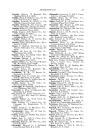
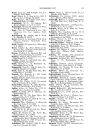
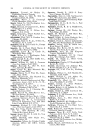
292 JOURNAL OF THE SOCIETY OF COSMETIC CHEMISTS of the plunger stop, the tester can record the ratio of the volume of air to the volume of odor which could just be detected. It is possible by the use of a sequentially-removed series of stops to obtain a linear reduction in the amount of odor containing gas. It is also possible through the use of non- return valves and odor and moisture absorbing cartridges to make an odor measuring device in which the odor containing gas is diluted with auto- matically cleaned and dried air. A gas reservoir may also be used to supply the diluent gas if, for example, an inert gas rather than air is desired. Preliminary tests have shown that the entire dilution series can be made rapidly enough to minimize the possibility of decomposition or inactivation of the odor containing substance. OBJECTIVE METHODS We will now turn to devices utilizing absolute value detectors. Recent advances in physical and physico-chemical techniques for the evaluation of specific gases in gas and vapor mixtures have made possible the design and fabrication of instruments which measure amounts of specific gases, vapors or families of gases and vapors. Two general gas detection methods are being used in the objective evaluation of odor producing compounds. These are gas chromatography and infrared spectroscopy of gases. Some specific gaseous substances such as ammonia and sulfur or halogen-contain- ing compounds can be analyzed by means of chemical techniques, while others, such as hydrogen, oxygen, and carbon monoxide and dioxide, can be evaluated using special electrodes but these are of limited value in the analysis of oral odor. Vapors containing odorous compounds which are the decarboxylation or oxidation products of proteins can be analyzed by spectrophotometric methods. These methods are of general assistance, especially in laboratory studies of odors caused by decomposed protein in saliva. Methods using electrically or chemically charged surfaces aside from those employed in gas chromatography have not been of use in the evaluation of oral odors. Gas Chromatography From related work in this field it has been determined that many of the odor gases from the oral cavity are of low molecular weight. Low molec- ular weight gases to be studied can be frozen using liquid nitrogen or, in special cases, liquid helium. Liquified gases can be heated while hydrogen is slowly flushed over the sample. Each gas will vaporize at its boiling temperature and become mixed in the flowing hydrogen stream. Through a controlled increase in temperature, these gases can be flowed separately into a flame detector for analysis. They can also be sampled by a human

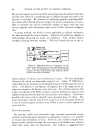
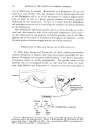
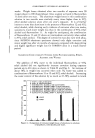
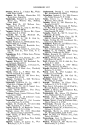
EVALUATION OF ORAL ODOR 293 nose so that boiling characteristics of objectionable gases will be recorded from the flame (or ion detector) output and their objectionability noted on the proper recording. Through the use of secondary traps it is possible to concentrate particular gases for further analysis. This technique requires absolute temperature control throughout the range from the liquid tem- perature of the gas outside the trap up to 20øC. Because of the extensive temperature monitoring and control system needed, the method has never been useful beyond the preliminary collection of a few odors. If one has some idea of the chemical configuration of the gas in question, it is possible to capture the gas into a material which will selectively absorb or adsorb it. This capturing chemical is placed in a tubular column through which the gas is directed. These columns can then be heated slowly while flushing hydrogen or in some cases inert gases through them. Characteristic peaks will be recorded by ion or flame detectors for particular temperatures, and these can be compared with peaks for known chemicals which have been captured by the column. Columns are available for the analysis of polar compounds, some hydrocarbons, nonpolar materials of up to six carbons, some low boiling point hydrocarbons, some blood volatiles, some primary phenols and cresols, a few steroids, some fatty acid configurations and some other specific gases. More columns are becoming available weekly. Until more comprehensive atlases of the characteristic column capabilities are available, the use of column chrornatographic analysis for the study of oral odor producing compounds will be limited. Infrared Detection The energy of light of wavelengths from 1-8 u is not sufficient to break chemical bonds. It is sufficient to stretch and bend bonds so that changes due to the absorption of energy in chemical compounds may be detected and recorded. Because atlases are available for the interpretation of characteristic bond mobilization energies, the use of infrared gas analysis techniques offers more promise in the study of oral odors. The equipment and techniques are available but expensive. The results obtained require interpretation by experienced personnel. These interpretations require the availability of considerable data and confirmatory chemistry, thus render- ing them unsuitable for clinical evaluation programs. Two techniques have been developed in our laboratory which may offer some data for the general field of oral odor analysis. The first of these requires the use of an infrared gas detection apparatus. The method may be used for approximating the molecular weight of compounds of particular interest because of their odor producing properties. Air is exhaled through the mouth into a cell. This cell is attached to a tube filled with inert gas which has an infrared detector at its other end (as shown in Fig. 5). Both the cell and the tube are pressurized to the same pressure with inert gas.
Purchased for the exclusive use of nofirst nolast (unknown)
From: SCC Media Library & Resource Center (library.scconline.org)