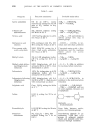
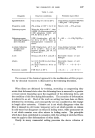
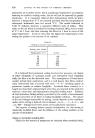
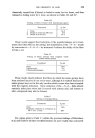
422 JOURNAL OF THE SOCIETY OF COSMETIC CHEMISTS dyes for hair is due to the formation of salt bonds with the carboxy groups of keratin. In our laboratory we have prepared various quaternary com- pounds which are colourless, and which are useful both as softening agents and as antistatic agents.

J. Soc. Cosmetic Chemists ! 5 423-436 (1963) ¸ 1964 Society of Cosmetic Chemists of Great Britain THE CHEMISTRY OF HAIR C. S. WHEWELL, Ph.D., F.R.I.C., F.T.I., F.S.D.C.* Presented at the Symposium on "Hair", at Brighton, Sussex, on 15th April 196•1. The chemical structure of hair is discussed, and in terms of this concept the setting of chemically modified hair is considered in detail. Some limita- tions of this simplified picture of hair are indicated, emphasis being given to the differences in reactivity of several different types of keratin. Hair is a member of the group of hard keratins and although of complex morphological structure can for many purposes be regarded as a chemical. This concept has proved to be of great value in the development of new commercially important processes, of which methods of obtaining permanent set are probably the most significant. In the past, emphasis was laid on the general features of keratin fibres (1), but it is now being increasingly recognised that hair consists of several different proteins and attempts are being made to isolate them in a high state of purity. By this means it is hoped to obtain more information about the precise structure of the proteins, for clearly if the hair can be fractionated into several soluble proteins the highly ingenious techniques which have been so successful in the elucidation of the structure of other soluble proteins could be applied to hair proteins. Much work remains to be done before this stage in hair research is satisfactorily concluded, and at present the more general picture must serve as a basis for the development of commercial processes. In this paper it is proposed to set out the more important considerations, to discuss the significance of this admittedly simplified picture and to indicate certain observations which still require explanation. Much of the knowledge on the chemistry of hair has been the outcome of investigations on wool because of the greater industrial importance of this keratin. In many ways the two fibres are similar, but there are certain quantitative differences between them as will be pointed out later. MORPHOLOGY Morphologically, hair consists of three roughly concentric regions, cuticle, cortex and medulla. The cuticle is complex and three regions have been differentiated, viz. an outer epicuticle and inner endo- and exo-cuticles. * Department of Textile Industries, The University, Leeds 2, Yorks. 423
Purchased for the exclusive use of nofirst nolast (unknown)
From: SCC Media Library & Resource Center (library.scconline.org)