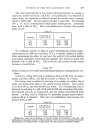
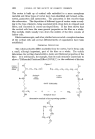
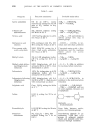
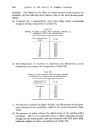
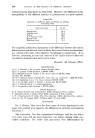
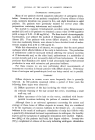
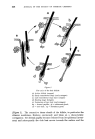
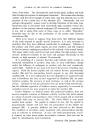
424 JOURNAL OF THE SOCIETY OF COSMETIC CHEMISTS The cortex is built up of cortical cells embedded in a more amorphous material and three types of cortex have been identified and termed, ortho- cortex, paracortex and metacortex. The paracortex is less reactive than the orthocortex. The disposition of different types of cortex varies accord- ing to the type of keratin, being associated with crimp form in crimped wool fibres, and concentric in coarse uncrimped fibres. It has been shown that the cortical cells have the same general properties as the fibre as a whole. The medulla which usually runs down the middle of the fibre consists of hollow cells. Electronmicroscopic, and other, studies have revealed a complex structure of the cortical cells and several different levels of organisation have been established. CHEMICAL STRUCTURE The cuticle probably differs markedly from the cortex, but it forms only a small, although important, part of the fibre as a whole. The cuticle determines the wetting characteristics, lustre and frictional properties of the fibre. It is well known, for example, that its scale structure causes hair to show a "Differential Frictional Effect (D.F.E.)", i.e. the coefficient of friction Coiled peptide chain / CH--CH•--CH•--CO• CO NH glutamic j acid R--CH residue ? CO CH --CH a -- S NH / Figure I x x NH + Ntta --CtIa --CH•--CH•--CH a Lysine residue SALT LINKAGE -- S -- CH t disulphide bond Alternative method of incorporating cystine: / NH CH2 CH S CO S NH I CH2 --CH CO

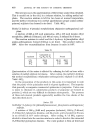
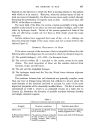
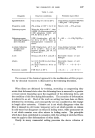
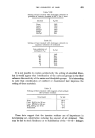
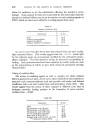
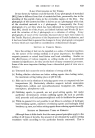
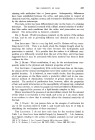
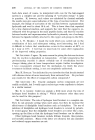
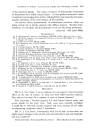
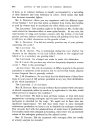
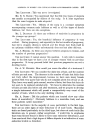
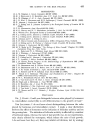
THE CHEMISTRY OF HAIR 425 depends on the direction in which the fibre is moving relative to the surface with which it is in contact. Moreover, when the surface layers of hair or wool are removed chemically, the fibres become more easily wetted, thereby favouring the penetration of reagents such as dyes. At the same time, the D.F.E. of the fibres is reduced. The main bulk of the fibre, the cortex, consists essentially of long coiled peptide chains joined in one plane by salt and sulphur linkages, and in the other by hydrogen bonds. Details of the precise geometrical form of the coils are still being worked out but there is little doubt about the basic structure. Certain authors have suggested that some of the --S--S-- linkings are disposed along the length of the main chains and not as links between the chains (Figure 1). CHEMICAL REACTIVITY OF HAIR If the above concept of the structure of hair is adopted it follows that the following sites and linkages may be concerned in attack by chemical reagents. (1) The peptide linkages (--CO--NH---) in the main chains. (2) The several residues (R--) attached to the carbon atoms in the main chains. The most important of these are the residues derived from tyrosine, serine, and threonine. (3) The salt and the disulphide linkages. (4) The hydrogen bonds and the Van der Waals forces between adjacent peptide chains. The reactions between hair and chemicals are generally complex, more than one type of linkage being affected, but sufficient is known about the main features of the reactions involved to account for some of the more important properties of the chemically modified fibres. The list of reactions summarised in Table I, which is an extended version of a table due to Lennox (2), illustrates the diversity of possible reactions between keratins and simple chemical reagents. Table I Chemical treatments used to modify wool Reagent Reaction conditions Probable main effect Picric acid S-Benzyl thiouronium hydrochloride 1% solution in ethanol acting for 72 hr at 22 ø C 1% aqueous solution acting for 10 min at 25 ø C on wool pre- viously treated with excess NaI-ICO a solution Forms salts with basic groups, mainly arginine and ---NI-t a Forms salts with COOH groups
Purchased for the exclusive use of nofirst nolast (unknown)
From: SCC Media Library & Resource Center (library.scconline.org)