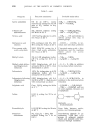
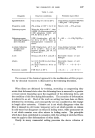
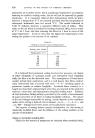
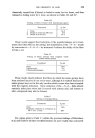
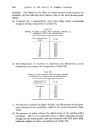
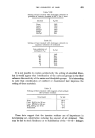
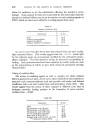
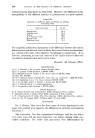
434 JOURNAL OF THE SOCIETY OF COSMETIC CHEMISTS evident from the data shown in Table XIII. Moreover, the differences in the susceptibility of the different keratins to pretreatment are quite marked. Table XIII Response to different types of keratin to setting in boiling water Type of keratin % Set Human hair Lincoln wool Mohair N.Z. Romney wool Merino wool Blackface wool 12-1 14-4 24-6 6'0 21.3 8.1 No completely satisfactory explanation of the differences between the various fibres has been put forward, and it is likely that several factors are important, e.g. cuticle/cortex ratio, fibre diameter, morphological compactness. It is, however, interesting to note that removal of the cuticle does not affect the set which is obtained when hair is set in water. (Received' 5th February 1961.) REFERENCES (1) C. S. Whewell J. Soc. Cosmetic Chemists 12 207 (1961). (2) F. G. Lennox Textile Research J. 25 677 (1955). (3) S. Blackburn and H. Lindley J. Soc. Dyers Colourists 64 305 (1948). (4) Brit. Pat. 872,828. (5) W. T. Astbury and H. J. Woods Phil. Trans. Roy. Soc. London Ser. A 232 333 (1953). (6) J. B. Speakman et al, J. Soc. Dyers Colourists 52 335 (1936). (7) A. N. Davidson and F. O. Howitt J. Textile Inst. 53 62 (1962). (8) C. S. Whewell and R. S. Gandhi unpublished. (9) A. Farnworth Textile Research J. 27 632 (1957). General References E. H. Mercer Keratins and Keratinization (1961) (Pergamon Press, London). P. Alexander and R. F. Hudson Wool (1954) (Chapman & Hall, London). J. W. S. Hearle and R. H. Peters Eds. Fibre Structure (1963) (Butterworths, London). Wool Sci. Rev. 27 (August 1962) 3 (March 1963) 23 (July 1963). DISCUSSION DR. J. BLAKE: How have the three types of cortex mentioned in the paper been studied with regard to the differences in structure and chemical reactivity ? T•E LECTURER: The first experimental technique, and the one which is in some ways still the most important, was simple staining under con- trolled conditions. The ortho- and para-cortex were differentiated by

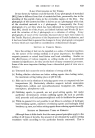
THE CHEMISTRY OF HAIR 435 staining with methylene blue or Janus green. Subsequently, differences have been established between the ortho- and para-cortex in respect of chemical reactivity, sulphur content, and resistance to fibrillation as revealed by the electron microscope. The meta-cortex has been differentiated only on the basis of a staining technique. The material is treated with a dilute, neutral solution of methy- lene blue under such conditions that the ortho- and para-cortex are not stained. The meta-cortex is, however, coloured. DR. J. BLAKE: Would you please comment on the nature of the surface of hair, and its role in governing diffusion and chemical attack on hair keratins ? THE LECTURER: This is a very big field, and Dr. Holmes will say some- thing about it (10). There is no doubt about the changes brought about by removing the surface of hair--the fibre becomes less hydrophobic and penetration is assisted. It is possible that the surface is of different com- position or is differently oriented from the rest of the fibre, and it has been suggested that it may be associated with fatty material but there is little evidence for this. DR. J. BLAK•: What contribution, if any, do the non-keratinous com- ponents make to the physical and chemical properties of hair ? THE LECTURER: Comparatively little work has been done on this topic, for almost all the serious investigations have been carried out on specially purified keratins. It is believed, in some textile circles, that the presence of oil and grease on the fibres exerts a protective effect and in one com- mercial method of chlorination, treatment of greasy material is recom- mended. The method of purification does, however, affect the properties of hair and useful information on the susceptibility of human hair, extracted by various solvents, to attack by papain has been provided by Holmes (11). He has suggested the presence of a lipid-keratin complex in hair. Mercer mentioned the presence of an intercellular cement but the amount of this which is not keratin is very small, and so far as I am aware, there is no evidence to show that it seriously affects the chemical reactivity of the hair. DR. J. BLAKE: DO yOU possess data on the energies of activation for any of the reactions listed in Table I, and would such data be of help in elucidating the mechanisms of these reactions ? THE LECTURER: I do not have such data for the reactions listed in Table I, as these have been studied largely by Lennox (2). I do, however, have figures relating to the action of complex aremines on hair and wool. (10) A. XV. Holmes J. Soc. Cosmetic Chemists 15 In the press (1964). (11) A. W. Holmes J. Textile Inst. 50 T422 (1959) Nature 189 923 (1961).
Purchased for the exclusive use of nofirst nolast (unknown)
From: SCC Media Library & Resource Center (library.scconline.org)