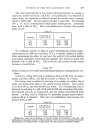
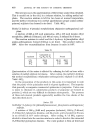
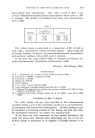
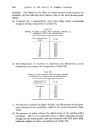
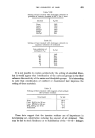
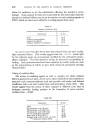
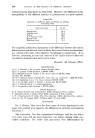
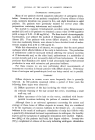
432 JOURNAL OF THE SOCIETY OF COSMETIC CHEMISTS either by oxidation or by the substitution affecting the reactivity of the linkage. Some support for this view is provided by the observation that the nitrated or iodinated fibres can be set in solutions of such reducing agents as THPC which are much more effective as setting agents than water. Table X Setting of reduced hair Treatment % Set None Sodium hydrosulphite Sodium bisulphite Sulphur dioxide in methanol 14.5 20'5 16'5 21 '7 As can be seen from the above data the reduced fibres set more readily than untreated fibres. This would suggest that the --S--S-- bonds split by the reducing agent are not seriously modified by the subsequent atmos- pheric oxidation. The fibre therefore retains its increased susceptibility to setting. Such pretreatments have been exploited for textile purposes, such as the presensitizing of fabrics to give them enhanced permanent pleating characteristics. Setting of oxidized fibres The action of oxidizing agents on hair is complex, for while oxidized fibres in general do not take a set in water, those oxidized by such reagents as peracetic acid, permonosulphuric acid and periodic acid under well defined conditions, take a set more readily than untreated fibres (Table XII). This would suggest that the action of these reagents is different from that of hydrogen peroxide, leading perhaps to the formation of more reactive residues than --SOoH. Table XII Treatment % Set •q-one 2% peracetic acid (5 min) 2% peracetic acid (60 min) 2% peracetic acid (120 min) 10. vol. hydrogen peroxide Iodic acid (4 hr at 40 ø C) Periodic acid (0.5% at R.T. for 7 hr) * Untreated control 5.9% 14'5 6'1 22'5 30'1 1'6 23'5* 24'0*

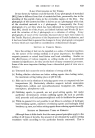
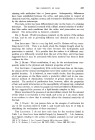
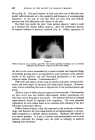
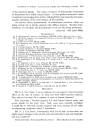
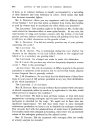
THE CHEMISTRY OF HAIR 433 X-RAY PHOTOGRAPHS OF SET FIBRES It was shown by Astbury et al (5) that the X-ray photograph of stretched (30%) hair is different from that of unstretched hair, presumably due to the uncoiling of the peptide chains in the crystalline regions of the fibre. The photograph of the unstretched fibre is known as an a photograph while that of the stretched material is a /• photograph. Consequently the X-ray photograph of a set fibre which has been deformed by stretching by more than 30% should be of the/• type, and indeed Astbury and Woods (5) have used the retention of the /• photograph as a criterion of setting. X-ray photographs of most of the materials discussed above have been taken in the Textile Physics Laboratory of the Department of Textile Industries, and it has been found that in general the changes in X-ray photograph correspond to those which are expected by consideration of dimensional changes. SETTING IN VARIOUS MEDIA Since the setting of hair can be regarded as a series of chemical reactions (1), the nature of the setting medium is of great importance, for different reagents promote or retard bond fission and bond rebuilding. Studies on the effectiveness of various reagents as setting media are of considerable commercial significance, for they are the basis of many commercial processes. Some of the more important findings from a theoretical point of view are as follows: (a) Untreated hair cannot be set in solutions of strong acids (6). {b) Boiling alkaline solutions are better setting agents than boiling water, the maximum setting taking place at pH 9.2 (6). (c) Hair can be set in solutions of reducing agents even at comparatively low temperatures (6). Particularly effective reagents include ammonium thioglycolate, sodium and monoethanolamine bisulphites (7), THPC, mercaptans, phosphorous acid. {dl Oxidizing agents, in general, are not good setting agents, but under particular circumstances certain oxidizing agents (8) such as periodic acid, peracetic acid and permonosulphuric acid do facilitate the process. {e) While in general it is not possible to set fibres in solutions of hydrogen bond breaking agents, mixtures of reducing agents and hydrogen bond breakers, e.g. urea, are better setting agents than reducing agents alone (9). SETTING OF DIFFERENT TYPES OF KERATIN Although there is little doubt that the same general principles apply to the setting of all types of keratin, the amount of set obtained by a given setting treatment varies according to the particular keratin concerned. This is
Purchased for the exclusive use of nofirst nolast (unknown)
From: SCC Media Library & Resource Center (library.scconline.org)