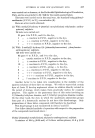
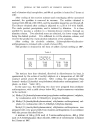
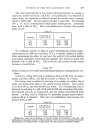
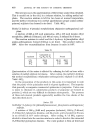
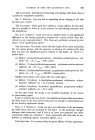
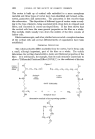
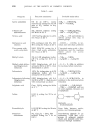
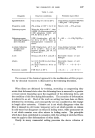
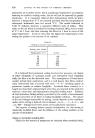
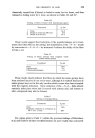
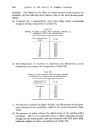
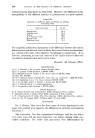
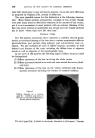
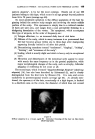
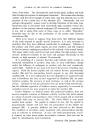
JOURNAL OF THE SOCIETY OF COSMETIC CHEMISTS (hair fall), which may or may not lead to alopecia, we use the term effluvium as proposed by Kligrnan (13), instead of defluvium. The most plausible reason for this distinction is the following observa- tion. Many female patients permanently complain of loss of hair thouglx even after many years no detectable reduction in the amount of hair occurs, yet it is not uncommon to meet patients with an extreme thinning of the hair who never noticed an appreciable loss of hair and who usually pretend not to know "where they have left their hair". CLINICAL TYPES The 102 patients mentioned above represent a carefully selected group insofar as transient thinning of the hair due to various symptomatic effluvia (post-infectious, post parturn, drug induced, post intoxications) were ex- cluded. We also excluded all cases of diffuse alopecia, secondary to well defined local diseases of the scalp, including the diffuse form of alopecia areata as well as alopecias of the pseudopeladic type. In our series of 102 patients the following types of diffuse alopecia could be distinguished: (1) Diffuse sparseness of the hair involving the whole vertex. (2) Diffuse sparseness limited to an orbicular zone around the crown (skull- cap type). (:3) Diffuse sparseness of the hair on the vertex combined with ironto- parietal recessions imitating the feature of common baldness. • • •-': •:• ' .. •g• •. . •.• .•:•" • Figure 1 Diffuse alopecia in a woman, aged 2?. Uniform sparseness of the hair on the vertex (Behrman's female pattern alopecia). The first type (Fig. 1) which is obviously identical to Behrman's "female

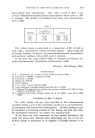
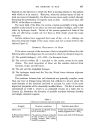
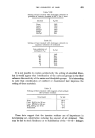
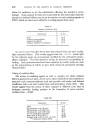
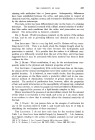
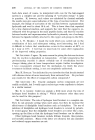
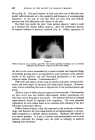
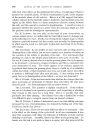
ALOPECIA IN VgOMEN ' ITS CLINICAL FORMS AND PROBABLE CAUSES 439 pattern alopecia", is by far the most common. Ninety out of our 102 patients belong to this type, which occurs in all age groups beyond puberty from 16 to 70 years (average age 40). Its most prominent symptom is the diffuse sparseness of the hair be- .ginning behind the anterior scalp margin and involving the entire middle portion of the scalp. This sparseness is simply due to a reduced number of hairs per unit area, and ranges from a just perceptible thinning to a •lisfiguring denudation of the vertex. The symptoms, which accompany this type of alopecia, in the order of frequency are: (1) Telogen effluvium, i.e. an increased daily loss of club hairs. (2) Oiliness of the scalp, which in many instances is so pronounced that the hair becomes greasy within one to three days after shampooing appearing literally bathed in oil after this period. (3) Discomforting sensations termed "tenderness", "tingling", "itching", "burning", and "awareness of the scalp". (4) Scaling, which is usually slight and which is heavy only in exceptional cases. ($) Hirsutism and disturbances of the menstrual cycle appear to occur with nearly the same frequency as in the general population, while major morphological changes of the scalp, such as atrophy, follicular plugging or reddening do not occur at all. The second type, which I termed "kiippchenf0rmige Alopecie" (skull-cap alopecia) (14), has also been described by Sabouraud (1), and is clearly distinguished from the first form by Binazzi (15). It is rare, and occurs exclusively in postrnenopausal women (average age $4). As already men- tioned, the sparseness of the hair, occasionally of a high degree, is limited to a disciform area on the crown, the diameter of which does not exceed l•igure • Diffuse alopecia in a woman, aged 57. Orbicular thinning of the hair on the crown (skull-cap type).
Purchased for the exclusive use of nofirst nolast (unknown)
From: SCC Media Library & Resource Center (library.scconline.org)