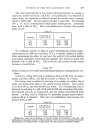
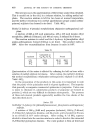
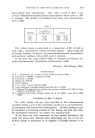
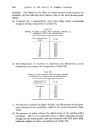
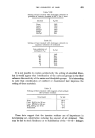
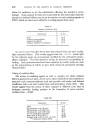
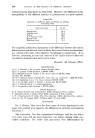
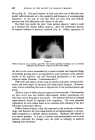
Z•0 JOURNAL OF THE SOCIETY OF COSMETIC CHEMISTS 10 cm (Fig. 2). The small number of such cases (five out of 102) does not permit valid statements as to the regularity and frequency of accompanying: symptoms. It can only be said that there are cases with and without previous hair fall (effluvium) and oiliness of the hair. The third type merits the term "male pattern alopecia" which is used as a synonym for chronic diffuse alopecia. Here the well-known picture of common baldness is perfectly imitated (Fig. $). Diffuse sparseness of Figure Diffuse alopecia in a woman, aged 39, with fronto-parietal recessions as in common baldness (male pattern alopecia in the strict sense). the hair on the vertex surrounded by a broad occipital and temporal fringe of normally growing hair is accompanied by some ascension of the anterior border of the hair-line, and well developed denudations of the fronto- temporal angles (German--"Geheimratsecken"). Effluvium and oiliness of the scalp are always noticeable, menstrual dis- orders and some degree of hirsutism also being rather frequent. However,, many women exhibiting this form of alopecia are in the postrnenopausal age group. All these types of diffuse alopecia appear to be irreversible. Unfortunately we have never seen any definite improvement, neither spontaneous nor following various therapeutic procedures. We therefore feel that all alleged improvements should be regarded with scepticism. The most plausible explanation for such claims seems to be confusion with thinning of the hair following symptomatic effluvia. Diffuse female alopecia, while still neglected in the textbooks of dermat- ology, and therefore far from being known by all dermatologists, is increas- ingly recognized as a definite clinical syndrome. Rothman (16) defined it as a serious problem. It is also a cosmetic and psychosomatic one as such patients, especially the younger ones, are quite as unhappy as patients suffering from hirsutism.

ALOPECIA IN WOMEN : ITS CLINICAL FORMS AND PROBABLE CAUSES 441 Identity with common baldness (male patterJz alopecia) The nature and etiology of diffuse alopecia are still highly controversial matters. Views as to its nature have been advanced by Sidi and Bourgeois- Spinasse (9), who ascribe it to the indiscriminate use of androgens Juster (3) makes an endocrine imbalance responsible whilst Braun-Falco and Zaun (11) fayour a relationship with alopecia areata, and Binazzi and Wierdis {10) contend that an underlying oestrogenic deficiency is present. Based on observations over several years, we consider all three forms of diffuse alopecia as the expression of common baldness (male pattern alopecia) in the female sex, provided the condition is chronic and not related to transient effluvia or well defined scalp disorders. The identity of common baldness in men and diffuse alopecia in women, a view already advanced by Sabouraud (1), McCarthy (2), and Behrman (4), led us to propose the term androgenetic alopecia for both conditions (14). In the light of present knowledge, common baldness (male pattern alopecia) is the result of androgenic stimulation of the hair follicles of the human vertex with a genetically determined increased responsiveness to androgens (17). The interplay between genetically predisposed hair follicles of the scalp, and normal or increased amounts of androgens initiates that "retrograde metamorphosis" of the hair (18), the result of which is bald- ness (19). Our concept of identity between common baldness and diffuse alopecia in women necessarily focussed our attention on the heredity aspects and on the presence of other signs of androgenic stimulation. HEREDITY We found that the majority of our patients with diffuse alopecia (82 out of 102) were daughters of bald fathers or of mothers with similarly thin hair, or belonged to families in which male pattern baldness is a common trait. Our estimation may be fraught with error as we have seen only a small number of relatives of our patients and have gained the impression that they tend to minimize the extent and occurrence of baldness in their families. It is therefore fortunate that Smith and Wells (20) have recently shown, on the basis of family histories, that of their 56 female patients with "male type alopecia" 54}/0 of the male and 23}/0 of the female first degree relatives past the age of 30 years were similarly affected. The figures for the corres- ponding relatives of patients with alopecia areata were only 20}/0 and 7% respectively. In this connection it is worthwhile to mention the case of a girl, aged 20, with moderately developed diffuse alopecia whose mother and aunt were uni-ovular twins and exhibited severe diffuse alopecia.
Purchased for the exclusive use of nofirst nolast (unknown)
From: SCC Media Library & Resource Center (library.scconline.org)