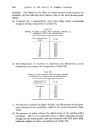
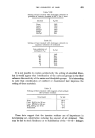
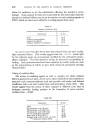
JOURNAL OF THE SOCIETY OF COSMETIC CHEMISTS propagated. Eruption of hair dorsal to the margin of the graft occurs at the same time as on the adjacent flank, and does not await the retarded growth-front on the graft itself (10). Systemic factors The influence of systemic factors has been clearly demonstrated by experiments in which homografts have been exchanged between animals of different ages (11), and in which rats have been joined in parabiotic pairs (14). When eruption of hair on the recipient animal is due in advance of that in the donor, the activity of follicles on the grafts can be brought forward into line with those of the host. If rats of different ages are joined in parabiotic pairs, there is clear evidence of a cross action which tends to bring the waves of hair growth into phase with each other indeed, even animals of the same age tend to synchronize their moult cycles when they are parabiotically joined. These facts provide strong evidence that systemic factors normally play some part in the control of follicular activity. It is possible that as yet undiscovered hormones are responsible for synchronization. At the same time there is ample experimental evidence that many known hormones affect the activity of the hair follicle. Steroid hormones of the ovaries (15, 16), the testes (15, 16), or the adrenal cortex (16, 17, 18) all prolong the resting phase, i.e. they delay the initiation of follicular activity. Hence either gonadectomy (15, 16) or adrenalectomy (18, 10) will shorten the resting phase and, in that sense, initiate a new active phase. Similarly thyroid hormone shortens the resting stage, and inhibition of the thyroid by propylthiouracil lengthens it {20). Removal of the pituitary reduces the length of the resting phase, so that any affect on the thyroid would appear to be completely overridden by the resulting lowered secretory activity of the adrenals and gonads (1½, 20). One in- teresting fact is that all hormonal treatments, whether they cause advance- ment or retardation of activity, affect the dorsal follicles more than the ventral ones. Another is that even when the resting stage is greatly prolonged by treatment with propylthiouracil, it is still possible to induce activity by plucking the club hairs {20). These pieces of evidence suggest that all the hormones may act through a common mechanism and that, when delay is induced, the potentiality of the epidermal part of the follicle is not affected. The hypothesis that hormones act indirectly through the dermis is consistent xvith, though not proved by, the facts. It is possible that hormones could affect the rate of growth of the hair, the duration of the active phase, and the rate of shedding of club hairs independently of any affect on the initiation of anagen, that is to say on the overall periodicity of the follicle. Oestrogens, for example, have been sho•vn to reduce the rate of hair growth and to delay the shedding of

THE ACTIVITY OF THE HAIR FOLLICLE 453 clubs (15), though there is no conclusive evidence that they also prolong the period of anagen. This finding may contribute to an understanding of the phenomenon of post-partum hair shedding in women (21). Some- times there is an excessive loss of club hairs a few months after the end of pregnancy, even to the extent of producing a slight baldness. From a recent study (21) it seems that, during the latter half of pregnancy, the proportion of hairs in anagen can rise to 95% or more, i.e. less than 5% of the follicles are in the resting state as compared with a normal average of about 13%. Then after parturition the proportion of active follicles falls rapidly to a level of less than o/ 65/o, and club hairs are shed. It is reasonable to conclude that something produced during pregnancy pro- longs the active phase, but that after parturition such follicles are almost synchronously precipitated into catagen, so the anagen count falls. The experiments on the rat suggest that oestrogen could be responsible, and the large amounts of oestrogen produced by the placenta may well be implicated. At the time of labour, for example, the urinary oestriol may be a thousand times normal, but it falls rapidly within a month of delivery (22). Environmental factors There is substantial evidence that the photoperiodic affect of light has an important influence on the moult cycles in animals such as the mink (23), the weasel (24), the ox (25) and the ferret (8) and there is some evidence that temperature may be of importance in the mountain hare (9). In man there is little doubt that psychological states can affect the shedding of scalp hairs. Kligman (3) has described a spectacular case of psychogenic hair shedding, in which a prisoner, who had undergone a series of trials for murder over a period of three years, began to lose hairs at the rate of 1,000 per day about ten weeks after he was finally convicted. DEVELOPMENTAL AND AGEING CHANGES IN THE FOLLICLE During the life-time of the follicle, the type of hair produced may change. Everyone is familiar with the "puppy" fur of young animals, which is flufiler and finer than the adult coat. The maturation of the hair can be prevented by removal of the pituitary, and thus it appears to be brought about by a pituitary hormone. It is generally assumed that the growth hormone is responsible, but there is evidence to suggest that the lactogenic hormone may be the important factor (26). The succession of hairs in any particular follicle in man provides a rather more complex problem. In certain regions of the body the type of hair changes at puberty and long terminal hairs are produced instead of fine,
Purchased for the exclusive use of nofirst nolast (unknown)
From: SCC Media Library & Resource Center (library.scconline.org)