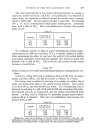
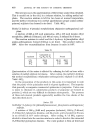
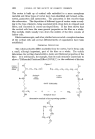
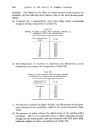
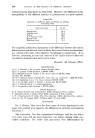
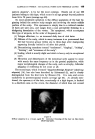
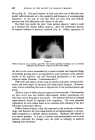
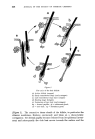
JOURNAL OF THE SOCIETY OF COSMETIC CHEMISTS however, have periodic moults, implying that activity of the follicles is more or less synchronized. In white rats, successive waves of replacement of hair start on the belly and move over the flanks to the back (Figure 2) each hair is fully formed in 11 to 18 days and the club hair is retained for a very much longer period (5,6). Experiments on rodents have contributed much towards the understanding of hair growth. THE CONTROL OF HAIR GROWTH In trying to analyse the control of hair growth, it is important to appreciate that different factors may be involved at different phases of the follicular cycle. Of major interest is the problem of the initiation of activity, i.e. what controls the period of the follicle from the start of one anagen to the next. In addition, however, the duration of the active phase, the rate of growth of the hair, and the rate of loss of club hairs could all react independently. In order to simplify rather than to complicate the problem, it is proposed to discuss only those factors the existence of which seems likely from experiment. Three different sets of causes appear to interact in the control of follicular activity: An intrinsic follicular rhythm, transmissible systemic factors, and the influence of environmental changes. The relative importance of these varies from species to species. Intrinsic activity appears to be a major feature of human follicles, but it can be clearly demonstrated in rodents. In animals which breed and moult seasonally, such as the ferret (7,8) and the mountain hare (0), the role of environmental changes in the daily duration of light or in temperature may be demonstrable, and hormonal mechanisms are of obvious importance in these forms. But psychological factors can influence the human scalp (2), and the influence of hormones is clearly demonstrable even in domesticated forms, such as the laboratory rat and man, in which sexual cycles are almost completely disengaged from environmental influences. The evidence will now be briefly reviewed. Intrinsic factors The mosaic pattern of activity in the human scalp, when each follicle is out of phase with its neighbours, can only be explained on the assumption that there is a control mechanism within the follicle. Such follicles could, of course, still be subject to systemic influences, and under abnormal circum- stances a limited degree of synchrony may be achieved. In rodents the existence o[ innate control can be demonstrated by putting follicles out of phase with adjacent ones. This may be achieved by transplantation of skin to new sites or by plucking hairs in the resting phase it also occurs to some extent in grafts which are severed but replaced in their original positions.

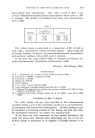
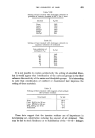
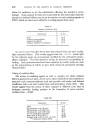
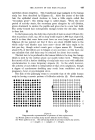
THE ACTIVITY OF THE HAIR FOLLICLE 451 The site of pieces of skin has been altered, either by rotating through 180 ø grafts in the flank of rats or by transposing flaps (10). Such follicles always retain their periodicity and do not take up the rhythm of the sites into which they are put. So, on a rotated graft, the wave of growth begins dorsally and moves ventrally, whereas on the adjacent flank it moves normally from belly to back. The hair is about twice as long on the back as on the belly and the length produced is characteristic of the original, not of the new, site. These experiments also dispose of two other hypotheses about the control of hair growth. Since the nerves are completely cut and hair growth occurs long before they could possibly have regenerated, it is clear that follicular activity is not dependent on nervous connections. And since, by translocation of skin, islands of active, well vascularized follicles can be produced within areas of resting follicles having no demonstrable blood supply, it is clear that activity is not induced by a wave of vasculariza- tion. The above results do not, however, conclusively demonstrate the existence of an intrinsic control mechanis•n they could be explained on the alternative hypothesis that there is a characteristic regional latent period in response to some systemic factor, and that this response is retained even when the position of the skin is altered. A conclusive experiment must involve the complete removal of the follicle from the animal. Ideally, it would be nice to demonstrate cyclic activity in follicles in tissue culture but it is extremely difficult to culture adult skin and neither we, nor as far as we know any one else, have been able to maintain the follicles alive for long enough to test the hypothesis. It is, however, possible to take pieces of skin and to graft them into animals of different age in which the skin cycles are in a different phase. In the circumstances in which new activity at the site is due in the donor before it is due in the recipient, such transplanted follicles have been shown to continue in phase with the donor (11). Follicles can be put out of phase with their neighbours either by grafting, or by plucking the "club" hairs. If a piece of skin in the flank of a rat is removed during the resting stage of the hair follicles and immediately sutured in its original position, the passage of the hair growth wave is delayed in comparison with that on the adjacent body (10). If club hairs are plucked during the resting phase, activity of the follicle is induced and eruption of hair usually, but not always, occurs about 12 days later (12). The fact that in both these experiments follicles can be put out of phase with their neighbours suggests that intrinsic factors play a major part in the control of their periodicity. The study of unrotated grafts also provides evidence against the hypothesis, discussed by some authors (13), that hair growth waves are
Purchased for the exclusive use of nofirst nolast (unknown)
From: SCC Media Library & Resource Center (library.scconline.org)