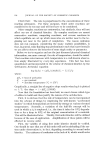
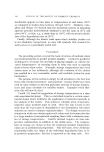
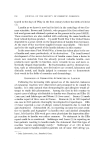
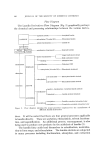
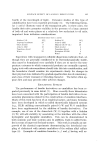
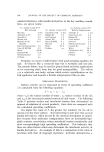
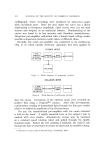
160 JOURNAL OF THE SOCIETY OF COSMETIC CHEMISTS Flow Diagram The Lanolin Derivatives Flow Diagram (Fig. 2) graphically portrays the chemical and processing relationships between the various deriva- LANOLIN I saponilfication I TOAL I IFA}T¾ ALCOHO•Sl I ACIDS fraetionation adsorption extraction SURFACE ACTIVE ALCOHOL• acylation (acetic) ethoxylation (75 moles EO) solvent fractionation Acetylated fanolin Ethoxylated lanolin Lanolin oil esterification (isopropanol) Isopropyl lanolate --further fractionation - L blending •Liquid multi-sterol extract Solid multi-sterol extract Absorption base --crystallization Cholesterol USP ethoxylation (24 moles EO)•Ethoxylated cholesterol (16 moles EO) -- ethoxylation 1 I-(25 moles EO)-- -- Ethoxylated lanolin alcohols Ethoxylated lanolin alcohols (acetie)--fractionation--Aeetylated lanolin alcohols --esterification• I-(ricinoleic) Lanolin alcohols ricinoleate r- acetylation thoxylation-] I_ acetylation Partially acetylated ethoxylated ester Completely aeetylated ethoxylated ester Figure 2. Flow diagram showing the usual processes employed for the manufacture of different lanolin derivatives tives. It will be noted that there are four general processes applicable to lanolin directly. These are acylation, ethoxylation, solvent fractiona- tion, and saponification. An additional process, rearrangement, is also being used to produce new products by the acidolysis of lanolin (3). The lanolin fatty acids lend themselves to esterification, neutraliza- tion to form soaps, and ethoxylation. The lanolin alcohols are subjected to many processes including fractionation, adsorption, and extraction

SURFACE EFFECT OF LANOLIN DERIVATIVES 161 to obtain the surface-active fraction, which can then be processed further to form multi-sterol extracts and absorption bases. Cholesterol is pro- duced from this fraction by crystallization. By ethoxylating cholesterol, a derivative with hydro-alcoholic solubility properties is obtained. Other lanolin alcohol products are prepared directly from the surface- active alcohol fraction by ethoxylation. Another process employed is esterification. Steps such as ethoxylation and acetylation are then car- ried out on esterified lanolin alcohols. g2uaternization has resulted in interesting experimental products with unusual substantivity when ap- plied to skin and hair. K•SULTS AND DISCUSSION Pigment Wetting The effect of lanolin derivatives on the wetting and dispersing of finely ground solids in various liquid vehicles has been explored exten- sively. Lanolin products differ considerably in their pigment wetting action, a number of them being outstanding in this regard. It was as- sumed that wetting and dispersing implied deflocculation or reduction of agglomerated particles to the primary particle state. Consideration was given to the role of the derivative in terms of its orientation to and ad- sorption on the particle surface. The hydrophilic-lipophilic contrast within the molecule and association tendencies of portions of the deriva- tive molecule were all regarded as important factors contributing to compatibility between the particle surface, the lanolin derivative, and the vehicle. Lanolin products probably also function by lubricating the particle surface and by displacing therefrom materials which might interfere with their adsorption onto the surface. Wetting is regarded as a significant interfacial phenomenon involved in dispersing solids. After preliminary studies, a simple technique was selected to evaluate the comparative wetting performance of lanolin derivatives. The method employed was adapted from the paint indus- try where it has been used extensively (4). Recent studies have also ap- plied this method to materials of interest in cosmetics (5). The test consists of adding increments of vehicle from a burette to powders containing lanolin derivatives as additives. The incorporation of each increment is accomplished manually, and the mixture is worked to a uniform consistency. When a cohesive mass is formed, an end point is read, referred to as the "Wet Point." Further vehicle additions soften the mixture until a point is reached at which it flows this volume is called the "Flow Point."
Purchased for the exclusive use of nofirst nolast (unknown)
From: SCC Media Library & Resource Center (library.scconline.org)