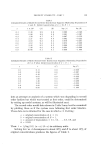
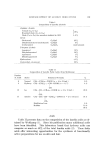
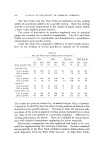
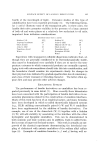
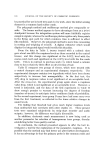
162 JOURNAL OF THE SOCIETY OF COSMETIC CHEMISTS The Wet Point and the Flow Point are indicative of the wetting ability of a particular additive for a specific system. Since the wetting activity is inversely proportional to the volume of liquid vehicle added, a lower value signifies greater activity. The ratios of derivatives to powders employed were in practical ranges for eventual use in finished formulations. The Wet and Flow Points were found to be reproducible and demonstrated a quantitative relationship in each specific system. Table III shows the comparative efficiency of three lanolin deriva- tives in the wetting of several powders in mineral oil (70 Saybolt). Table III Wet and Flow Points in Mineral Oil (70 Saybolt) TiO2 Tale Oxy Red D&C Red #9 Wet Flow Wet Flow Wet Flow Wet Flow Deriv./powder ratio Pt. Pt. Pt. Pt. Pt. Pt. Pt. Pt. Amerchol L-101 10% of powder 30 238 31 174 30 113 28 105 20% of powder 12 47 18 165 7 58 16 83 A cetulan lO% of powder 34 242 28 198 30 129 32 98 20% of powder 14 34 15 184 7.5 109 18 86 A merlate P 10% of powder 23 61 27 127 11 43 3,5 93 20% of powder 16 51 18 106 3 35 20 81 Control (Min. Oil) 10% of powder 44 258 33 259 38 124 33 108 20% of powder 36 249 23 247 26 112 23 96 The results are given in terms of cc. of mineral oil per 100 g. of powder. Controls at 10 and 20% show the effect of using mineral oil instead of the derivative in the powder mixture. The data in Table III represent only one phase of the work on pigment wetting and are included here to show the value of the test method as a screening technique. Differences in wetting performance are shown. These are validated by actual experi- ence with finished formulations employing the above materials. Microscopic examination was also employed and found to be very useful for supplementing Wet and Flow Point data. Systems examined microscopically at the Flow Point exhibited complete deflocculation and good dispersion when the Flow Point was low. At high Flow Points

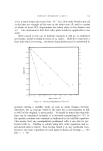
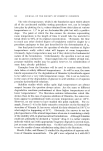
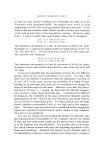
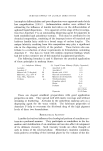
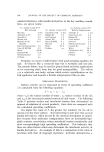
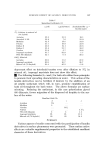
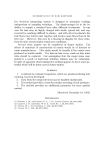
SURFACE EFFECT OF LANOLIN DERIVATIVES 163 incomplete defiocculation and poor dispersion were apparent under fairly low magnification (100X). Sedimentation studies were utilized for estimating the influence of lanolin derivatives on the deflocculation of agitated liquid dispersions. It is apparent at this stage of the investiga- tion that Amerlate P is an outstanding dispersing agent for pigments in both emulsified and anhydrous systems. This may be attributed to its chemical composition, consisting of the isopropyl esters of branched and hydroxy lanolin fatty acids in a broad range of carbon lengths. The unique lubricity resulting from this composition may play a significant role in the dispersing activity of the product. These factors also con- tribute to a reduction of shear requirements in formulations containing Amerlate P. The data in Table III confirm empirical findings which had led to the extensive use of this material in pigmented products. The following formulas (a and b) illustrate the practical application of these principles in makeup items: (a) Anhydrous Makeup Acetulan 6% Amcrlate P 3 Mineral oil (70 Saybolt) 36 Microwax, m.p. 170 ø F 15 Talc, TiO2, Pigments 40 Perfume q.s. (b ) Liquid Crearn Makeup (Highly Pigmented) Amerchol L-101 4.0 Amerlate P 3.0 Stearic acid, XXX 2.0 Glyceryl monostearate 1.0 Mineral oil (70 Saybolt) 15.0 Triethanolamine 0.8 Propylenc glycol 5.0 Water 69.2 Perfume q.s. 100.0 Parts Pigments 15-25 Parts These are elegant emollient preparations with good application properties on skin. They spread well with matte coverage and without streaking or leathering. Acetulan in the anhydrous makeup acts as a degreasing agent for the waxy vehicle. The lubricant properties of Amerlate P help to overcome the frictional drag of the high pigment levels of these two formulations. RHEOLOGICAL ACTIVITY Lanolin derivatives influence the rheological pattern of emulsion sys- tems in a profound manner. They participate as emulsifiers in the for- mation and stabilization of an emulsion and can also affect development of its ultimate viscosity. Such viscosity trends are often thought of only in terms of the external phase. Elementary emulsion considera- tions point to crowding of the external phase by the volume of the dis-
Purchased for the exclusive use of nofirst nolast (unknown)
From: SCC Media Library & Resource Center (library.scconline.org)