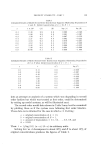
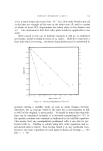
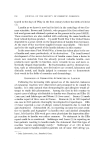
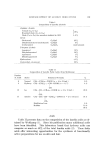
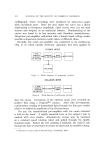
164 JOURNAL OF THE SOCIETY OF COSMETIC CHEMISTS persed phase and the use of external hydrocolloids as the prime sources of viscosity control. These studies show that the incorporation of lanolin derivatives in the interfacial film is an effective way to modify viscosity behavior and simultaneously add emollient properties. The formulations shown in Table IV utilize Solulan C-24, an O/W emulsifier, together with cholesterol, a W/O emulsifier, in various ratios which determine the viscosity pattern of a cosmetically elegant O/W lotion. Brookfield readings show the dramatic influence of slight ad- Table IV Viscosity Changes in O/W Lotion Cholesterol USP ... Solulan C-24 ... Stearic Acid XXX 3.0% Glyceryl monostearate (pure) 3.0 Mineral oil (70 Saybolt) 25.5 Triethanolmnine 1.0 Propylene glycol 4.0 Water 63.5 Observations after one month: Appearance at room temp. Viscosity readings Brookfield--cps. #3 spindle •3 rpm Room temp. stability good Incubator stability good (42øC) 0.5% 0.5% 0.5½-• 0.5% ß.. 0.15 0.3 0.75 3.0 3.0 3.0 3.0 3.0 3.0 3.0 3.0 25.0 25.0 25.0 25.0 1.0 1.0 1.0 1.0 4.0 4.0 4.0 4.0 63.5 63.35 63.2 62.75 medium heavy no flow heavy flow medium heavy medium flow flow flow 23,000 off-scale 39,000 26,000 9,400 (solid) good good good good good fair good fair justments in concentration of Solulan C-24 [ethoxylated (24 moles) cholesterol] on the reduction of the viscosity of the system. Extended time studies of this formula show that an optimum concentration of 0.3% Solulan C-24 prevents the undesirable thickening of this formula while maintaining its stability. This antigelling effect is a very useful prop- erty which may be applied to many lotion systems. SOLUBILIZATION Transparent gels involve the use of microemulsions in modern cos- metic technology. Lanolin derivatives are essential components in many of these interesting systems in which the dispersed phase is in- visible to transmitted light (theoretically a particle size of less than one-

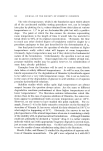
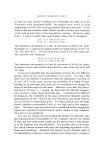
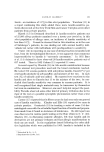
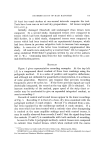
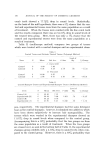
SURFACE EFFECT OF LANOLIN DERIVATIVES 165 fourth of the wavelength of light). Extensive studies of this type of solubilization have been reported previously (6). The following formu- las (c and d) illustrate some of the transparent gels in these cases, the lanolin derivative promotes stability in the presence of a large amount of both oil and water phases at a relatively low surfaetant to oil ratio, important from irritation considerations. Ernollient Clear Gels (c and d) Solulan C-24 15% Solulan 16 10% Isopropyl myristate 25 Atlas G-1292 10 Oleyl alcohol 5 Mineral oil (70 vis.) 20 Atlas G-1292 15 Oleyl alcohol 4 Propylene glycol 5 Propylene glycol 5 Water 35 Hostaphat KL340 4 Water 47 Experience with transparent colloidal dispersions indicates that, al- though they are generally considered to be thermodynamically stable, they must be formulated very carefully if they are to survive the tem- perature extremes to which commercial products are normally exposed. Aging tests with microemulsions should take this into consideration, and the formulator should examine his experiments closely for changes in their physical state indicated by gradual opacification, loss of consistency, and a loss of their resonant or vibrating character. The latter often ap- pears first and may precede other adverse changes. EMULSIFYING EFFECTS The performance of lanolin derivatives as emulsifiers has been re- ported previously in some detail (7). More recently these laboratories have been concerned with the participation of lanolin derivatives in as- sociation phenomena related to the construction of emulsion interfaces. Much of this work has been of an empirical nature, and many formulas have been developed in which so-called theoretically balanced systems (e.g., HLB) utilizing conventionally paired O/W and W/O emulsifiers have been supplemented by the addition of lanolin derivatives. For example, use of one of the Amerchols (W/O) together with a Solulan (O/W) will add stability by associating at the interface with the other hydrophilic and lipophilic emulsifiers. This can be demonstrated in both nonionic and ionic systems and, in addition, leads to added bene- fits in terms of improved feel and texture. This work is actually an out- growth of the classical experiments demonstrating the interfacial cou- pling of cholesterol with anionic emulsifiers of the sodium alkyl sulfate type (8). Examples of emulsion formulas (e, f, and f) having well as-
Purchased for the exclusive use of nofirst nolast (unknown)
From: SCC Media Library & Resource Center (library.scconline.org)