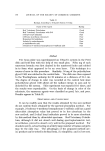
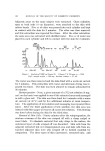
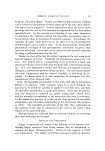
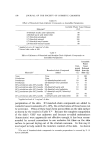
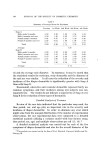
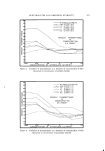
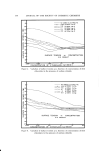
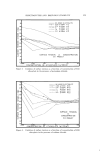
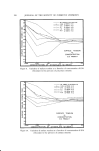
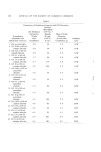
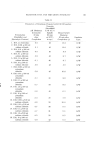
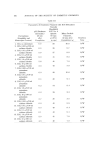
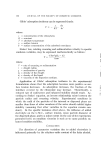
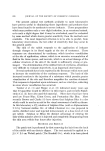
164 JOURNAL OF THE SOCIETY OF COSMETIC CHEMISTS Table I Summary of Average Scores for Erythema Previous 1st Week 2nd Week 3rd Week 4th Week Soap A Male under 9 months 4.00 Male 9 months and over 4.30 Female under 9 months 3.64 Female 9 months and over 3.25 Total 3.80 Average: Soap B Male under 9 months 4.00 Male 9 months and over 2.92 Female under 9 months 3.75 Female 9 months and over 3.37 Total 3.51 O. 85 1.69 1.54 1.54 1.50 2.30 1.70 2.60 O. 55 1.27 1.09 2.36 O. 62 1.69 1.06 1.44 0.88 1.74 1.35 2 02 .f 1.50 1.22 2.89 2.22 3.22 1.31 2.38 2.69 2.69 1.50 2.50 1.90 2.30 1.00 2.25 2.00 2.37 1.26 2.50 2.20 2.64 Average: 2 •4 tis and the average rash diameter. In summary, it may be stated that the statistical results for erythema, scaly dermatitis and the diameter of the rash are very similar. In all cases the reduction of the severity and incidence of the diaper dermatitis is significantly greater with Soap A than with Soap B. Eczematoid, ulcerative and vesicular dermatitis represent fairly un- common symptoms, and their incidence among test subjects was con- sequently low. The results do not indicate a superiority of Soap A over Soap B in the reduction of these types of dermatitis. Detailed A nalysis of Variance Review of the raw data indicated that the particular soap used, the time period, sex, and age play an important role in the severity and incidence of diaper dermatitis. In order to eliminate any error which might arise from the unequal distribution of the number of experimental observations, the raw experimental data were subjected to a detailed statistical analysis utilizing a variance model with four factors (soap, time period, sex, age) and multiple observations per cell (15, 16).* A detailed statistical analysis was carried out for each of the five symptoms of diaper dermatitis and also for the overall diameter of the * This analysis was carried out by the firm of Peat, Marwick, Caywood, Schiller and Co., Chicago, Ill.

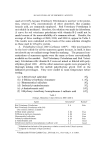
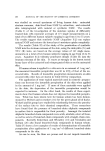
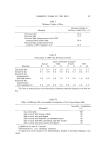
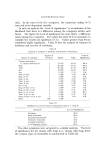
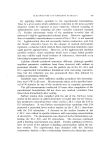
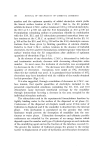
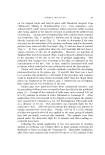
BACTERIOSTATIC SOAP 165 rash. In the cases of the five categories, the numerical coding (0-7) was used as the dependent variable. In such an analysis the "level of significance" is an indicator of the likelihood that there is a difference among the categories within each factor. The higher the level of significance the more likely a difference exists among the categories. For values less than 90 it is customary to consider the results not significant (N.S.). Values greater than 99 are considered highly significant. Table II lists the analysis of variance of incidence and severity of erythema. Table II Analysis of Variance of Incidence and Severity of Erythema Degrees of Level of Source of Variation Freedom Square Value Significance Change with Soap A vs. change with Soap B 1 Soap 1 Time 4 Sex 1 Age 1 Soap X time 4 Soap X sex 1 Soap X age 1 Time X age 4 Time X sex 4 Sex X age 1 Soap X time X sex 4 Soap X time X age 4 Soap X sex X age 1 Time X sex X age 4 Soap X time X sex X age 4 Error 460 17.113 26. 450 90. 254 19 602 0 162 5 386 1 682 5 618 1 308 0. 378 3. 042 1. 386 1.212 4. 802 0. 496 1. 788 1. 339 12. 19. 67. 14. O. 4. 1 4 0 0 2 1 0 3 0 1 78 99.9 75 99.9 40 99.9 64 99.9 12 N.$. 02 99.5 26 N.S. 20 95 0 98 N.S. 28 N.S. 27 N.S. O4 N.S. 91 N.S. 59 90.0 37 N.S. 34 N.S. ß . . Table III Significance Level of Change in Symptoms, Soap A w. Soap B Symptom Level of Significance Erythema 99.9 Scaly dermatitis 99.0 Eczematold derlnatitis N.S. Ulcerative dermatitis N.S. Vesicular dermatitis N.S. Total diameter of rash 99.5 The other symptoms were subjected to a similar analysis, The level of significance for the change with Soap A vs. change with Soap B for the various types of dermatitis is summarized in Table III.
Purchased for the exclusive use of nofirst nolast (unknown)
From: SCC Media Library & Resource Center (library.scconline.org)