450 JOURNAL OF THE SOCIETY OF COSMETIC CHEMISTS confirm the obvious and confuse the more subtle differences between various treatments. Nevertheless the supervision of a dermatologist is essential to provide guidance on correct diagnosis and to safeguard the interests of the volunteer participants. For the purpose of taking measurements, however, it is desirable to employ specially-trained observers, the reliability of whose results has been rigorously tested such observers need not be medically qualified. Despite the supposedly ubiquitous occurrence of dandruff, we have never found it easy to recruit large numbers of severe sufferers for trials this may have been a blessing in disguise, insofar as it has inspired us to devise techniques applicable to the available numbers of volunteers. The clinical studies reported here should not, however, be considered to be adequate to establish fully the efficacy of the proposed formulation. It is, for example, necessary to determine whether efficacy is maintained over many months of usage or whether resistance develops in this particular case, another experiment continuing for 12 months has, in fact, shown that reductions in dandruff levels were satisfactorily maintained but the short term studies are naturally undertaken first, primarily for screening pur- poses. It is interesting to note the finding that about 10 weeks are required to re-establish starting levels of dandruff when treatment has reduced it virtually to zero. The true induction period for dandruff is probably rather less than this, however, since the treatment is likely to have exerted some "carry over" effect. Whenever clinical trials are conducted, according to the patterns discussed here or in other ways, it is important to keep detailed records of any adverse effects (in addition to worsening of the condition under examination). These will generally be confined to mild episodes of transient erythema or itching but the supervising dermatologist will certainly wish to examine anything more than this in some detail. Comparison between test and control products on the incidence of physiological reactions should be made, to show whether irritancy is due to the active constituents or the shampoo base itself or even to establish whether the active constituents may have an anti-irritant effect. ACKNOWLEDGEMENTS The authors wish to thank Dr. W. G. Tillman, who supervised the work reported here as consulting dermatologist. (Received: 2$th August 1966)

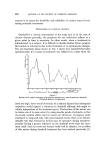
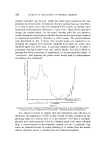
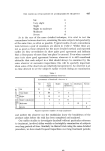
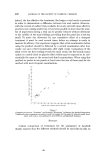
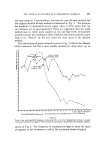
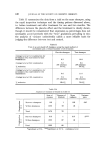
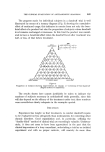
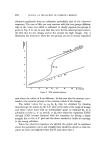
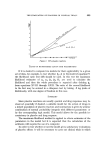
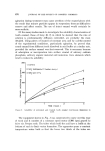
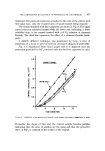
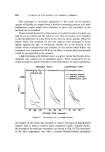
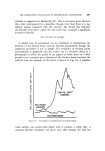
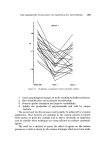
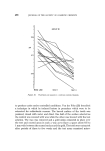
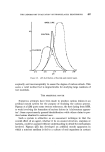
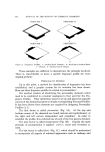
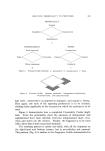
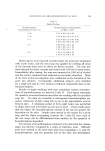
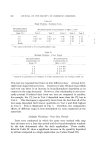
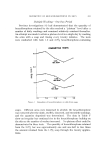
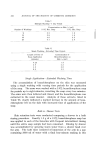
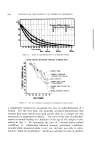
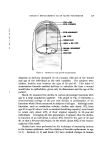
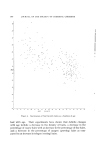
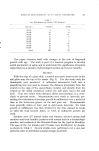
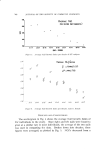
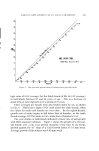
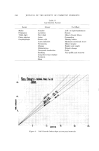
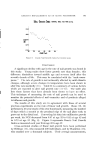
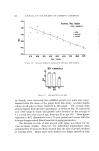
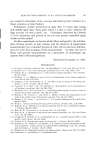
THE CLINICAL EVALUATION OF ANTIDANDRUFF SHAMPOOS 451 REFERENCES (1) Van Abbg, N.J. J. Soo. Cosmetio Chemists 15 609 (1964). (2) Spoor, H. J. Proc. Sai. Seat. Toilet Goods Assoc. No. 31 33 (1959). (3) Thorne, N. Brit. J. Clin. Praat. 17 357 (1963). (4) Vander Wyk, R. W. and Roia, F. C. J. Soc. Cosmetic Chemists, 1õ 761 (1964). Introduction by Mr. Van A bbd Unlike our previous paper on the subject of dandruff, we are now dealing with the clinical evaluation of treatments. It would naturally be preferable to carry out a simple laboratory test but this cannot be done with certainty and so we find ourselves in the field of human subjects and biological variation. The real difficulties arise from the fluctuating character of dandruff itself and a relatively sophisticated technique is necessary for validation of the efficiency of a medicated shampoo. In this paper, we have dealt with the 25-area method of inspection that appeared in the last paper and with a more rapid technique where the scalp is divided into only four imaginary areas. Contrary to expectation, the quadrant method appears to be rather more sensitive. There is a general parallellism or, in fact, linearity between the two techniques, over most of the range of moderate to severe dandruff but at the level of high dandruff there is a greater spread out on the rapid method and the displacement from zero at the lower end suggests that the rapid method is also more sensitive at low levels of dandruff. We have distinguished between weekly or fortnightly examinations over a fairly long time and a programme of only three examinations, comprising before treatment, after one month's treatment and after two months' treatment. One way of representing the data obtained from the abbreviated programme of inspection is in the form of a ternary diagram which shows not only improvement of the group but changes in the direction of "worse" or "no change". DISCUSSION MR. C. PucH: When one looks at the ternary diagram, one can see very clearly the proportion of people getting benefit. To my mind this is a most important quantity to examine in trying to make a better shampoo. In Fig. $ one can see that the placebo shows virtually no movement, but the test shampoo is moving firmly towards 100% getting better. If the trial had been continued for another month, the treated panel might have reached the apex, although this is unlikely. I xvould like to stress that this seems to be an excellent method of presentation giving far more valuable information than percentage improvement on an "average head". MR. VA• ABBr.: Although curves such as those represented in Fig. •t appear to show clearly what is happening week by week, they represent panel averages and they do not show the proportion getting worse or the numbers unchanged. For our ternary diagram, we have arbitrarily chosen a level of 50% improvement or 100% worsening as the level for illustration. However, we could have chosen other levels and shown the appropriate proportions. The actual points on the diagram would differ but the conclusions regarding superiority of treatment-v-placebo would not materially change. MRs. D. L. WEDDERBUR•: You could, perhaps, have omitted a control group in this trial owing to your employment of control and then test and then back on control again. Does your use of a placebo mean that you have found seasonal variations in
Purchased for the exclusive use of nofirst nolast (unknown)
From: SCC Media Library & Resource Center (library.scconline.org)