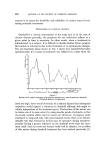
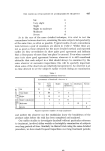
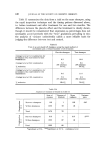
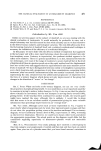
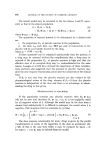
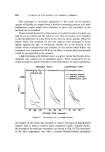
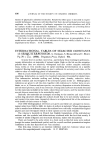
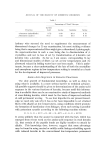
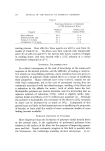
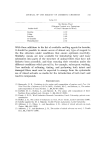
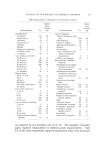
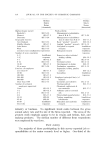
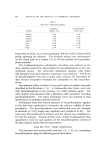
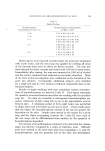
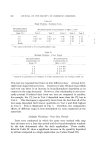
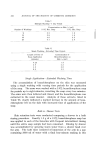
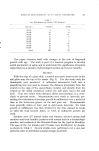
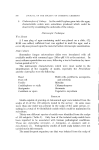
448 JOURNAL OF THE SOCIETY OF COSMETIC CHEMISTS Table II summarizes the data from a trial on the same shampoo, using the rapid inspection technique and the timing pattern discussed above, i.e. before treatment and after treatment for one and two months. The difference between the placebo effect and the treatment is clearly shown, though it should be remembered that expression as percentages does not necessarily accord precisely with the "true" gradations prevailing in vivo the analysis of variance undoubtedly yields a more reliable basis for judging the difference between test and control. Table II Trial of an anti-dandruff shampoo using the rapid method of assessment and a reduced number of observations Average level at 1 st examination for all subjects who reattended for 2rid examination Average level at 2nd examination reduction Average level at 1st examination for all subjects who reartended for 3rd examination Average level at 3rd examination reduction Placebo shampoo Test shampoo 9.3 (38 subjects) 21.8% 9.6 (37 subjects) 22.070 10.8 5.0 (39 subjects) •54.3% 11.0 (32 subjects) 70.9% Table IIA Analysis of variance of results in Table II Sum of Degrees of Mean Variance squares freedom variance ratio __ -- Between shampoos 105 1 105 5.8' Within shampoos 1370 75 18 Total 1475 76 Betwee n shampoo s 313 1 313 17'* * Within shampoos 1222 67 18 Total 1535 68 *Significant at 5 %, ***Significant at 0.1%, confidence level

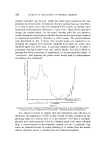
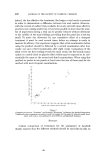
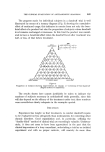
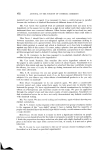
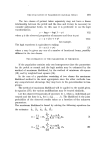
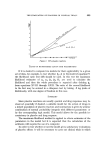
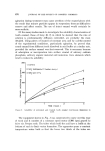
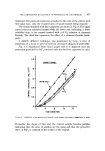
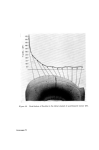
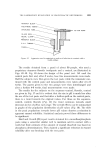
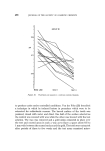
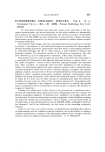
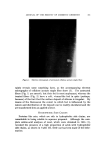
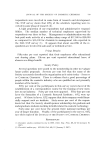
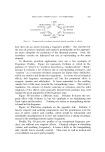
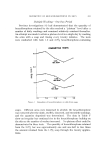
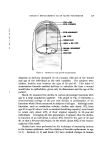
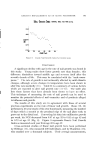
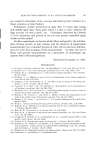
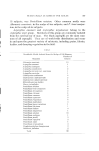
THE CLINICAL EVALUATION OF ANTIDANDRUFF SHAMPOOS 449 The progress made by individual subjects in a dandruff trial is well illustrated by means of a ternary diagram (Fig. $) showing the cumulative effect of continued usage this indicates in concise form not only the bene- ficial effect of a product but also the proportion of subjects whose dandruff level remains unchanged or increases. In this trial the product was consid- ered to have a beneficial effect when the dandruff level after treatment was half, or less, of that before treatment. IDO•. OF • SUBJECTS UNCHANGED COOKE lOO• OF O PLACEBO SHAMPOO, after I months' use SUBJECTS IMPROVED ß • • ACTIVE SHAMPOO, after I manlbs' use 0•, OF SUBJECTS IMPROVED SU•ECTS WORSE Figure $ Proportion of subjects showing improvement, no change, or worsening of their dandruff' (Rapid method of inspection). The results shown here cannot justifiably be taken to indicate the numbers of subjects necessary in antidandruff trials generally, since this will also depend on the efficacy of the treatment under test these numbers were nevertheless clearly adequate in the examples quoted. DISCUSSION Experience has taught us that treatments to combat dandruff require to be evaluated no less stringently than medicaments for correcting other chronic disorders. Good organization and, in particular, utilizing the "double-blind" method of clinical trial are exceedingly valuable. Unfortun- ately, it does not seem to have been appreciated in the past that the clinical impressions of a busy consultant, undertaking a trial as an isolated experiment and with no proper controls, will scarcely do more than
Purchased for the exclusive use of nofirst nolast (unknown)
From: SCC Media Library & Resource Center (library.scconline.org)