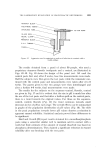
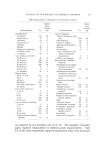
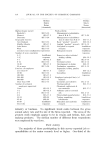
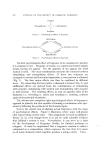
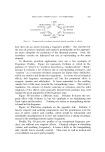
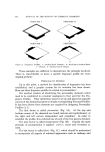
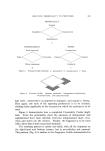
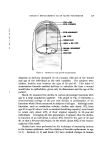
566 JOURNAL OF THE SOCIETY OF COSMETIC CHEMISTS , Undersurface of Colony: As the mold hyphae grow into the agar, characteristic colors were sometimes produced which could be observed by examining the underside of the colony. Microscopic Technique Wet Mount A 3 mm plug of agar-eontaining mold was placed on a slide, $% KOH was added, sufficient heat was applied to melt the agar, and a cover slip was pressed upon the material before microscopic examination. Slide Culture Shoemaker fungus microculture slides were inoculated with all available molds with cornmeal agar (Difco pH 6.0) as the nutrient. In most cultures sporulation was seen, follow ing a ten to fourteen day incu- bation period at 25 øC. The microscopic characteristics which were most useful in the identification of the majority of molds, especially the Penicillium and the Aspergillus •-ere the following: Head Foot-cell Vesicle Conidiophore or stalk Steriõmata Conidium or spore Hulle cells, perithecia, ascospores, and sclerotia Metulae Chlamydospores Stromata Vegetative mycdium RESULTS Molds capable of growing on Sabouraud agar were isolated from the scalps of 55 of the 100 subjects tested in the survey. In some cases more than one mold was present in the scalp of the same person, re- sulting in a total of 90 identifiable molds which could be maintained in subculture. Thirty-one different species of molds were identified from the scalps of 100 subjects (Table I). Only four of the isolated scalp molds have been reported to be associated with human pathological conditions. These are Aspergillus versicolor, A. fumigatus, A. awamori, and A. r•iyckoensis (5). Pathogenicity studies of mold scalp isolates were not carried out in this research. The most frequent organism, one that was isolated from the scalp of

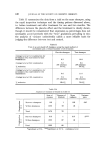
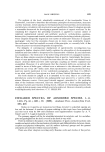
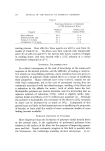
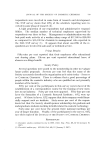
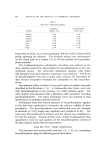
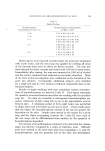
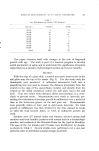
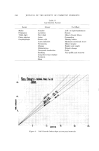
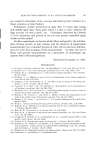
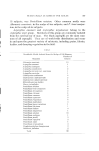
HUMAN SCALP AS HABITAT FOR MOLDS 567 13 subjects, was Penicilliurn riotatum. Other common molds were Alternaria senecionis, in the scalps of ten subjects, and P. brevi-compac- turn, in the scall:s of six subjects. Aspergillus awarnori and Aspergillus rniyakoensis belong to the Aspergillus niger group. Members of this group are commonly isolated from the external ear of man. The black aspergilli are the most com- mon of all aspergilli. They are of world-wide distribution and occur in and upon the greatest variety of substrata, including grains, fabrics, leather, and decaying vegetation in the field. TaEle I Identifiable Molds Isolated from the Scalps of 100 Humans Number of Organism Isolates A Itemaria senecionis Aspergillus awarnori .4 spergillus furnigatus Aspergillus rniyakoensis Aspergillus terricola var. americana Aspergillus versicolor Cladosporiurn avellaneurn Cladosporiurn cladosporioides Cladosporiurn sphaerosperrnurn Helmijzthosporiurn halodes Mucor circinelloides P enicilliurn albidurn Penicilliurn brevi-cornpacturn Penicilliurn chrysogenurn P enicilliurn c itrin urn oeenicilliurn commune ?enicilliurn expansurn oeenicilliurn frequentans P enicilliurn irnplicaturn oeenicilliurn lanoso-coeruleurn Penicilliurn lilacinurn Penicilliurn lividurn oeenicilliurn nalgiovensis oeenicilliurn notaturn Penicilliurn oxalicurn Penicilliurn paxilli oeenicilliurn roqueforti Penicilliurn soppi P enicillium verrniculaturn Pseudosternphyliurn lanuginosurn P•llularia pullulans Total 10 1 1 2 1 1 2 2 4 2 o 2 6 2 4 2 2 4 4 1 1 4 1 13 1 2 1 3 2 2 __ 90
Purchased for the exclusive use of nofirst nolast (unknown)
From: SCC Media Library & Resource Center (library.scconline.org)