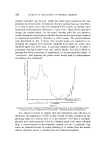
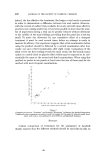
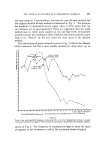
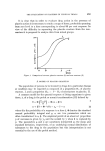
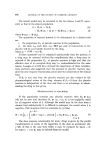
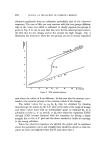
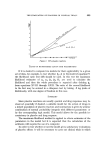
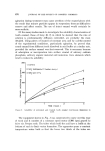
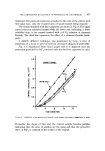
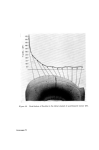
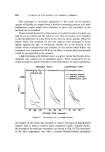
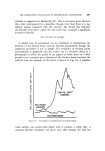
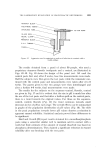
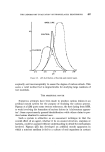
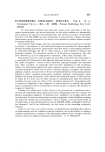
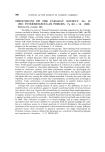
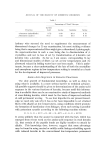
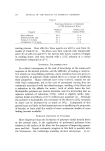
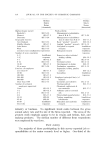
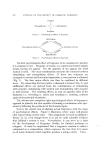
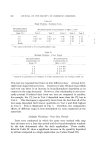
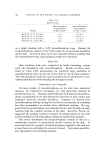
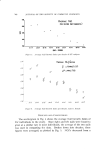
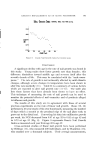
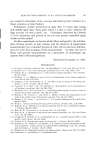
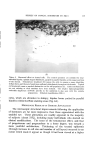
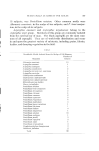
THE LABORATORY EVALUATION OF PROPHYLACTIC DENTIFRICES 487 ,o.I BASE LINE CON FLUORIDE 3'5 3.6 / I I I I I I 3.7 3.8 3"9 pH Figure 19. pH distribution of fluoride and control users. scopically and macroscopically to assess the degree of carious attack. This seems a valid method but is impracticable for studying large numbers of test materials. THE ARTIFICIAL MOUTH , Numerous attempts have been made to produce carious lesions in an artificial mouth system for the purpose of studying the carious process. Pigman et al (26) quote some twenty references, the first dating from 1878, to work involving the formation of carious lesions in 'a laboratory appara- tus'. Some report merely general decalcification while others claim to pro- duce lesions identical to natural ones. Such a system is attractive as an assessment technique in that the overall effect of an agent, whether it be on enamel structure, enzymes or bacteria, could be assessed without understanding in detail the mechanisms involved. Pigman (27) has developed an artificial mouth apparatus in which a nutrient medium is fed to a culture of oral organisms in contact

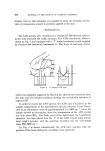
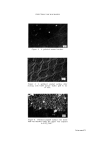
488 JOURNAL OF THE SOCIETY OF COSMETIC CHEMISTS with teeth. The medium was dripped into a two part acrylic box which held the teeth in the lower compartment. A piece of muslin impregnated with plaque derived from saliva was in contact with the teeth while the upper part of the box maintained a pool of nutrient in contact with the plaque and teeth. In this paper Pigman used enamel hardness measurements to assess the effect of topical treatments but other workers, for example Francis and Meckel (28), have reported the production of lesions in this type of equipment. CONCLUSION The techniques mentioned have been used to assess products containing fluorides which became popular as a topical treatment because of the observed reduced caries experience of people living in areas with fluoride in the water supply. This effect was observed and exploited before the mechanism of its action was fully understood and it is possible that, based on the suggestions of Jenkins referred to previously, biochemical or bacterio- logical tests would have been at least as appropriate as the chemical ones described. Any new caries inhibiting agents which may be proposed are likely to be based on knowledge derived from a study of the carious process. The point at which they are intended to attack this process will be known and so specific tests will be defined to study their efficiency. The laboratory assessment procedures will consequently be realistic so that, in the clinical trial which will still be necessary, these expensive and scarce facilities will be used to test only those materials likely to have a marked beneficial effect on dental health. ACKNOWLEDGEMENTS I should like to thank Mr. A. Saxton for the use of the electron micro- graphs, some of which are to be published shortly in another journal. I also gratefully acknowledge permission by the following, to reproduce illustrations-- Figure 3- The editor, Journal of Dental Research Figure 12-The editor, Advances in fluorine research and dental caries prevention Figure 15 - The editor, British Dental Journal. (Received: 20th February 1967)
Purchased for the exclusive use of nofirst nolast (unknown)
From: SCC Media Library & Resource Center (library.scconline.org)