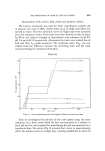
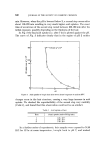
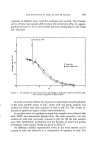
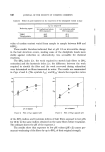
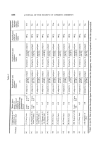
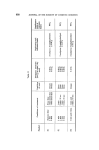
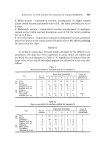
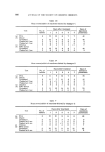
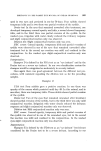
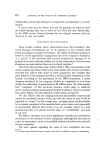
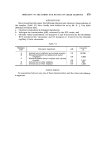
QUANTITATIVE ESTIMATION OF DETERGENCY OF SHAMPOOS 655 inconvenience and time involved. In a number of experiments, where gross effects were expected or were the only ones of interest, initial replication was restricted to two subjects with two samples per subject. Where the results thus obtained showed only limited statistical significance (say, at' the 95% level) the number of experiments could be readily increased until the required replication was attained to establish the significance of any particular conclusion. All experiments were conducted on the basis of a factohal design since it was hoped to learn whether, and to what extent, shampoo time, rinse time, agitation, affected the detergency of a particular shampoo. For any one shampoo, determinations were thus carried out at the two extreme shampoo and rinse times as well as at the two extreme conditions of mechanical agitation. All the products used were proprietary shampoos based on lauryl sulphate. RESULTS Table I shows the results obtained for a series of experiments involving five different products, some used on a dirty head of hair and some used in a second application on a head of hair washed immediately before. Two columns for tolerance limits and replication are given, to indicate the extent to which the tolerance limits depended on the replication. The column "Whether between-subject variance" has been included to show that only in a small number of cases can the true experimental. error (residual variance) be attributed to the use of different subjects. In most cases it arises between the finger/wool bundle combinations on the hand during any one shampoo. The results from each experiment were subjected to an analysis of variance to determine the significance or otherwise of the various factors included in the experimental design, and the tolerance limits of the average values obtained. Both the significance of major factors and the tolerances were calculated with due regard to the true experimental error, i.e. whether it arose from subject to subject variance or sample-to-sample (within subject) variance. DISCUSSION In the three cases 1, 2, 10, it can be seen that the results obtained were time-dependent. The first two of these, which were repeats of the same experiment carried out at an interval of three months, indicated that

656 JOURNAL OF THE SOCIETY OF COSMETIC CHEMISTS
Purchased for the exclusive use of nofirst nolast (unknown)
From: SCC Media Library & Resource Center (library.scconline.org)