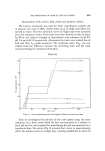
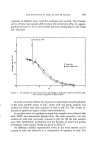
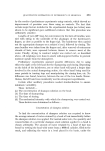
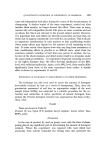
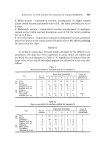
THE BEHAVIOUR OF HAIR AT LOW PH VALUES 647 copiously in distilled water until the washings were neutral. The titration curves of these hair samples did not show the second step (Fig. $), suggest- ing that the latter is due to irreversible processes taking place in the virgin hair structure. 1.5 0.5 I I I I mole g-i x IO g 0 Virgin Heir elf I I I I 2 3 4 5 pH Figure $ Acid uptake of acid treated hair (presoaked in acid and washed acid free) after seven hours' exposure to HC1 at 25øC In order to clarify whether the exposure to acid media caused hydrolysis of the main peptide chains in hair, amino acid end group analysis was carried out before and after exposure of hair to pH 1.2. The results in- dicated no significant degree of main chain hydrolyssis. In another series of experiments virgin hair samples were reduced with both THPC and ammonium thioglycolate. The same procedure was also carried out with hair previously exposed to pH 1.2. All the hair samples were then methylated, hydrolysed and the fraction of intact S-S groups determined. Some typical results are given in Table II. No difference (within experimental error) in the total amount of S-S content in hair was observed as a consequence of exposure to acid. The

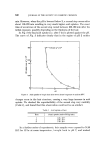
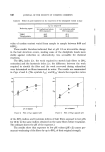
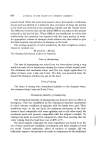
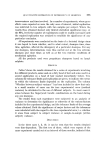
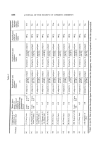
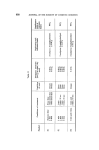
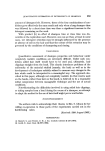
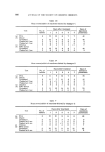
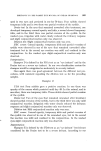
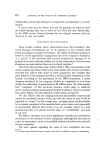
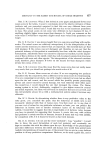
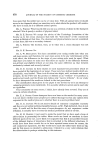
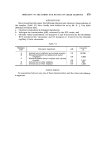
648 JOURNAL OF THE SOCIETY OF COSMETIC CHEMISTS Table II Effect of acid treatment on the reactivity of the disulphide bonds in hair Reducing agent THPC Thioglycolate % wt. total S-S S-S reduction before ItC1 exposure 33.7 38.8 S-S reduction after HC1 exposure 27.1 31.2 value of cystine content varied from sample to sample between 6.00 and 6.20%. These results therefore indicated that at pH 1.3 an irreversible change in the hair structure occurs, making some of the disulphide bonds more stable against reduction or, alternatively, less accessible for chemical reactions. The 20% index (i.e. the work required to stretch hair fibres to 20% extension) and the hysteresis index (i.e. the difference between the work required to stretch the fibre and the work recovered during relaxation) were determined on fibres immersed in water. The results are summarised in Figs. 4 and 5. (The symbols 12 o' and H 2 o' denote the respective ratios Iao pH of Exposure F•gure 4 Plot ooe I20' against pH % IOO H2( pH of Exposure Figure 5 Plot of H20' against pH of the 20% indices and hysteresis indices of hair fibres exposed to low pHs for 12 hr to the same indices obtained on the same fibres before treatment. The ordinate shows the pH of the exposure.) The results show that exposure to low pH values (pH 2) causes per- manent weakening of the fibres by up to 30% of their original strength.
Purchased for the exclusive use of nofirst nolast (unknown)
From: SCC Media Library & Resource Center (library.scconline.org)