JOURNAL OF THE SOCIETY OF COSMETIC CHEMISTS Face powder rarely causes dermatitis only three patients were seen who gave a positive patch test to their face powder, but in none was the allergen traced. A fourth patient was found to be sensitive to lanolin, a small amount of which was present in the pancake powder she was using. On changing to loose powder all the symptoms subsided. Mascara, eyeshadow and eye-liners are frequently thought by the patient to be the cause of irritation, redness and swelling of the eyelids. It is possible that these cosmetics, in particular mascara and eye-liner, may sometimes act as mild irritants and the patient may be intolerant of them. On patch testing, however, it is rare for an allergic sensitivity to be found. Three patients were thought to be sensitive to mascara, in two the com- ponent fractions were tested. In one, they were all negative and the mascara test also became negative. The other patient reacted to a test mixture of undecylinic acid and beeswax unfortunately she refused to return for further patch testing and which of these two caused the reaction was not determined. Epstein (13) has emphasised that under an occlusive patch test mascara, particularly some of the liquid forms, frequently gives a false positive reaction, which may be indistinguishable from an allergic response. He attributed this effect to the presence of solvents and found that it could be avoided by using a non-occlusive patch test, in which the mascara was covered by a freely permeable dressing. Eye-shadow seems to be innocuous, and we have not had a patient with a proven sensitivity to this cosmetic. (Received: 5th September 1966.) (1) (2) (3) (4) (s) (6) (7) (8) (9) (10) (11) (12) (13) REFERENCES Magnusson, B. and Hersle, K. Acta Dermatol. Venereol. 45 123 (1965). Magnusson, B. and Hersle, K. Acta Dermatol. Venereol. 45 257 (1965). Rieger, M. M. and Battista, G. W. J. Soc. Cosmetic Chemists 15 161 (1964). Hecht, R., Schwarzschild, L. and Sulzberger, M. B. N.Y. State J. Med. 119 2170 (1939). Cainan, C. D. Acta Allergol. 13 493 (1959). Wilmsmann, H. J. Soc. Cosmetic Chemists 16 105 (1965). Calnan, C. D. J. Soc. Cosmetic Chemists 18 (1967). Rein, C. R. and Rogin, J. R. Arch. Dermatol. Syph. 61 971 (1950). Reisch, M. Arch. Dermatol. 80 230 (1959). Cainan, C. D. and Shuster, S. Arch. Dermatol. 88 812 (1963). Haber, L. C., Harris, H., Leider, N. and Baer, R. L. Arch. Dermatol. 90 572 (1964). Cronin, E. Brit. J. Dermatol. 78 167 (1966). Epstein, E. Arch. Dermatol. 91 615 (1965).

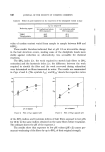
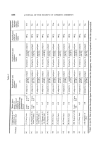
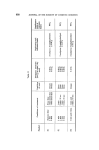
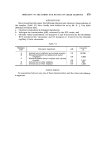
CONTACT DERMATITIS FROM COSMETICS 687 Introduction by the lecturer Recently we have investigated patients with lanolin sensitivity which is difficult to detect. We have found that the best method of patch testing is to use 30% wool alcohols in Vaseline or Ung. Aquosum, B.P. which contains 3% wool alcohols, and apply it to the skin under polythene. The latter method is effective but when the reaction is positive the test unfortunately causes rather a large patch of eczema. V•hile investigating these patients with lanolin sensitivity we attempted to identify the actual allergen in the wool alcohols. Fractions of the alcohols were obtain- ed by crystallisation and patients were patch-tested, but there was no uniformity of results. The response varied from patient to patient and it seems definite that there is more than one allergen responsible for lanolin sensitivity this would account for the fact that lanolin-sensitive patients can sometimes tolerate one lanolin preparation but not another. DISCUSSION DR. K. SAMES: I consider that over-due importance is still being attributed to the effects of eosin as such, in particular, and to the other halogenated fluoresceins as such, in instances of lipstick dermatitis. I am sure that it is agreed from all sides that the actual number of instances of lipstick dermatitis has decreased appreciably over the last few years to such proportions that it is now practically negligible. In an attempt to study to what extent eosin or any particular halogenated fluorescein is the kingpin of lipstick dermatitis complaints, I have made a study of all the customer medical complaints of lipsticks received by my own company over the period 1962-65 inclusive. I must emphasise that the total number received is so small as to be mathe- matically insignificant by comparison with the very large number of lipsticks sold over the open counter, and that I have not been able to follow up individually even this small number so as to be able to ascertain whether they were genuine medical complaints or not. I have, therefore, accepted each one of these complaints for the purpose of this study as though it were unqualifiably genuine and have studied the formulations of the various shades of lipsticks involved only on the basis of the halo- genated fluoresceins contained therein, since the base and perfume and other raw materials are in the main common to all the formulations. The units, in which I have shown in Tabl• I the frequency of occurrence, have no denomination whatsoever because they represent so very small a number averaged over four years and have then been averaged over the number of shades which actually contain the particular pigments which have been typified. They can, therefore, only be taken as a ratio figure and without any true numerical value. Table I indicates that there are nine groups which in actual fact represent 21 shades of lipsticks and that these nine groups subdivide themselves into five of very small numerical units, two of very slightly greater intermediate arithmetical value of units and two of appreciably higher number of units, approximately six times as great as those of the lowest group. I am not attempting to postulate any significance here but the following apparent hypotheses emerge:- 1. The presence of tetrabromo alone gives no greater incidence figure than if none of the halogenated fluoresceins are present, and the same applies when dibromo is used alone or when dibromo is used with tetrachlorotetrabromo or when di-iodo is used with tetrachlorotetrabromo. The middle group, approximately two and a half times
Purchased for the exclusive use of nofirst nolast (unknown)
From: SCC Media Library & Resource Center (library.scconline.org)