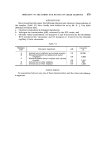
. SOCIETY OF COSMETIC CHEMISTS OF GREAT BRITAIN 701 Using your chosen example, clearly distinguish between these detergent types. (ii) Describe briefly the industrial process for the manufacture of two of the following types of detergent: (a) soaps (b) alkyl sulphates (c) alkyl ether sulphates Particular attention should be given to the chemical reactions involved. What is meant by the terms "micelie" and "critical micelie con- centration"? Describe a method for measuring the critical micelie concentration of a detergent. If the micellular molecular weight of potassium oleate is 29,000 and that of sodium lauryl sulphate is 24,000, how many molecules of each detergent are there in a micelie? C----12, H = 1. Na =23, S =32, 0 = 16 SECTION B 3. Indicate the chemical nature of the various types of materials with waxy properties which are used in the cosmetic industry and outline their uses. What raw matehal quality control tests would you apply to each type of waxy material? 4. Describe in as great detail as you can the composition of animal fats and vegetable oils. Explain how and why the chemical structure of these compounds influences their physical properties and their tendency to develop rancidity. SECTION C 5. Define the Beer-Lambert law and explain with the aid of diagrams the essential features of a simple spectrophotometer. A 3.3% solution of substance "A" contained in a 0.5 mm thick cell absorbs 72% of light of wavelength ZA (where substance "B" does not absorb appreciably). A 5.1% solution of substance 'B' in a 0.25 mm thick cell absorbs 41% of light of wavelength ZB (where "A" does not absorb). The ratio of the optical densities at ZA and ZB in a solution of a mixture of "A" and "B" only was 3.7:1. Calculate the composition of the mixture of "A" and "B" (Log tables are provided).

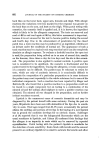
702 JOURNAL OF THE SOCIETY OF COSMETIC CHEMISTS Discuss the relative merits and limitations of paper, thin-layer, and gas-liquid chromatography for the analysis of cosmetic products. Describe in general terms the apparatus used for gas chromatography. SECTION D 7. What do you understand by the word "perfume"? The following are terms used by perfumers to describe odours. Name for each term one perfumery material which could be so described:-- woody, citrus, spicy, animal, floral, balsamic, herbal. Discuss the problems involved in the perfuming of two of the following products: (a) talc (c) white toilet soap (b) lipstick (d) aerosols Discuss how you would test the suitability of a perfume for one of these products. 8. What methods are used for the production of natural products used in perfumery? By which method is (1) bergamot oil, (2) jasmin absolute, (3) lavender oil obtained? Write brief notes on the fields of chemistry associated with the natural odorous products used in perfumery. Give examples of two chemicals of each field and the products in which they occur naturally. . 10. SECTION E Explain how emulsifying agents facilitate the formation of an emulsion and how they influence the nature of the emulsion. What other factors influence the nature of the emulsion? Name the different types of amphipathic emulsifying agent and give an example of each type. State Poiseuille's law and indicate under what conditions it applies. A given volume of water flows through a capillary viscometer in 45 seconds and an equal volume of an aqueous glycerol solution whose density is 1.12 g/cm requires exactly 11.5 minutes to flow through. Calculate the absolute viscosity of the glycerol solution. (Assume that the viscosity of water is 1.000 cP under the conditions of the experi- ment and that its density is 1.00 g/cm. 3)
Purchased for the exclusive use of nofirst nolast (unknown)
From: SCC Media Library & Resource Center (library.scconline.org)