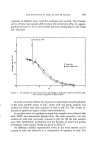
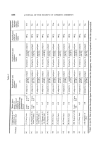
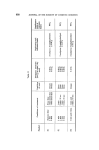
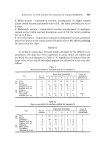
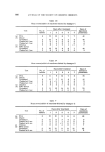
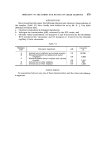
IRRITANCY TO THE RABBIT EYE MUCOSA OF CREAM SHAMPOOS •7 Shampoo A FDA test: Four rabbits gave a positive reaction. Each animal showed temporary iritis and partial eversion of the eyelids and in two rabbits there were corneal opacities, one of which was still present 134 days after appli- cation of the shampoo. Draize test: In the three eyes that remained unwashed after treatment, one developed a temporary corneal opacity and all three showed iritis and partial eversion of the lids. Irrigation with water alleviated the severity of the response which was confined to the conjunctivae. Dilution test: One rabbit showed a positive reaction with partial eversion of the eyelids. In the remaining animals, mild conjunctival reaction only was observed. HRC screen: Corneal opacity, which was still present on day 134, tempor- ary iritis and considerable conjunctival reaction with partial closure of the eyelids was observed in one of the eyes that remained unwashed after treatment. In the second unwashed eye, mild conjunctival reaction only was observed. In the washed eyes, reaction was confined to the con- junctivae. Interpretation: Shampoo A is defined by the FDA test as an "eye irritant" and by the Draize .test and HRC screen as a severe eye irritant. Dilution to 10% and irrigation with water clearly reduce the irritation response. There was, therefore, good agreement between the different test pro- cedures with this shampoo, except that the dilution test obviously did not reveal the full potential irritancy of the shampoo. Shampoo B FDA test: Five rabbits gave a positive reaction. Each animal showed partial eversion of the eyelids and in three there was temporary iritis. In the remaining rabbit, reaction was mild and confined to the conjunctivae. Draize test: In the three eyes that remained unwashed after treatment, two showed temporary iritis and all three showed partial eversion of the eyelids. In the eyes irrigated with water, mild conjunctival reaction only was observed. Dilution test: None of the rabbits gave a positive reaction. Reaction was mild and confined to the conjunctivae. HRC screen: Partial eversion of the eyelids was observed in one of the eyes that remained unwashed after treatment. In the second unwashed eye

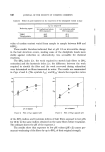
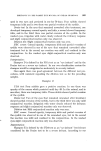
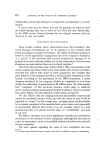
668 JOURNAL OF THE SOCIETY OF COSMETIC CHEMISTS and both washed eyes mild conjunctival reaction only was observed. Interpretation: Shampoo B is defined by the FDA test as an "eye irritant", but is not considered to be a severe irritant in the Draize test. By our own arbitrary classification, it is categorised as mildly irritant. Again, as with Shampoo A, there was good agreement between the different test procedures, and the dilution test did not reveal the full potential irritancy of the shampoo. Shampoo C FDA test: Five rabbits gave a positive reaction. Corneal opacities, both of which persisted until day 40, were observed in two rabbits, and all five animals showed temporary iritis. In two rabbits there was partial eversion of the eyelids. Draize test: Corneal opacity was observed in one of the eyes that remained unwashed after treatment and all three unwashed eyes showed temporary iritis and mild conjunctival reaction. In the washed eyes irrigation with water clearly reduced the irritancy response and mild conjunctival reaction only was observed. Dilution test: One rabbit showed a positive reaction with partial eversion of the eyelids. In the remaining animals mild conjunctival reaction only was observed. HRC screen: Corneal opacity, temporary iritis and partial eversion of the eyelids were observed in one of the eyes that remained unwashed after treatment. In the remaining unwashed eye and those irrigated with water mild conjunctival reaction only was observed. Interpretation: Shampoo C is defined by the FDA test as an "eye irritant" and by the Draize test as a severe irritant. By our own arbitrary classification system the shampoo is categorised as moderately to severely irritant. The irri- tation was reduced in those eyes irrigated with water, and in those treated with the 10% dilution. Once again there was good agreement between the different test pro- cedures, with the dilution test again failing to demonstrate the potential irritancy of this shampoo. Shampoo D FDA test: Five rabbits gave a positive reaction. Corneal opacity devel-
Purchased for the exclusive use of nofirst nolast (unknown)
From: SCC Media Library & Resource Center (library.scconline.org)