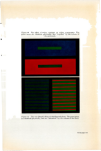
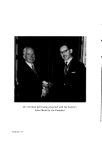
EYESWEET AND COLOUR SCIENCE IN COSMETICS 519 ceptive pathway is evident from the fact that some of the more subtle of the effects described are seen, or not seen, according to the mental attitude of the observer. If he thinks of the total colour effect in the spirit of the artist receptive to all outside impressions, he will see them if he regards the colour array as a set of physical stimuli which he tries to analyse as object- ively as possible, then the subtler effects will not be apparent to him. For progress to be made in the study and explanation of these effects, it is obvious that considerable care and cunning will be needed in devising suitably revealing experiments. CONCLUSION Coming finally to the title of this lecture, you will by now, I hope, have seen its meaning. Eyesweet describes what looks just right, the craftsman uses the term for the successful product of his craft, of his cunning of hand and eye which make a thing of beauty unpredictable by measurement. Science records what we know when we have measured the craftsman's work: it can tell the manufacturer how to make any given thing, but only eyesweet can tell him what to make. (Received: 2nd April 1968.) REFERENCES (1) Longuet-Higgins, H. C. Nature, •,17 104 (1968). {•,) Young, T. Phil. Trans. Roy. Soc. London Ser. B 911 12,237 (1802). (3) Young, T. A course of lectures on natural philosophy (1807). (Johnson, London). (4) Wiinsch Versuche und Beobachtungen •ber die Farben des Lichtes (1792) (Leipzig). (5) yon Helraholtz, H. Phil. Mag. 4 519 (1852). see also: Handbuch der Physiologischen Optik (1866) (Voss, Hamburg) in English-- Treatise on physiological optics (1924) (Optical Society of America, New York). (6) Maxwell, J. C. Phil. Trans. Roy. Soc. London Ser. B lõO 57 (1860) see also: Scientific papers I 410 (1890) (University Press, Cambridge) (7) Donders, F. C. Brit. JlIed. J. 11 768 (1880). (8) Nickerson, D. and Newhall, S. M. J. opt. Soa.•Am. 8•1419 (1943). (9) Crawford, B. H. Brit. J. Appl. Phys. 14 319 (1963) General references le Grand, Y. (transl. Hunt, Walsh and Hunt) Light, colour and vision (1965) (Chapman & Hall, London). Burnham, R. W., Hanes, R. N[. and Bartleson, C. J. Color a guide to basic facts and concepts (1963) (John Wiley, New York). The Chairman then presented the lecturer with the Society's silver medal, amidst applause from the audience. This was followed by a vote of thanks proposed by the Vice-President of the Society, Mr. C. P•gh.

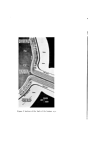
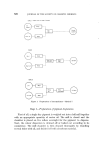
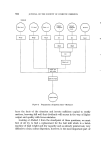
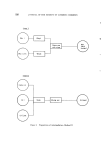
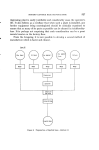
J. Soc. Cosmetic Chemists 19 59.1-530 {1968) ¸ 1968 Society of Cosmetic Chemists of Great Brttain Modern lipstick base manufacture P. D. W. DALEY* Presented at the Symposium on "Processing and Manu- facturing", organised by the Society of Cosmetic Chemists of Great Britain, at Leamington, Warwicks. on 14th November 1967. Synopsis-Two different lipstick base manufacturing processes are described. Both methods can yield very good products but the amount of work and cleaning involved in the first method greatly exceeds that in the second. Furthermore, as demands rise the first method cannot be easily adapted for higher operating rates. In most manufacturing industries today, good process operators are difficult to find and retain. In our own field of toiletries and cosmetics, although products are clean and easy to use when they reach the consumer, many difficulties are encountered when raw materials and cosmetics in bulk come to be handled within the factory. These difficulties are aggravated by the fact that by and large we are an industry involved in making large numbers of smallish batches. Unless methods are carefully thought out initially and then periodically reviewed, the process worker can have a job which is unenviable, involving struggles with heavy containers and con- tamination of clothing with colour, oils etc. If this sort of situation persists, labour turnover often rises, and interest in the job certainly declines with the inevitable lowering of quality standards. METHOD I Three basic intermediates are prepared initially and stored for subse- quent use. Their methods of manufacture are indicated by the flow charts in Fig. 1. *Gala Ltd., Surbiton, Surrey 521
Purchased for the exclusive use of nofirst nolast (unknown)
From: SCC Media Library & Resource Center (library.scconline.org)