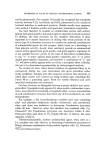
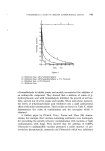
534 JOURNAL OF THE SOCIETY OF COSMETIC CHEMISTS Hexachlorophane is essentially active against gram-positive bacteria, e.g. Staphylococci and consequently its use alone as a 3% emulsion in creams for the treatment of surgeons' hands in pre- and post-operative situations has its limitations. The question arises as to the effect of these systems containing 3% hexachlorophane against pathogenic gram-negative micro-organisms, such as Pseudomonas pyocyanea, Escherichia coli and Proteus. A scrub which is not effective against a broad range of organisms is potentially dangerous. During production the scrub can become con- taminated with organisms, resistant to the antimicrobial present, which can cause an infection when used. In addition, an initially sterile scrub can pick up resistant strains during use. It is therefore important that the antimicro- bials used should have the greatest possible spectrum of activity and thus the in vivo as well as the in vitro effect of the scrub is important. It has been observed, for example by Knight et al (1), that a con- tainer of a 3% hexachlorophane emulsion was contaminated with gram- negative organisms and retained these organisms for several days. The use of such a product therefore in pre-operative "surgical scrubs" as a cleanser for the mucous membranes of infants, children, adults and for the dry wash of new born babies or as a surgical lubricant in gynaecology, should be rejected for hospital use if laboratory tests show the presence of such gram- negative organisms in unopened containers. Anderson (2) has observed the persistent growth of gram-negative organisms (Proteus and Pseudomonas) in hexachlorophane soaps. He has emphasised that the suppression of pathogenic Staphylococci by several active antimicrobials, such as hexachlorophane, has given rise in many cases, to their replacement by gram-negative organisms. In particular, Pseudomonas pyocyanea and Proteus cause cross infection and are more likely to appear if the antimicrobial in use has no activity against gram- negative microbes. In considering the increase of gram-negative infection of the urinary tract, workers in Amsterdam (3) were able to relate this increase to the use of chlorhexidine as an antimicrobial agent. Most strains of Proteus investigated were insensitive to chlorhexidine at the recommended concentration. It is interesting that these workers (3) found that a com- bination of kanamycin (or neomycin) with tetracycline was synergistic against these organisms. The action of kanamycin (501•g ml-1) with tetra- cycline (20 I•g ml- 1) was bactericidal on all the strains of Proteus investigated, although such concentrations alone were ineffective. Earlier work has shown the synergistic effect of using combinations of penicillin, tyrothricin, sulphonamides, acridines, quaternary compounds

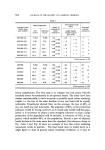
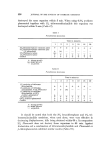
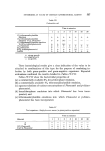
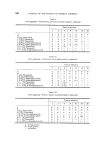
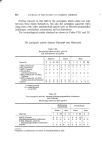
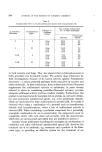
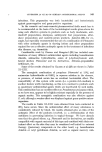
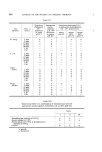
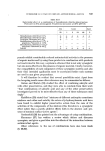
SYNERGISM IN VITRO OF CERTAIN ANTIMICROBIAL AGENTS 535 and the phenoxetols. For example, Kaiser (4) has recognised the synergistic activity between 0.1% tyrothricin and 0.5% phenoxetol in the control of bacterial infection in medicinal products. Similar results were apparent when using 2, 7 diamino acridine and quaternary ammonium compounds. The need therefore to consider an antimicrobial system with activity against both gram-positive and gram-negative organisms is clearly essential. In addition, the time necessary for the complete destruction of these organisms is of utmost importance in dealing with cream products of the above type. It is therefore necessary to consider the potential combinations of antimicrobial agents for this purpose, which based on a knowledge of their inherent activity, should, when combined, provide an antimicrobial system active against both gram-positive and gram-negative organisms. It is not possible however, purely on the basis of theoretical considerations, to say "x" is active against gram-positive organisms and "y" is active against gram-negative organisms, and therefore a combination of "x" and "y" will show activity against both, as well as a synergistic effect. Initially, this has to be determined experimentally by bacteriological methods. We carried out tests, where known numbers of organisms likely to be encountered during use, were innoculated into given quantities, under sterile conditions. Samples were then removed at known time intervals on which plate counts were carried out using nutrient agar containing 3% Tween 80 as a quenching agent. From the results obtained each anti- microbial combination was evaluated. One has, of course, to distinguish between a purely additive and syner- gistic effect. Synergism is only apparent if, when usedin combination to pro- vide a more effective bactericidal or fungicidal effect, a lower concentration of each constituent is necessary than when any of the constituents are used independently. For example, a 3% hexachlorophane emulsion (o/w type containing alkyl aryl polyether sulphonate, lanolin cholesterols, and petrolatum) when used alone was ineffective in destroying Pseudomonas pyocyanea within 30 min. However, when this emulsion was combined with 1% Phenoxetol*, the Pseudomonas pyocyanea was destroyed within 3 min. Phenoxetol when used alone at 1ø/0 required 30 min to destroy the same organism. (Table I). Tribromosalicylanilide, another antimicrobial agent, when used as a 1% emulsion was only effective in destroying Pseudomonas pyocyanea in 30 min, whereas a combination of this product together with 10/0 Phenoxetol *Phenoxetol: [i-phenoxyethanol
Purchased for the exclusive use of nofirst nolast (unknown)
From: SCC Media Library & Resource Center (library.scconline.org)