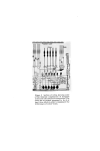
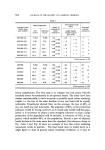
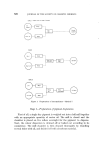
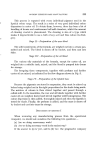
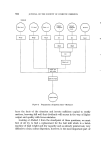
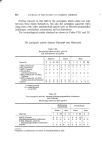
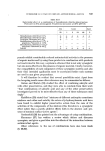
54O JOURNAL OF THE SOCIETY OF COSMETIC CHEMISTS Further interest in this field is the synergism which exists not only between these esters themselves, but also the synergism apparent when using them with other antimicrobial agents such as dibromo-propamidine isethionate, merthiolate, phenoxetol, and its derivatives. The bacteriological results obtained are shown in Tables VIII and IX. The synergistic activity between Nipastat* and Phenoxetol Table VIII Bactericidal effect at 22øC, pH 6.9 B.6 Pseudornonas pyocyanea minutes hours days Material 3 5 10 30 1 3 5 1 5 7 21 28 0.25•oPhenoxetol + + + + + + q- + + + + -- 2.0 •o Phenoxetol 0.09•o Nipastat q- q- q- q- q- q- 0.2 •o methyl p-hydroxybenzoate q- q- q- q- q- q- q- q- q- q- q- q- 0.25 •o Phenoxetol q,0.09 •o Nipastat 0.25 •o Phenoxetol q-0.15 •o methylp-hydroxybenzoate q- q- q- q- q- q- q- Control + + + + + + + + + + + + q- strong growth (+) slight growth -- no growth Table IX The synergistic activity between dibromopropamidine isethionate and Nipastat Bactericidal effect at 22øC-pH 6.9 Material 0.08 •o Nipastat dibromopropamidine isethionate 0.05 •o Nipastat +0.01 •o dibromopropamidine isethionate Control Micrococcus Epidermidis hours days 3 24 2 5 . -- __ __ + + + + -- __ + + + + Pseudornonas hours days 1 $ 24 2 5 + + (+) + + + + + + q- q- q- q- *Nipastat: a combination of esters of p-hydroxybenzoic acid

SYNERGISM IN VITRO OF CERTAIN ANTIMICROBIAL AGENTS 541 It will be clear from Tables V11I and IX that one is able to go some way in approaching an all-purpose preservative by using combinations of materials. We have now obtained a product with a considerably enhanced anti- microbial system and in considering further possibilities of synergism this combination rather than a single ester should be used. In our work, there- fore, in considering possible bacteriological experiments, an ester combin- ation has been used as the one component of further mixtures, as already indicated in Tables VIJI and IX. I wish to emphasise that in our bacteriological tests we have laid con- siderable stress on determining the effectiveness of combinations on the organism Pseudomonas pyocyanea and other gram-negative organisms. The reasons for this have been our observations of the notable increase of this organism in cosmetic preparations. One suggestion put forward for the ever increasing incidence of Pseudomonas pyocyanea is the widespread use of hexachlorophane. Continued use of this material considerably reduces the degree of gram-positive skin bacteria, but clears the way for infection by gram-negative organisms such as Pseudomonas pyocyanea, Proteus, Coli, etc., against which this product is ineffective. This finding, amongst others, has led to the present bacteriological examination of combinations of the above type. A report (13) refers to a possible connection between the increase in pyocyaneus infections and the widespread use of disinfectants containing hexachlorophane which are ineffective against gram-negative organisms. Recently, Savin (14) in an investigation of Pseudomonas pyocyanea infections in a hospital skin ward, found a diluted steroid cream to contain large numbers of these organisms. It is resistant to most antibiotics and able to fill the biological vacuum left when these are used. Since the intro- duction of antibiotics, Pseudomonas pyocyanea has played an increasing role in human infection. Reference (15) was made early last year to several instances of in- fection by Pseudomonas which developed despite the fact that treatment had been carried out with creams containing antibiotics, such as hydro- cortisone, amphomycin and neomycin to which this organism is usually sensitive. After these cases had been investigated further, it was found that opened tubes of the used ointment were themselves infected with Pseudo- monas pyocyanea and that several other gram-negative bacteria are able to survive in what might. be regarded as an unfavourable environment, pro- viding a trace of moisture is present. Last year Burdon and Whitby (16)
Purchased for the exclusive use of nofirst nolast (unknown)
From: SCC Media Library & Resource Center (library.scconline.org)