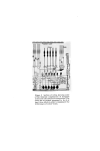
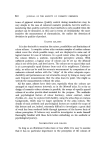
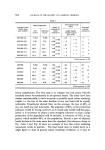
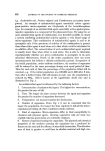
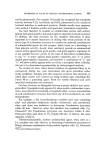
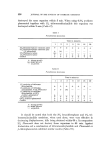
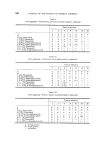
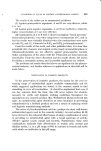
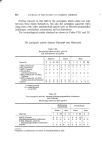
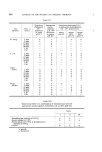
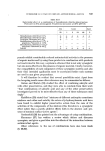
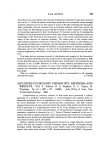
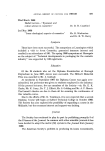
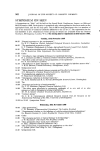
546 JOURNAL OF THE SOCIETY OF COSMETIC CHEMISTS Table XI Test bacteria Ps. aerug E. coh $taph. $trept. faecalis Time of action 1 min 5 rain 10 rain 15 rain $0 rain 1 hr 2 hr 1 rain 5 rain 10 rain 15 rain 80 rain lhr 2 hr Propylene Phenoxetol 10-2 1 5 lO 15 30 1 2 min min min min rain hr hr 1 min 5 min 10 rain 15 rain $0 rain 1 hr 2 hr dissolved in water pH 4.7 q- q- + + + __ -- -- -- + + + + + + + Aminacrine hydro- chloride 1/2. 10 -3 dissolved in water pH 6.0 Propylene phenoxetol 10 -2 q- aminacrine hydrochloride 1/2 . 10 -3 dissolved in + + + + + + + + + + + + + + + + + + + water serum pH 5.9 20 •o pH 7.6 -- + -- __ __ __ __ __ -- __ + + -- + -- __ __ __ -- __ -- -- + + + + + + + + -- + -- __ + -- + -- + -- + -- + __ -- serum $0% pH 7.9 q- + + + __ -- -- -- + + + + + + -- + + + + + -- Table XlI Bactericidal effect of a combination of benzalkonium chloride and benzyl alcohol against Escherichia colt, at 22øC (pH 4.7) Benzalkonium chloride at 0.01 •o Benzyl alcohol at 0.5 •o Benzyl alcohol at 0.5 •o q- benzalkonium chloride at 0.01 •o Control hours q- q- 24 growth no growth

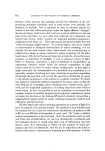
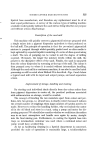
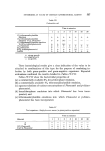
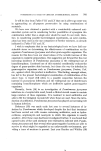
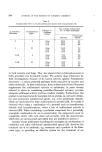
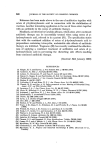
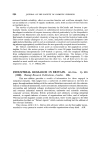
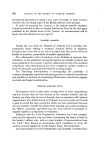
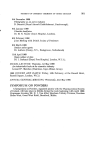
SYNERGISM IN VITRO OF CERTAIN ANTIMICROBIAL AGENTS 547 Table XIII Bactericidal effect of a combination of benzalkonium chloride plus propylene Phenoxetol in 20 % serum against Pseudomonas pyocyanea at 22øC (pH 6.5) Benzalkonium chloride at 0.1% Benzalkonium chloride at 0.2 • Propylene Phenoxetol at 1.0 • Benzalkonium chloride at 0.1 • q- propylene Phenoxetol at 1.0 • Benzalkonium chloride at 0.1% q- propylene Phenoxetol at 0.5 % Control i 20 hours days 1 3 24 48 3 + + + + + + + + q- pounds exhibit considerably reduced antimicrobial activity in the presence of organic matter and by using these products in combination with products not inactivated in this way, a system is obtained that is not only' synergistic but also more effective in the presence of organic material. Clearly, however, the compatibility of each component of these synergistic systems and also their final intended application must be ascertained before such systems are used in any given preparations. It will therefore be evident that several possibilities exist. Apart from the foregoing results some other references may be summarised as follows: Osman and Mariah (24) studied the effect of combining salicylic acid with other preservatives, and they were able to conclude from their work "that combinations of salicylic acid and any of the other preservatives investigated proved to be more effective than any of these substances used singly". Myddleton {25) stated that "mixtures of different antiseptics sometimes reinforce each other and notably the esters of p-hydroxybenzoic acid have been found to exhibit higher preservative action than the sum of the activities of the components of the mixture {this therefore is a synergistic effect rather than a purely additive effect) both in the absence and pre- sence of nonionic surface-active agents". Gershenfeld {26) has pointed out the advantages of using combinations. Maccacaro (27) has written a review which defines and discusses synergism, and gives a good idea into the effects of the interaction between antimicrobial agents. Other references to the use of combinations have also been made (6, 28-30).
Purchased for the exclusive use of nofirst nolast (unknown)
From: SCC Media Library & Resource Center (library.scconline.org)