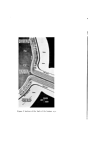
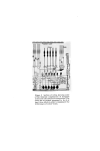
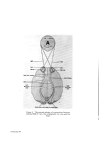
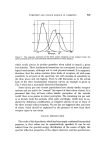
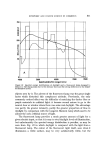
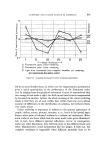
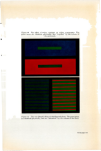
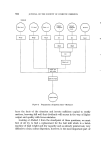
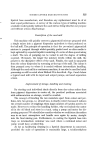
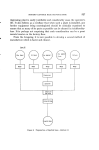
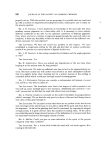
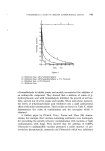
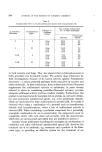
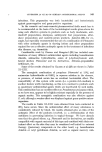
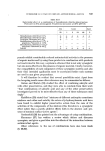
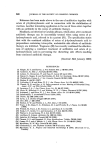
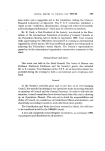
L•ht Lens I ! Left: geniculate __ Right Visual areas in the• of ocO. p•d lobes Figure 4 The general scheme of connections between external field of view (top of diagram), the eyes and the brain. Facing page 505

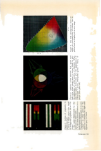
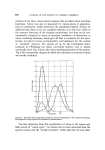
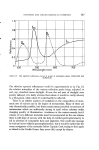
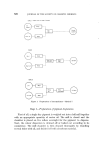
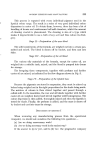
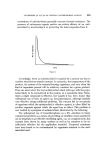
EYESWEET AND COLOUR SCIENCE IN COSMETICS 5O5 much like a little camera, with a lens in front and a screen at the back on which the lens can form an image (Fig. 1). The screen is immensely com- plicated and has not yet yielded up all the secrets of its structure and function, but we know enough to realise that it is a fine mosaic of light- sensitive elements, minute photocells, each of which is eventually con- nected to the brain by a complex system of nerve fibres (Figs. oe-4): light of different wavelengths may be supposed to affect these photocells to different extents, so that they can send impulses to the brain which depend upon the wavelength and upon the particular photocell stimulated. There is still nothing in this which could be called "colour", only an ab- sorption of radiation and an initiation of a nerve impulse, purely physical and electrical processes. The nerve impulses travel along the optic nerve to more and more distant stations in the brain and there, for the present, all definite knowledge has its boundary. We can only say that somewhere in the brain there occurs what we call perception of colour, perhaps in minute particular localities, perhaps in ill-defined patches, perhaps all over the brain as in the holographic concept recently put forward by Longuet- Higgins (1). To the tidy-minded scientist this is a distressingly vague ending, but fortunately the various factors which precede it are amenable to quite precise description and measurement, and to this extent the "perception of colour" is well understood. COLOUR VISION We have seen how light can be analysed into its component wave- lengths which finally excite different colour perceptions in the brain. When the original mixed light falls upon a surface it is in part reflected back, the rest being lost by absorption within the surface. A white surface is one which reflects equally and almost completely all wavelengths of light a grey surface reflects equally but only partially a coloured surface reflects both partially and unequally. The appearance of colour results from the loss of parts of the original white light: what is not lost is reflected back (Fig. 5), and can be seen by the eye. This selection of spectral intensity is the only function performed by a surface, or by a transparent substance such as stained glass, in the production of colour. Nevertheless, the property of "colour" is commonly ascribed to surfaces, pigments, glasses, liquids, etc., as if it belonged solely to them. In fact, the most intricate and myster-
Purchased for the exclusive use of nofirst nolast (unknown)
From: SCC Media Library & Resource Center (library.scconline.org)