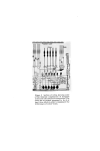
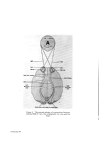
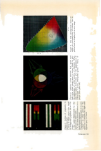
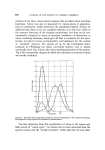
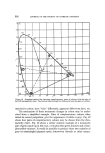
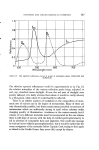
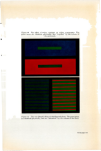
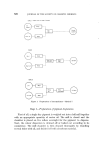
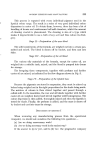
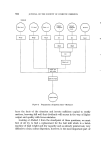
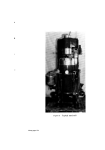
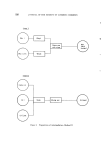
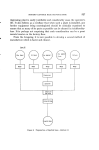
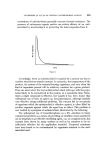
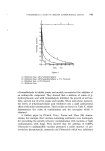
506 JOURNAL OF THE SOCIETY OF COSMETIC CHEMISTS ious part of the process of seeing colour comes only when light has travelled from source to surface and from surface to eye. As soon as the light has been absorbed, wholly or partially, by the receptors of the retina, its role is finished. It is transformed into nervous impulses which travel to the brain. In some way these impulses must carry the information, previously carried by the light, coded in such manner that the colour information in the light is perceived by the brain. There is little doubt that the primary coding at the level of photoelectric transformation in the receptors is followed by many re-codings, cross-codings and group- codings. The surprising thing is that, through the intricate maze of our higher nervous system, perception finally occurs in such perfection, crystal- clear and, usually, unambiguous. The disentangling of the various stages of nervous transmission and coding is one of the great preoccupations of the sensory research worker at the present time, but the nature of the primary, receptor coding has been well established for many years. It is described as the trichromatic theory of vision, first proposed by Young (2, 3), who was unconciously following up an idea proposed by Wiinsch (4) it was forgotten for many years, then later revived by Helmholtz (5) and given an experimental basis by Max- well (6). The experimental fact which provides the basis for this theory is that the colour of any light stimulus, whether coming to the eye direct from a source, or after reflection at a surface, can be matched in appearance by a mixture, in appropriate proportions, of not more than three chosen stimuli, i.e. the three chosen stimuli are all shown upon the same area of a screen and can then be adjusted to match in appearance any other light stimulus. This principle is illustrated by Fig. 6. It must be admitted that this state- ment is an over-simplification, but the only extension we need consider is that one or other of the three chosen stimuli, called the primary stimuli, must sometimes be imagined as having a negative value. This is, of course, physically impossible: what happens in practice is that certain stimuli must have one of the primaries mixed with them in order to match the mixture of the other two. It is rather like an algebraic equation in which Test q- Primary A = Primary B q-Primary C This is physically possible, but on paper can be algebraically transformed to Test = Primary B q- Primary C--Primary A which is physically impossible but preserves the basic concept of the trichromatic theory. These primaries, A, B, and C, are physical stimuli, but they can be transformed algebraically into three fundamental sensations (7)

mmmmmmmmmmmmmmmmmmmmmmmmmm-rm' •mmmmmmmmmmmmmmmmmmmmmmmmmm_'Lm• ,',m•mmm {mmmmmmmmmmmmmmmmmmmmI•- '•.mmmmmmmmmm • • mmmmmmmmmmmmmmmmmmmmmm. ,mmmmmmm • • • mmmmmmmmmmmmmmmmmmmmmmmL- _ •mmmmmmmim • • mmmmmmmmmmmmmmmmmm,•r mm • • mmmmmmmmmmmmmmmmmmmmmm,' •mm mmmmmmmmmmmmmmmmmmmmml,• •mmmmmmm • • • immmmmmmmmmmmmmmmmmm. •mmmmmmm .mmmmmmmmmmmmmmm--? • ..... Immmmmm •! EiiiiiIiI//Ii), i i ) i i )'{• ! L) 1 { L lira • •o •o mIiiIiIimmI•-i i i i i ( i i • t ! { I ) { / imiI i • •n mmiIi/Im/{ ] { i I i { i i • I I ) { • | _ !m ¸ • IIiiiIImiiIm}'l i { I I { I { • I I I • I I { t 'IIIII • IiIiiiIIiiii{iEi i i 1 i i { i { I i i i ! I I•_L•J • Ill • • • }IIIImII•l I 1 I I I I ] { I I I { I h I I t I III -• • ,/IIIIIIIIIJP I It{ I I t I {• • ] k{ I_L_L m .• j I/iIimIii• i i 1 { l I I IJJ t t • I I •iiI limiImiiI.? I ! i i Ii i i { i ) I •II • • • mllIImE}' ! i3 i I f ! • i i I L• • I •11 • •
Purchased for the exclusive use of nofirst nolast (unknown)
From: SCC Media Library & Resource Center (library.scconline.org)