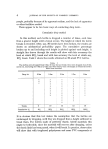
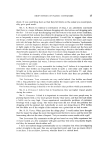
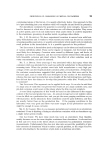
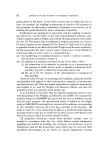
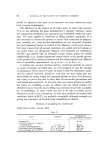
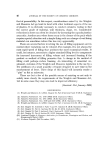
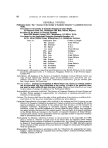
12 JOURNAL OF THE SOCIETY OF COSMETIC CHEMISTS Table VI Difference between bottles made from various grades of PVC. Bottles dropped on to bases. Grade ICI PCO 634 ICI PCO 747 ICI PCO 638 Vybak VZ 903 Drop height in metres Room temperature 50% level 3.4 3.2 2.5 2.2 10% level 2.6 2.3 1,6 1.3 50% level 2.6 1.2 1.1 10øC 10 % level 1.4 0.6 0.8 of their variability. There is as yet not sufficient data to get a true picture of the variability of the testing since the results have been obtained during production runs when conditions are not yet considered to be optimum. This means machine settings tend to differ between runs. However as an example, the figure of 2.2 m given as the 50% level for VZ 903 at room temperature, covers results varying from 1.6 m to 2.6 m. For comparison the 50% level for a range of our standard glass bottles is from about 0.3 m to about 1 m depending on the bottle. Very small glass bottles, of course have much more strength, and a shampoo minibottle has a 50% level of about 2.5 m. On the face of it the strength of the PVC bottles quoted seems to be satisfactory compared with glass. Whether this is so will not be known until more data on customer complaints is available. After producing about three million, only txvo bottles have been returned with broken bodies. One of these appears to have been broken by excessive squeezing, the other by dropping. (Received.' 31st Janua• 7 1968) REFERENCES (1) Shell Plastics CPL/PS/4. (2) Vinatex/Dorlyl PVC bottle compounds (Vinatex Datasheet). DISCUSSION MR. W. G. BURDON: Could you tell us whether you have any experience of change of impact strength xvith time, particularly in relation to vibration during transport. Also any experience with the influence of the contents on impact strength. I believe it is well known that solids, for instance, will stand far greater heights but I wonder whether intermediate physical products, such as thick creams, will also influence the drop height.

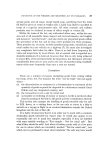
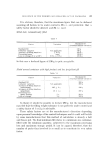
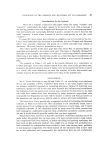
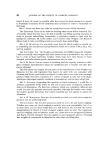
DROP TESTING OF PLASTIC CONTAINERS 13 THE LECTURER: I have no direct experience of these points with PVC bottles. I have a lot of tests on bottles which were being continually developed with changing machine conditions. They are now fairly well settled, and in the future I hope to have some information on how they will change as the material ages. Vibration from travel tests is concerned with the viscosity of the product. Because of the messy nature of drop testing, I confine my drop testing, in the main, to filling the container with water, but we have done work on the impact strength of shampoo sachets, with different viscosity shampoos, and there is no doubt that the more viscous the material in the container, the more resistant the container is to shock. I believe that a gelled product, however, is much worse, transmitting the shock straight through. I have not carried out any drop testing with bottles filled with viscous products. It may be interesting but on the whole I believe water is one of the most stringent test fills. MR. D. A. DEAN: What is the accuracy of fill, as a + 5 cm3 variation on a 90 cm3 bottle could be significant? THE LECTURER: We fill the bottles with the same volume as used in practice we use a volumetric filler to fill all our drop test containers, with a standard fill - in this case 90 cm3. MR. D. A. DEAN: I suggest that customer reaction is more important than just detail of numbers of customer complaints. May I ask if those complainants involving PVC bottles have been questioned as to exact cause? Is there any correlation between customer reaction on glass versus PVC bottles - as related to breakage? THE LECTURER: As far as the complaints are concerned, as a company we have not made any detailed survey, as far as I am aware, of reactions to these particular bottles. As far as sales figures are concerned the product is selling rather better than it was before we put it into a plastic bottle. Whether this has anything to do with PVC or the fact that it is merely plastic, or the fact that it is a different colour, I would not like to say. DR. K. G. JoaNsoN: Just a small supplementary point to Mr. Clarke's comments. This product was originally filled into a glass bottle, and we went on to a bottle almost identical with the one Mr. Clarke has illustrated, but in opaque HD polythene. The sales were virtually unaffected, but one or two large stockists refused to handle the opaque bottle - they insisted that we produce a transparent bottle and for that reason we went on to PVC in the virtually identical container. Since then there is no question that sales have increased very considerably. We had no adverse reaction. We had four customer complaints of breakage with the PVC bottle - we never had complaints of glass bottle breakages, although we know that they break. DR. C. V. SOWTER: You have explained how to derive the height at which 50% of the bottles break, and I can see that the technical purposes are a good reason for doing this but a marketing man is not interested in the fact that only half of the bottles will break. He is more concerned with knowing that, say 1% will break if dropped from 1 m, or something like this. Would you recommend a separate test to provide figures of this sort or would you say that a 50% level of breakage is the only real sensible measurement to make?
Purchased for the exclusive use of nofirst nolast (unknown)
From: SCC Media Library & Resource Center (library.scconline.org)