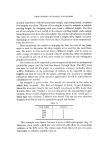
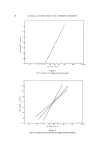
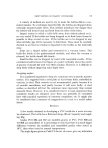
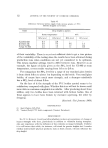
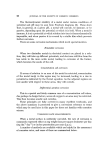
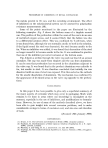
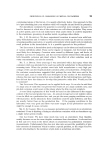
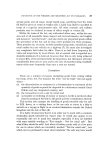
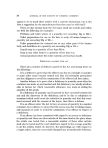
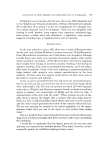
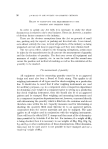
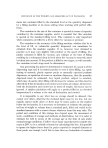
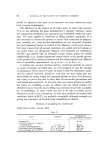
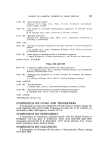
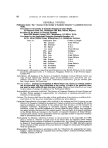
JOURNAL OF THE SOCIETY OF COSMETIC CHEMISTS 3.3 3-0 2.7 2'4 o 0-1 I 2 5 10 30 50 70 90 98 Per cent failure Figure 1 PVC bottles: 10 dropped at each height. 99 99 3'0 2'7 u* 2'4 E 2'1 .? 121 1',5 1'2 0'9 O. I 2 I0 $0 50 70 90 98 Per cent failure Figure 2 Effect of different lines drawn through scattered results 99.99

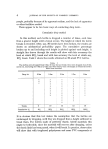
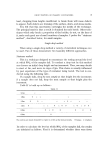
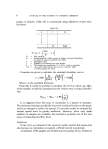
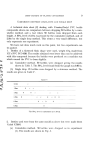
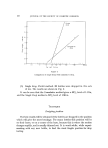
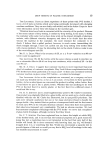
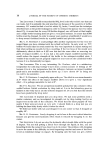
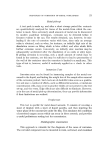
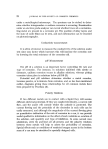
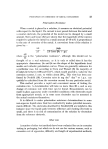
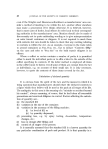
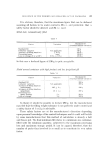
DROP TESTING OF PLASTIC CONTAINERS COMPARISON BETWEEN CUMULATIVE AND SINGLE DROP A technical data sheet (2) dealing with Vinatex/Dorlyl PVC bottle compounds shows one comparison between dropping 50 bottles by a cum- ulative method, and a test where 50 bottles were dropped from each height. A 50% level of 2.7m was found by the cumulative method, and of 2.9m by the single drop method. This seems a very small difference, but only represents one experiment. We have not done much work on this point, but two experiments can be quoted. 1. Bottles of a flattened flask shape were used, weight 13 g, made from ICI's PVC PCO 638. The results obtained were lower than can be achieved with this compound because the bottles were produced on a machine run which caused the PVC to burn slightly. (a) Cumulative method. 50 bottles were dropped giving the results shown in Table I. The 50ø/0 level found from the graph was 0.87 m. {b) Single drop. 21 bottles were dropped by a staircase method. The results are given in Table V. Table V 2.1m x 1.8m 0 x x 1 .Sin 0 0 x x x 1.2m 0 x x 0 x 0 0 0.9m 0 x 0 0 0.6m 0 The 50% level is calculated as 1.33 m. 2. Bottles used were from the same mould as above but were made from Vybak VZ905. (a) Cumulative method. 50 bottles were dropped as in experiment (1). The results are shown in Fig. $.
Purchased for the exclusive use of nofirst nolast (unknown)
From: SCC Media Library & Resource Center (library.scconline.org)