./. Soc. Cos• etic Chemists 20 663-674 (1969) {•) 1969 Society of Cosmetic Chemists of Great Britain The changing pattern of topical dermatological therapy j. w. HADGRAFT* Presented at the S•ymposium on "Skin", organised by the Society of Cosmetic Chemists of Great Britain, at Eastbourne, Sussex, on 20th November 1968. Synopsis--The introduction of antibiotics, corticosteroids and antifungal agents has had a profound effect on topical dermatological treatments. An analysis of prescriptions written for patients suffering from a number of common skin diseases in the years 1951, 1957 and 1967, has shown a general trend towards the use of fewer medicaments with more specific indications. The introduction of cosmetically acceptable preparations has increased the complexity of the formulations used and these can easily be adversely affected if mixed or diluted with other vehicles or preparations. The development of new, effective medicaments, particularly in the antibiotic, anti-inflammatory and antifungal fields has revolutionised topical dermatological therapy. Whereas, some twenty years ago, many topically used agents were based on empiricism and tradition, today the majority of therapeutic agents in this field are used rationally for specific purposes. These changes have stemmed not simply from the addition of corticosteroids, the newer antibiotics and antifungal agents to the range of preparations available to the dermatologist but are, in large measure, a logical consequence of an improved scientific knowledge of skin disease. In the latter field, cosmetic chemists have made no small contri- bution in providing more detailed knowledge on percutaneous absorption. The influence of the cosmetic chemist on dermatology, moreover, has been to improve the cosmetic acceptability of dermatological preparations. This *Royal Free Hospital, Gray's Inn Road, London, W.C. 1. 663

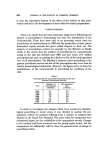
C:)64 JOURNAL OF THE SOCIETY OF COSMETIC CHEMISTS in turn has stimulated interest in the effect of the vehicle on skin pene- tration and led to the development of more effective topical preparations. CORTICOSTEROIDS There is no doubt that the most important single factor influencing the pattern of prescribing in dermatology has been the introduction of the corticosteroids. These have been used to an increasing extent since the introduction of hydrocortisone in 1953 and the production of more potent fluorinated topical steroids has given added impetus to their use. The analysis of prescriptions carded out annually by the Ministry of Health (Table I) has shown that the number of prescriptions for corticosteroids acting on the skin has doubled since 1961 and now totals 10.7 million prescriptions per year, accounting for a little over 5% of the total ingredient cost of all prescriptions. The Ministry's analysis covers prescribing in the general practitioner service and not all the prescriptions may have been for strictly dermatological indications. However, the figures serve to show the predominance of the corticosteroids in prescribing for conditions of the skin. Table I Prescriptions for corticosteroids acting on the skin {General Practitioner Service). Year 1961 1962 1963 1964 1965 1966 1967 Number of prescriptions (millions) 5.1 5.6 6.5 7.6 9,1 9.8 10.7 Net ingredient cost i millions 2.3 2.6 3.2 3.8 4.5 5.0 5.4 In order to investigate the changes which have occurred in dermato- logical prescribing in recent years, it was decided to analyse the pre- scriptions written for patients suffering from a number of common skin diseases at the Royal Free Hospital. The years taken for comparison were determined largely by the availability of the appropriate records. Changes in the medical staff have occurred over the period under review, but the comparisons are sufficiently valid to show the general trend of change in prescribing habits.
Purchased for the exclusive use of nofirst nolast (unknown)
From: SCC Media Library & Resource Center (library.scconline.org)